Best Free Zendesk Alternative for 2026

You’re probably in the same spot as a lot of Shopify merchants right now. Support volume is rising, margins are tighter, and Zendesk feels like too much tool for the wrong part of the job. You don’t just need a cheaper help desk. You need a free zendesk alternative that fits how an ecommerce store sells, supports, and scales.
For some stores, that means replacing tickets with automation before a ticket ever exists. For others, it means a shared inbox your team can run without a week of setup. And for brands with compliance or hosting needs, it means self-hosting and keeping control of the stack. The mistake is choosing based on “free” alone, then rebuilding everything six months later when Black Friday arrives and the tool cracks under pressure.
That matters more in the UK than many founders realise. SMEs make up 99.9% of UK businesses, with 5.6 million entities as of 2023, and they spend an average of £12,000 annually on customer support software according to the Office for National Statistics data cited by iubenda’s Zendesk alternatives analysis. Free plans aren’t a side benefit in that environment. They’re often the only sensible starting point.
The better way to evaluate a free zendesk alternative is to ask one question first. Do you want to automate conversations, organise agent work, or own the infrastructure yourself? That’s the lens I’d use before comparing feature grids.
If you’re also rethinking how customers get answers without opening a ticket, it’s worth looking at what a modern self-service customer portal should do for a Shopify store. The best tools below solve different versions of the same problem. They reduce friction before it becomes cost.
1. Marvyn AI
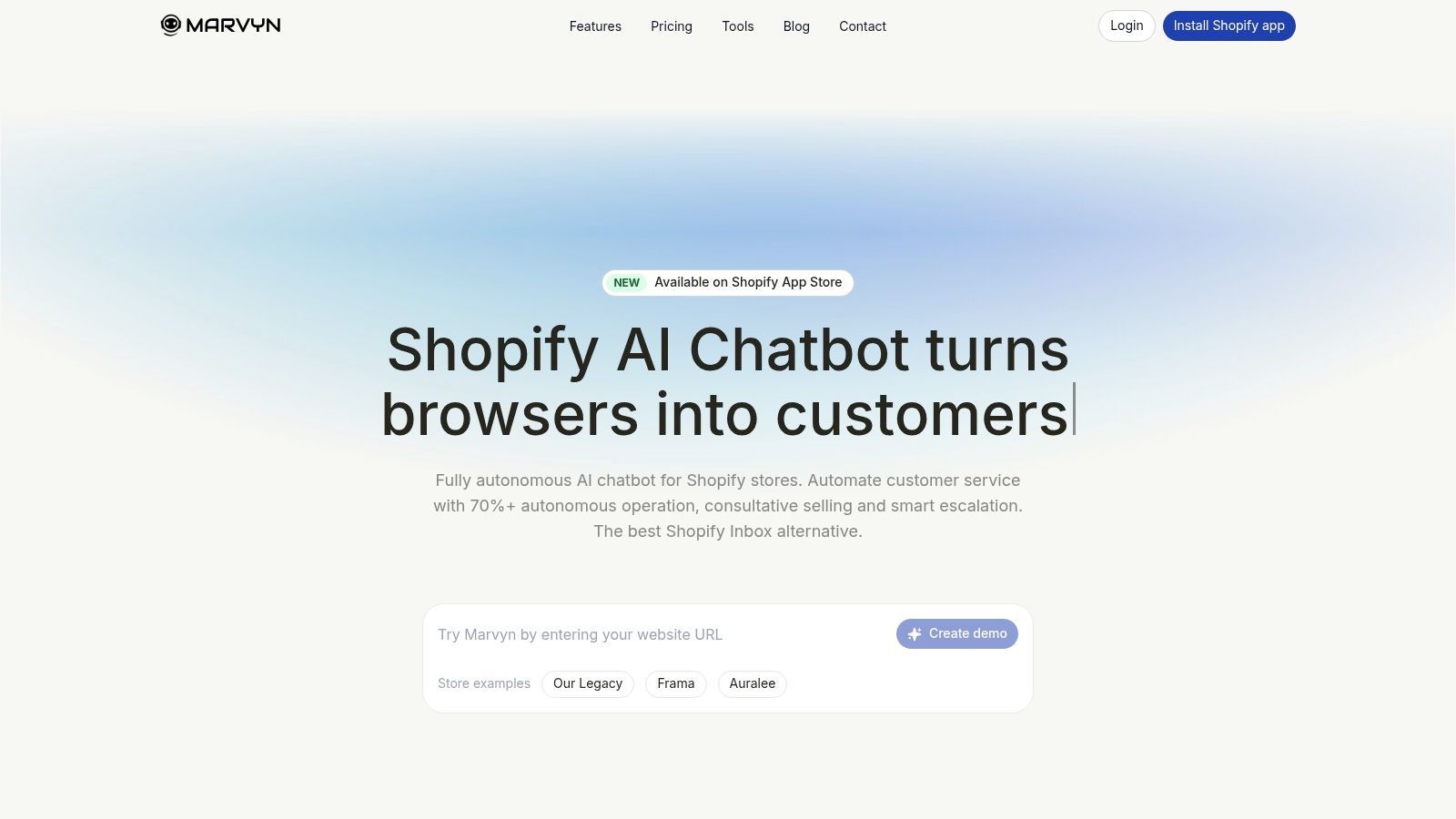
A shopper lands on a product page, hesitates over sizing, delivery or returns, and leaves before your team ever sees a ticket. That is the gap Marvyn AI is built to handle. In this list, it is the clearest example of the full automation category. It aims to answer buying and support questions before they become queue volume.
That makes it a different kind of free zendesk alternative for Shopify merchants. Marvyn connects to your Shopify store, pulls in catalogue and policy content, and responds inside a live conversation. For many DTC brands, that matters more than a tidy inbox. Significant costs usually sit earlier in the journey, where uncertainty slows checkout and pushes conversion down.
Marvyn fits stores where a large share of support is really pre-purchase guidance. Furniture, fashion, beauty, gifting, homewares. Any catalogue where shoppers compare options, ask for reassurance, and want a fast answer without waiting for an agent.
Where Marvyn fits best
A standard help desk organises work for humans. Marvyn reduces the amount of human work needed in the first place. If your team keeps answering the same questions about fit, shipping, returns, materials, compatibility, or which product to choose, automation usually gives you a better return than another ticket view.
The practical appeal is simple. It can handle the repetitive questions at any hour, in multiple languages, while your team focuses on exceptions, complaints, and edge cases.
- Best for high-intent Shopify stores: Useful where buyers need guidance before they commit to purchase.
- Best for lean teams: A solo founder or small CX team can cover more ground without sitting in chat all day.
- Best for merchants selling across markets: Multilingual support helps when your traffic comes in outside UK working hours.
Practical rule: If more than half of incoming messages are buying questions, start by fixing that layer before investing in heavier ticket management.
Trade-offs that matter
Automation only works as well as the store data behind it. If product pages are thin, policies conflict, or variant information is messy, the answers will reflect that. I have seen merchants blame the tool when the underlying issue was poor catalogue hygiene. Marvyn rewards stores that already keep product and policy content clear.
The second trade-off is operational depth. Marvyn is not built to replace a traditional service desk for teams that need SLA controls, workforce management, or complex back-office routing. If your support operation looks more like a call centre than a Shopify CX team, a ticketing-first platform will fit better.
For merchants deciding between automation and inbox software, this is the key question. Do you want to process more tickets, or prevent a chunk of them from existing at all? Marvyn is the stronger option for the first camp in this article’s framework, full automation. If you want more context on how that differs from legacy support platforms, this Freshdesk vs Zendesk comparison for ecommerce support teams is a useful reference.
2. HubSpot Service Hub
HubSpot Service Hub is the cleanest option when you want a free zendesk alternative that behaves like a lightweight support desk and keeps customer context tied to your CRM. It’s easy to launch, easy to understand, and hard to break. That matters when you want something live this week, not after a long configuration project.
For Shopify merchants already using HubSpot for leads, email marketing, or deal tracking, the value is straightforward. Support, sales, and contact history sit in the same record. When a customer asks about an order, previous conversations and lifecycle context are already there.
Why teams choose it
HubSpot works best when your support process needs to hand off into retention or sales. A shared inbox and basic ticketing are usually enough for a small team handling email and chat. It feels familiar, which reduces training friction.
That’s the practical appeal. You’re not buying a specialist support platform first. You’re extending a system you may already use elsewhere in the business.
- Strong CRM context: Agents can see the customer record without jumping across tools.
- Fast launch: There’s no server work or self-hosting overhead.
- Solid ecosystem: If your store relies on multiple apps, HubSpot usually has a path to connect them.
The limitation is just as clear. Once you need more advanced automation, deeper service reporting, or a stronger knowledge base layer, HubSpot starts nudging you towards paid tiers. That’s not unusual, but it means the free plan is best seen as a clean operational base, not an endpoint.
HubSpot is a good operations decision when support and marketing already share the same data. It’s less compelling if you only need a support tool.
One more practical note. The free experience can feel polished enough that teams delay asking whether they need conversation automation, not just conversation management. If that’s your next question, this guide to customer service software helps frame the gap.
HubSpot’s product page is at HubSpot Service Hub free tools.
3. Zoho Desk
Zoho Desk is a sensible pick when your support is still mostly email-first and your team is small enough to live with a stricter user cap. Its free edition supports 3 agents and includes core ticketing, a knowledge base, and basic analytics, which is why it remains one of the more practical free zendesk alternative options for small UK teams. The official product site is Zoho Desk.
The strongest fit is the classic growing merchant scenario. You’ve moved past a shared Gmail inbox, but you don’t need enterprise complexity. You want assignment rules, a portal, and enough structure to stop things slipping through the cracks.
Why it works for small teams
Zoho Desk’s free plan lines up well with the UK micro-business reality. ONS data cited by The CX Lead’s guide to Zendesk alternatives says 3.1 million UK micro-businesses in 2024 faced a 12% rise in support ticket volumes due to ecommerce growth post-Brexit, averaging 150 tickets monthly per store. That’s exactly the range where a simple, disciplined support desk can be enough, provided your volume stays predictable.
It also helps that Zoho has a broad ecosystem. If you already use Zoho CRM or other Zoho products, the desk feels less like adding a new platform and more like opening another room in the same building.
- Good free ceiling for tiny teams: Three agents is enough for many founder-led support operations.
- Email-first clarity: Clean for order issues, returns, and policy questions.
- Low-cost upgrade path: Paid plans don’t feel like a dramatic jump.
Where it starts to feel tight
Once your support shifts into multiple live channels, Zoho’s free plan shows its edges. Advanced automation and richer channel support sit behind paid plans, and the interface can feel heavy if you’re not invested in the broader Zoho stack.
That’s the trade-off. Zoho is strongest as a practical operations tool. It’s weaker as a storefront sales assistant.
If you’re comparing more traditional help desks before choosing, this breakdown of Freshdesk vs Zendesk is useful alongside Zoho because it highlights where omnichannel support changes the decision.
For very small support teams, Zoho Desk remains one of the easiest “start free, grow later” options. Just be honest about whether your future looks like ticket handling or AI-led pre-sales guidance. They aren’t the same thing.
4. Jira Service Management
Jira Service Management is the outlier on this list. It’s a free zendesk alternative, but it doesn’t really think like a typical ecommerce support tool. It thinks like a service operations platform. That can be useful, or it can be too much.
If your store has a technical support layer, internal operations requests, or a team that already lives in the Atlassian world, Jira Service Management can make sense. Request portals, forms, workflows, and queue management are mature. It’s built for process-heavy environments.
Best fit and worst fit
This works best for merchants with unusual complexity. Examples include custom product builds, B2B order handling, multi-team escalations, or a support operation closely tied to developers and ops staff. In those cases, Jira can act like a control room rather than a basic help desk.
It’s less suitable for a founder who just wants to answer “Where’s my order?” and “Can I exchange this size?” without friction. The tool can do that, but it’s like using warehouse racking to organise a market stall. Strong structure. Too much scaffolding for simple jobs.
- Best for process-heavy support: Good when requests follow rules and approvals.
- Strong workflows: Custom forms and automations are deeper than most free plans.
- Useful internal portal: Works well if support overlaps with IT or operations.
The free plan supports small teams, but complexity is the price you pay. A lightweight support desk gets you to an answer faster. Jira gives you more control, but you have to earn it through setup and discipline.
Choose Jira Service Management when your business needs workflow control more than conversational ease.
For Shopify merchants, that usually means one of two things. Either you already use Atlassian and want everything under one umbrella, or your operation has enough moving parts that a standard inbox no longer holds together. If neither is true, another option on this list will probably get you live faster.
You can review the platform at Jira Service Management.
5. tawk.to
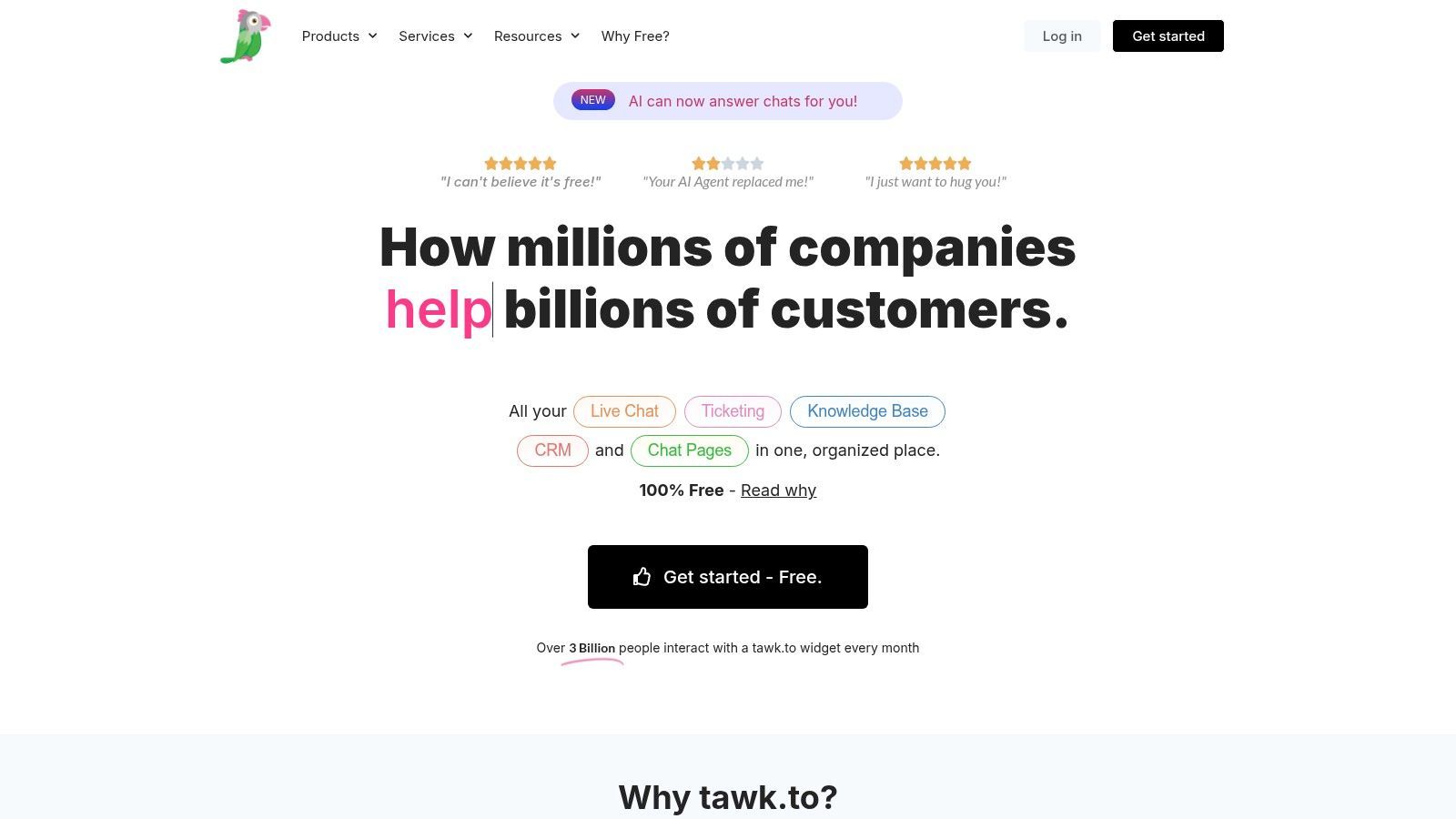
tawk.to is what I’d call the fastest honest answer to “I need free live chat now.” It’s one of the few tools that is free at the core rather than free-until-you-need-anything-useful. For many merchants, that alone makes it a valid free zendesk alternative.
Its strength is speed and simplicity. Install the widget, set up your inbox, and start handling pre-sales and support chats without worrying about per-conversation costs. That’s especially useful for smaller stores where the main need is catching buyer hesitation in the moment.
Where tawk.to earns its place
tawk.to is stronger for presales chat than for complex support operations. If your team wants a visible chat bubble, a shared view of incoming messages, and basic ticketing in one place, it does the job with very little ceremony.
That matters because not every store needs a “platform”. Some need a staffed front door.
- Unlimited agents and chat history: Good for small distributed teams.
- Quick Shopify setup: Low technical friction.
- No per-conversation fees: Helpful when traffic is uneven.
The weakness is the reporting and routing layer. If you want richer automation logic, nuanced prioritisation, or cleaner executive reporting, you’ll hit the ceiling faster than with a larger suite.
What to watch before relying on it
The branding is the obvious trade-off. Unless you pay to remove it, visitors will see tawk.to’s branding. Some stores won’t care. Premium brands often will.
The other issue is operational maturity. Once support becomes channel-heavy or your team needs stronger QA and analytics, tawk.to starts to feel like a good chat tool being asked to do a help desk’s job.
A practical way to think about it is this. tawk.to is good at starting conversations. It’s not the best at building a complete support operating system around them. If live chat is your main immediate need, that’s fine. If you’re planning ahead for larger CX processes, keep your future migration in mind.
For merchants reviewing chat-first setups, this guide to live chat on a website is worth reading before you commit. The product itself is at tawk.to.
6. Crisp
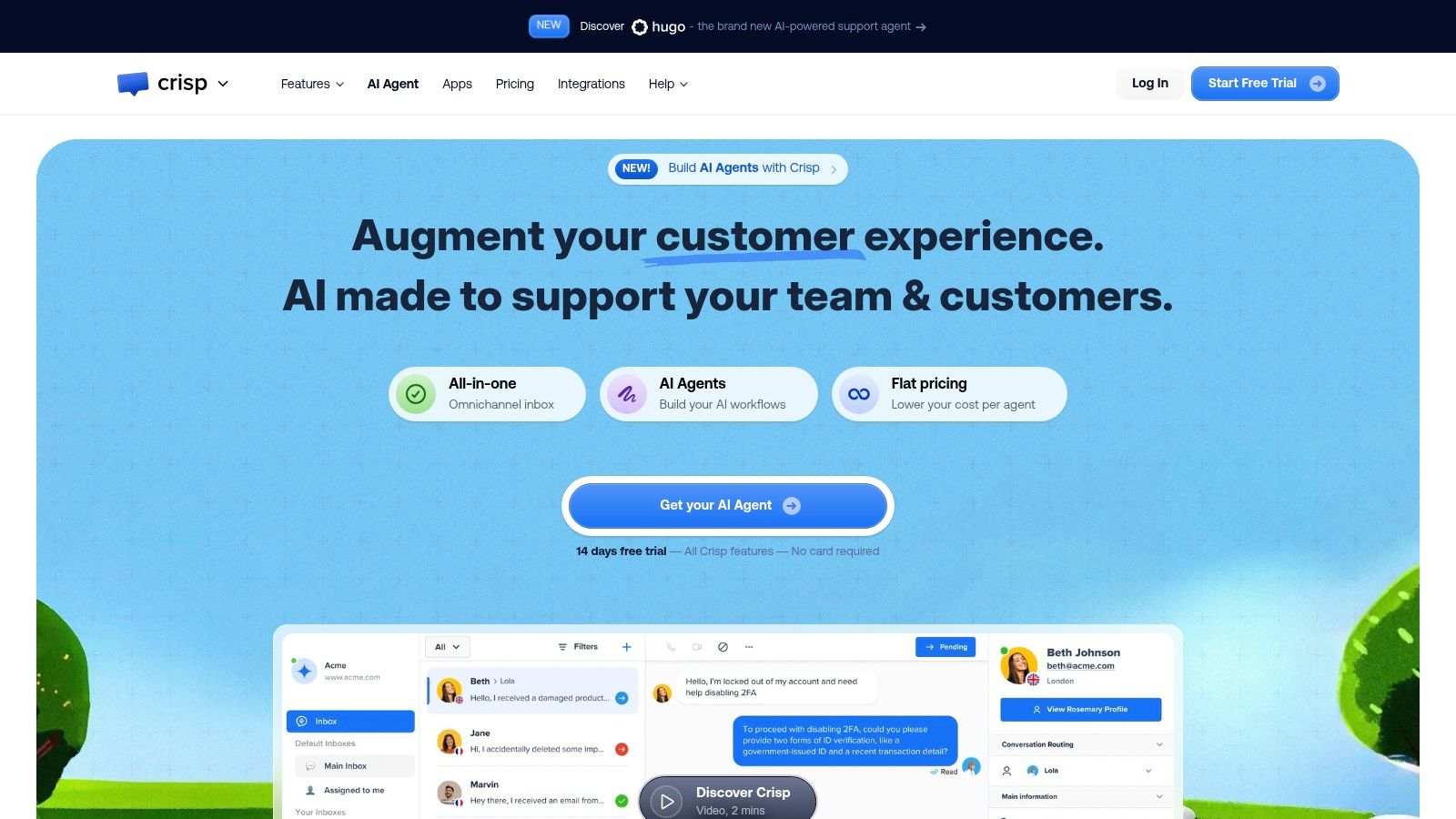
Crisp sits in a useful middle ground. It’s more polished than many basic live chat tools, but it doesn’t force the heavier service-desk mindset you get from enterprise platforms. For a Shopify merchant who wants a modern chat widget and a shared inbox that won’t confuse the team, Crisp is often easy to like.
The interface is the main selling point. Agents usually understand it quickly, which matters when support is shared across founders, ops, and marketing rather than a dedicated CX department.
Why merchants pick Crisp
Crisp is a good starter platform for stores that want conversational support without making a big systems decision yet. You can run chat, collect messages, and maintain a tidy inbox while leaving room to add automation later if the store grows.
That’s a sensible phase for many DTC brands. You don’t always need the final support stack on day one. You need something your team will use properly.
- Clean UI: Less agent friction than cluttered dashboards.
- Good for small stores: Useful when one person covers multiple roles.
- Clear upgrade path: Paid tiers add more automation and routing as needed.
There’s a cost to that simplicity. The free plan is deliberately limited, and some of the more interesting integrations and workflow features sit outside it. So while Crisp is easy to start with, it may not stay “cheap” once your support operation becomes more structured.
The practical trade-off
Crisp is best when clarity matters more than depth. If your biggest current problem is missed chats or messy inbox handling, it fixes that quickly. If your next problem is global multilingual support, advanced rules, or conversion-led AI sales conversations, you’ll likely outgrow the free version.
That doesn’t make it a poor choice. It makes it a staging choice. Crisp is the kind of tool I’d recommend to a merchant who wants momentum first and sophistication later.
You can explore it at Crisp.
7. Chatwoot
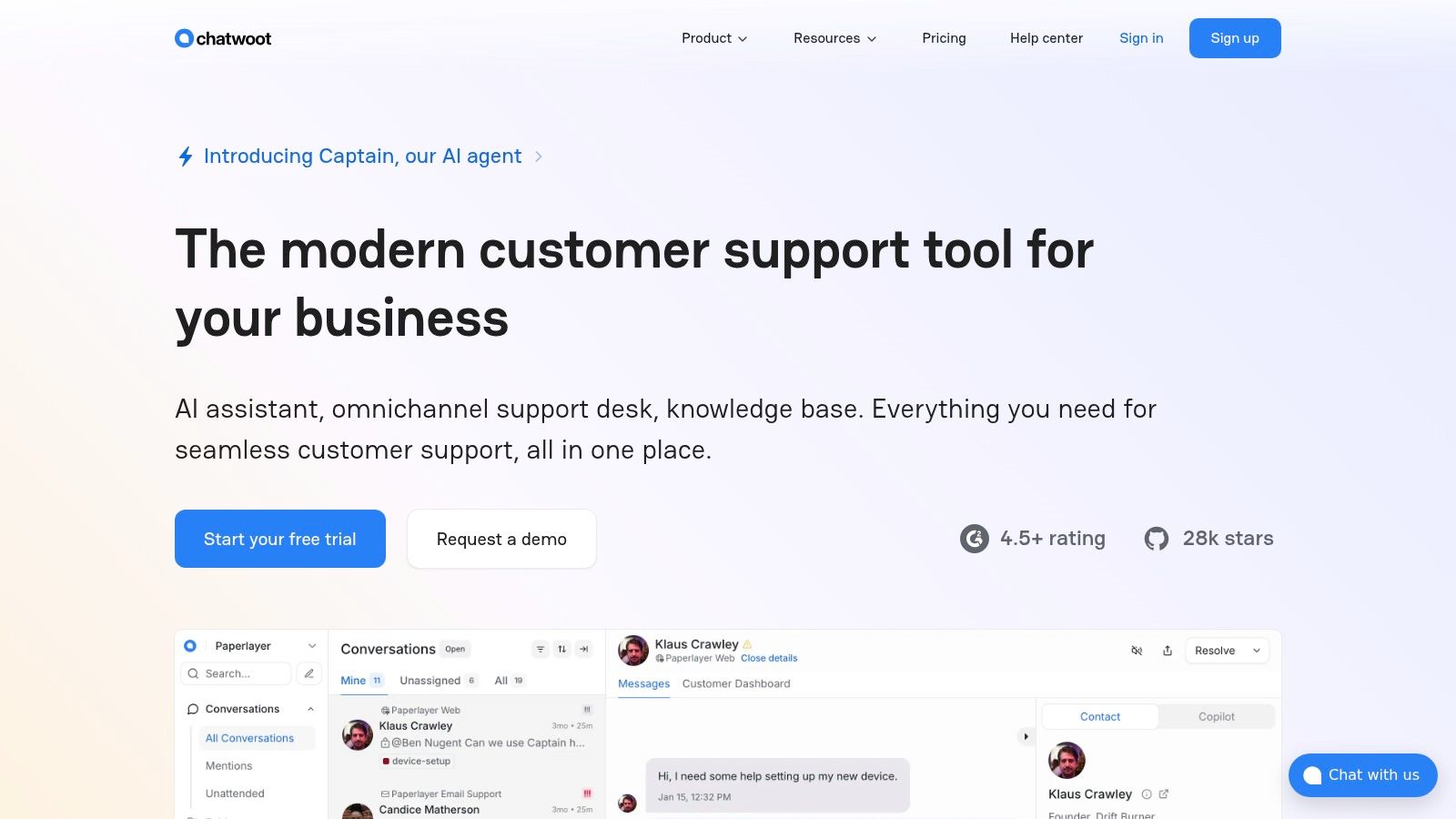
Chatwoot is the most practical open-source option here for merchants who want channel coverage without locking themselves into a SaaS vendor. As a free zendesk alternative, its appeal is simple. You can self-host it, own the data, and still get a modern multi-channel inbox.
That combination makes it attractive for teams with DevOps support or a trusted technical partner. If your brand is sensitive about data location, compliance, or long-term platform control, Chatwoot gives you room that hosted help desks don’t.
Why self-hosting can make sense
For most Shopify merchants, self-hosting is unnecessary. But for some, it’s exactly right. UK and EU brands with stricter internal policies, private infrastructure preferences, or a strong engineering culture often want more ownership over support data and deployment decisions.
Chatwoot covers website chat, email, and several messaging channels, with agent collaboration, tagging, and automation tools that feel surprisingly capable for an open-source product.
- Full data ownership: Useful for privacy-conscious teams.
- Broad channel coverage: More flexible than many expect.
- Extensible: Better suited to custom workflows than lightweight SaaS chat tools.
The hidden cost of “free”
The software may be free, but the operational burden isn’t. Someone has to host it, update it, secure it, and troubleshoot it. That’s the line merchants often miss when comparing self-hosted tools with SaaS products.
Open-source support software is only free if your time, maintenance, and infrastructure are already accounted for.
If you have the technical resources, Chatwoot is a serious contender. If you don’t, it can become yet another job your team didn’t plan for. In practical terms, it’s best for brands that already know why they want self-hosting. It’s not the right first experiment for a founder trying to escape tool complexity.
You can review the project at Chatwoot.
8. osTicket
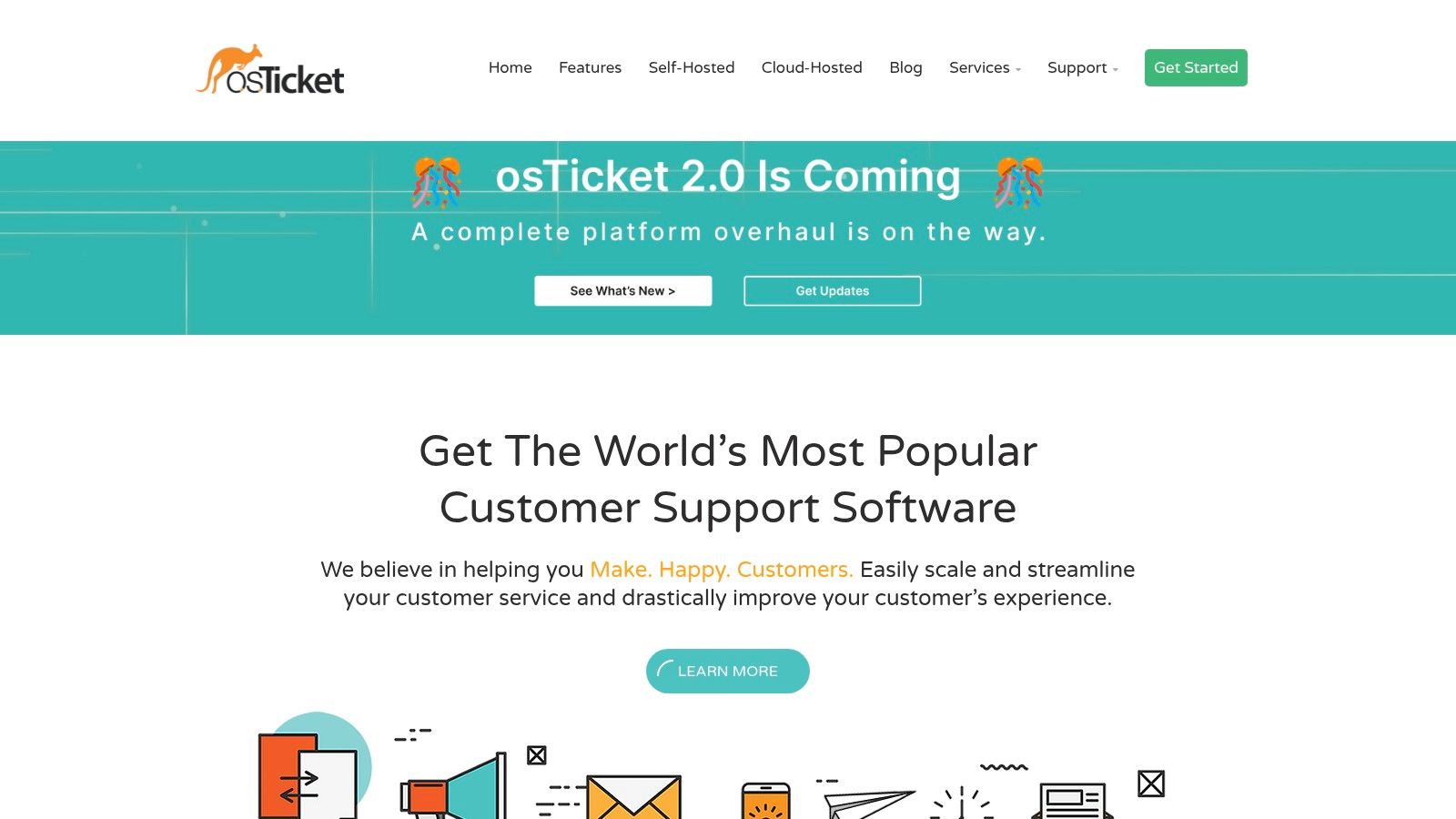
osTicket is old-school in the best and worst ways. It’s dependable, lightweight, and focused on straightforward email-to-ticket workflows. If your idea of a good support system is “it reliably works and doesn’t get in the way”, osTicket still has a case.
This isn’t the tool you choose for sleek conversational commerce. It’s the tool you choose when you want simple structure, low overhead, and the ability to host it yourself.
Where osTicket still shines
For operations that revolve around inbound email support, forms, SLAs, canned responses, and a customer portal, osTicket covers the basics well. It’s especially useful for merchants who want a free zendesk alternative without the complexity of a broader open-source communications suite.
Its server requirements are also modest compared with heavier platforms. That can matter if you’re keeping infrastructure simple.
- Stable core ticketing: Good for routine support flows.
- Minimal hosting needs: Easier to run than more complex stacks.
- Large community history: Helpful when you need practical fixes.
The downside is obvious once you log in. The interface and reporting feel dated. If your team expects a modern support workspace with rich integrations and polished UX, osTicket won’t impress them.
Who should avoid it
Don’t pick osTicket if your support model depends on social channels, advanced automation, or active pre-sales chat. It’s not built for that. It’s an email ticketing workhorse.
For some teams, that’s enough. Especially if the support job is mostly returns, fulfilment issues, and account requests handled by a disciplined internal team. In that setting, osTicket’s lack of flash is a strength.
For most Shopify brands focused on growth, though, it’s better treated as a practical self-hosted utility than a growth lever. You can review it at osTicket.
9. Zammad
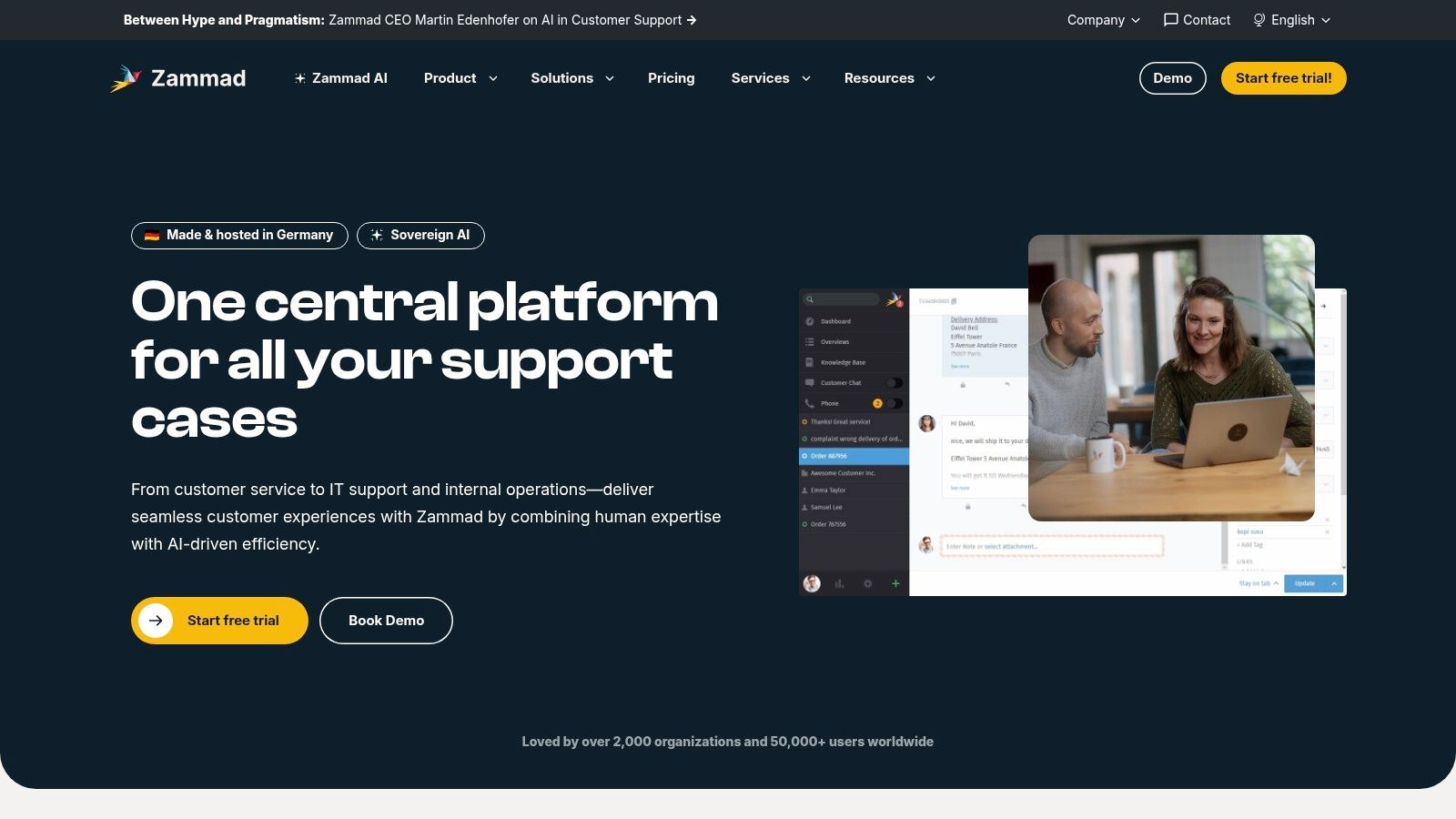
Zammad is what many teams hope open-source support software will feel like. It’s more modern than legacy self-hosted tools, more feature-rich than lightweight ticket systems, and serious enough for organisations that need stronger admin control.
For a merchant comparing self-hosted options, Zammad usually enters the conversation when osTicket feels too basic and Chatwoot feels too chat-centric. It sits closer to a full help desk.
Why some teams prefer it
Zammad gives you multi-channel ticketing, strong search, roles and permissions, triggers, macros, and integration hooks. It’s a better fit when support needs structure and governance, not just inbox handling.
That’s useful for larger ecommerce operations, especially if multiple departments touch support or if you need clearer separation between teams and permissions.
- Feature-rich open-source base: Good depth without immediate vendor lock-in.
- Admin controls: Better for layered teams and permissions.
- Privacy-friendly deployments: Helpful when local or sovereign AI options matter.
The trade-off is weight. Zammad is not a “spin it up in an afternoon and forget it” tool unless your technical setup is already mature. It benefits from proper deployment planning and ongoing care.
Practical fit for Shopify brands
For many DTC merchants, Zammad is more infrastructure than they need. But for stores with international operations, stricter privacy requirements, or a support team that behaves more like a service department than a chat queue, it can be a strong long-term foundation.
The question isn’t whether it’s powerful enough. It usually is. The question is whether your business wants to operate support software as part of its core stack. If the answer is yes, Zammad deserves serious consideration.
You can explore it at Zammad.
10. UVdesk
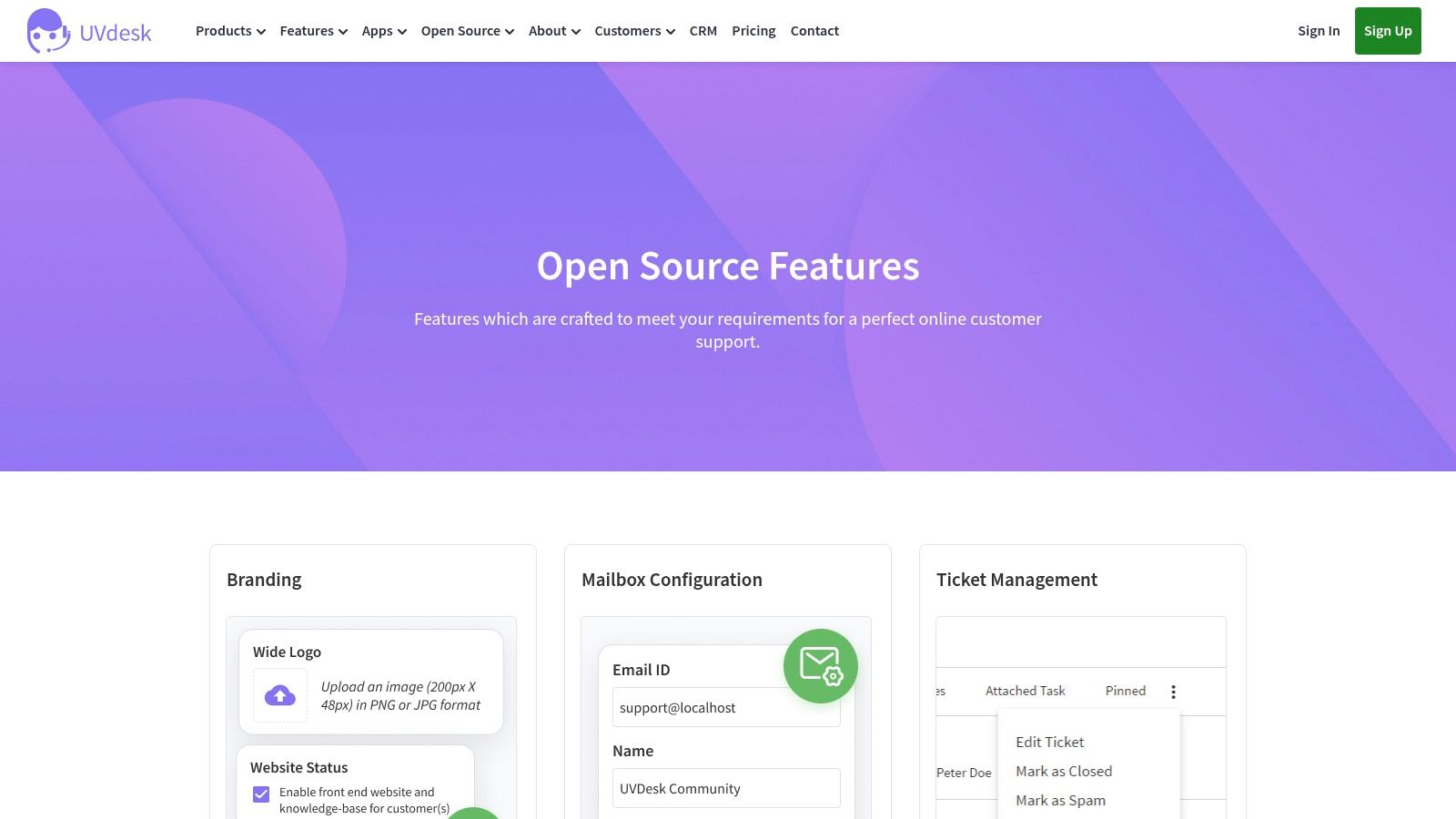
UVdesk is one of the more ecommerce-aware self-hosted choices on this list. That matters because a lot of support tools treat commerce as an add-on, while UVdesk at least understands that order context belongs near the ticket.
For Shopify merchants who want an open-source route but still need marketplace and storefront relevance, UVdesk is a more natural fit than a generic help desk.
Why ecommerce teams look at it
The Community Edition is free to self-host, and the product leans into workflows that matter to merchants. Ticketing, portals, productivity features, and ecommerce connectors are part of its appeal. It’s not just a generic inbox with a shop attached.
That makes it useful if your support team often needs order-level context and you want to keep the stack modular.
- Ecommerce orientation: Better fit for DTC than many open-source peers.
- Self-hosted flexibility: Useful for teams that want control.
- Expandable model: You can add capabilities as required rather than buying a huge suite up front.
The challenge is ecosystem depth. UVdesk can do a lot, but advanced setups may require paid add-ons or more configuration work than a merchant expects at first glance.
The real trade-off
UVdesk is best for stores that have already decided they want self-hosting and ecommerce-specific workflows. It’s less ideal for teams still working out whether they even need open-source in the first place.
That distinction matters. If you want a tool that disappears into the background and just works, a hosted SaaS product may still be the better answer. If you want control and commerce context, UVdesk is one of the few open-source options that earns a close look.
The project is available at UVdesk Open Source.
Top 10 Free Zendesk Alternatives, Comparison
Final Thoughts
A free Zendesk alternative only works if it fits the kind of support your store creates.
A Shopify merchant selling fashion, beauty, or homeware often gets pre-purchase questions that sit halfway between support and sales. In that case, a standard ticket queue can keep things tidy without reducing the question volume. An automation-first tool makes more sense because it answers repeat buying questions before they turn into tickets. Marvyn AI fits that use case well because it handles product, policy, and order queries in the same flow shoppers already use to decide whether to buy.
If your support model still depends on people owning most conversations, choose a team ticketing tool. HubSpot Service Hub suits stores that need support activity tied closely to CRM and marketing history. Zoho Desk suits teams that want a simpler service desk, lower entry costs, and a clear route to paid features without rebuilding their workflow later.
Live chat sits in a different category. tawk.to and Crisp are useful when speed of launch matters more than building a full service operation. tawk.to keeps costs down for small teams. Crisp usually feels cleaner for day-to-day use. Both are sensible early choices, but reporting, workflow depth, and automation limits tend to show up once ticket volume rises.
Self-hosted tools solve a different problem again. Chatwoot is the strongest fit for merchants who want a modern multi-channel inbox and control over where customer data lives. osTicket works well for straightforward email ticketing with low overhead. Zammad is better suited to teams that need more structured admin controls and process-heavy service workflows. UVdesk makes sense for ecommerce teams that want closer platform context and connector flexibility. Free software still has a cost. You pay in setup time, maintenance, hosting, and internal ownership.
Timing matters as much as feature lists. A tool that feels acceptable in February can become painful during Black Friday week. That matters for UK merchants in particular, where smaller teams often handle sharp seasonal swings without adding headcount. Freshdesk remains a common entry point, and Salesforce’s comparison page cites UK market data showing Freshdesk holds a 22% market share among UK SMBs seeking Zendesk alternatives. That popularity is useful context, but it should not decide the purchase on its own.
Use a simple filter before you choose:
- Choose automation-first if stopping repetitive questions matters more than sorting them into a better queue.
- Choose team ticketing if agents still need to own the conversation and you want clearer structure without heavy setup.
- Choose self-hosted if data control, hosting location, or customisation is a business requirement.
- Avoid false economy if the free plan creates an upgrade or migration problem the moment order volume spikes.
The practical trade-off is not free versus paid. It is short-term savings versus how much rework you create six months from now. Pick the tool that matches your current support pattern and still makes sense after your next growth jump.