Greetings in Email: A Guide for Shopify Brands (2026)
You’re probably doing this more often than you’d like.
A customer asks about sizing, shipping, or returns. You open your email draft and pause at the first line. Do you write “Hi”, “Hello”, “Good morning”, or nothing at all? If it’s a first-time buyer, you don’t want to sound cold. If it’s a loyal customer, you don’t want to sound stiff. If it’s a complaint, you definitely don’t want the greeting to feel careless.
That tiny opening matters more than most Shopify brands realise. In ecommerce, greetings in email aren’t just etiquette. They shape whether your message feels human, relevant, and worth reading. They also influence whether a customer keeps moving towards purchase, trusts your support team, or drifts away because your brand sounds generic.
A good greeting does one job immediately. It tells the reader, “This message was written for someone like you.”
The High Cost of the Wrong First Impression
Many Shopify owners spend time on subject lines, discount logic, flows, and product photography, then treat the greeting like an afterthought. That’s a mistake. The first words in your email set the tone before the customer reads a single offer, update, or answer.
The commercial impact is real. UK businesses report a 23% drop in email open rates when using outdated greetings like “Dear Sir/Madam”, according to a 2025 Statista UK email marketing survey of 1,200 DTC brands, cited by Indeed’s guide to email greetings. If your brand still sounds like a template from an old contact centre, customers notice.
For a Shopify store, that problem spreads across the whole funnel. A weak greeting can make a welcome email feel automated in the bad sense. It can make a pre-sale reply feel rushed. It can make a support message feel defensive before your solution even appears on screen.
Why this matters for sales, not just manners
Customers don’t separate “brand voice” from “buying confidence”. They experience both at once. If your email opens awkwardly, the rest of the message has to work harder.
That’s especially important when you’re answering high-intent questions like:
- Pre-purchase queries: “Will this fit me?” or “Can this arrive by Friday?”
- Post-purchase reassurance: “Has my order shipped yet?”
- Support recovery: “My parcel arrived damaged.”
- Retention moments: “We haven’t seen you in a while.”
Each one is a revenue moment. Each one starts with a greeting.
Practical rule: If your greeting could work for a bank statement, it probably won’t work for a modern ecommerce brand.
A lot of teams know their greetings need work, but they get stuck because consistency is hard. One founder writes “Hey!”, another support rep writes “Dear customer”, and the automated flow uses “Hi there”. The result is a fragmented customer experience.
That’s why greeting strategy belongs inside your broader ecommerce customer experience improvement plan. The goal isn’t to sound nicer. The goal is to sound right, every time, at scale.
The Psychology of the First Word
An email greeting works like the welcome someone gets when they walk into a shop.
In one shop, a staff member looks up, smiles, and says hello in a way that matches the setting. In another, nobody acknowledges the customer. In a third, the greeting is so formal it feels robotic. Before the shopper has touched a product, they’ve already formed an impression.
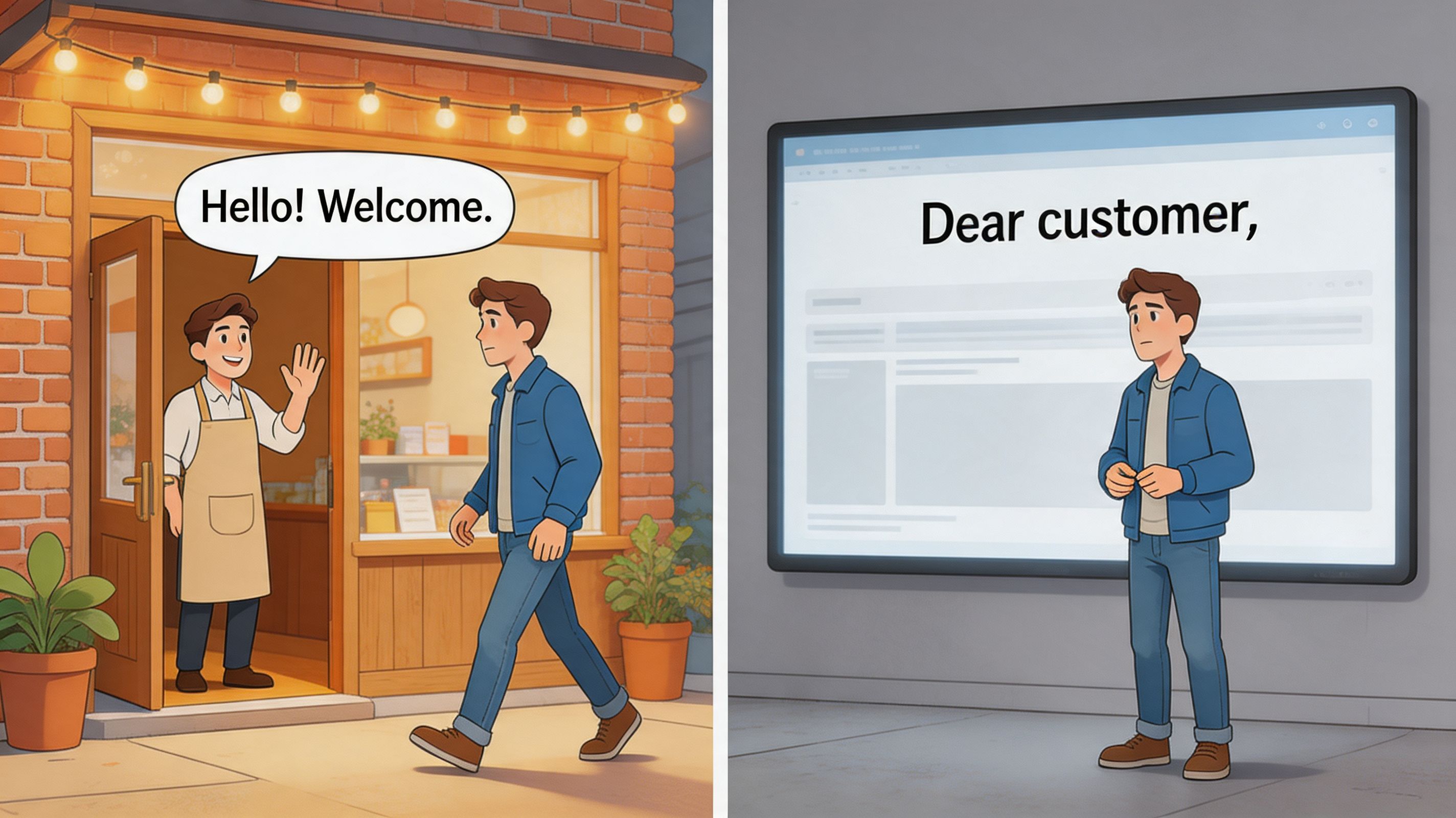
Greetings in email do the same thing. They prime the reader. They signal warmth, distance, confidence, familiarity, or carelessness.
What a greeting communicates instantly
Before your customer reads the body copy, your greeting already answers a few silent questions:
- Does this brand know who I am?
- Does this message feel personal or mass-produced?
- Is the tone appropriate for the situation?
- Does this sound like a real person or a system notification?
That’s why “Hi Sarah” feels different from “Dear Customer”, even if the rest of the email says the same thing. The first version suggests relevance. The second suggests bulk processing.
Tone starts before the message body
A lot of confusion comes from thinking the useful information starts in sentence two. It doesn’t. The greeting is part of the message, not decoration around it.
If someone has just placed an order, a calm and reassuring opener helps them feel they made the right choice. If someone is angry, a casual “Hey!” can make the situation worse. If someone is browsing your products for the first time, a stiff greeting can make your brand feel less approachable than your site does.
Here’s a simple way to think about it:
The greeting tells the customer how to interpret everything that follows.
Relationship changes the meaning
The same greeting can land differently depending on context. “Hi James” might feel ideal in a product recommendation email, but too light in a refund dispute. “Good morning” can feel polished in B2B wholesale outreach, but too formal for a playful skincare brand speaking to repeat customers.
That’s why you shouldn’t hunt for one “best” greeting. You need a system that matches brand personality, customer relationship, and message purpose.
When ecommerce teams get this right, they stop treating greetings in email as a fixed template. They start treating them as a customer experience lever.
Choosing Your Greeting A Framework for Every Situation
The typical sender doesn’t need a giant list of greetings. They need a reliable way to choose one quickly.
A simple framework works better than memorising etiquette rules. For ecommerce, the best approach is to place greetings on a spectrum: formal, semi-formal, and informal. Then match the tone to the situation.
A useful default already exists. In a UK corporate study, “Hi [Name]” was the most ubiquitous greeting, used in half of all messages at one firm, while 59% of initiating emails in a tech firm used no greeting at all, showing how strongly culture shapes norms, according to the Journal of Computer-Mediated Communication study on UK workplace email. For most Shopify brands, “Hi [Name]” is the safest middle ground because it feels human without sounding sloppy.
The formality spectrum
Here’s the practical version.
Formal
Use this when the interaction needs distance, respect, or extra care. That might include wholesale outreach, sensitive complaints, or messages to older customer segments where a polished tone fits the brand.
Examples:
- Good morning, Sarah
- Hello Sarah
- Dear Sarah
Formal greetings work best when the rest of the email is equally measured. If you open with “Dear Sarah” and then write breezy, chatty copy, the message feels mismatched.
Semi-formal
This is the default zone for most ecommerce emails.
Examples:
- Hi Sarah
- Hello Sarah
- Good afternoon, Sarah
These greetings feel appropriate for order issues, product questions, loyalty updates, account-related messages, and most one-to-one support interactions.
Informal
This tone fits brands with a strong conversational voice, especially in lifestyle, beauty, fashion, or community-led niches.
Examples:
- Hi Sarah
- Hey Sarah
- Hi there
Use informal greetings carefully. They can build closeness with existing customers, but they can also sound too familiar if the customer is upset or if the brand hasn’t earned that tone yet.
Email Greeting Selection Matrix
The easiest decision filter
If you’re unsure, ask three questions:
- How well do we know this customer?
- How emotional is this situation?
- What tone would match our site experience?
That usually narrows the choice fast.
For example, a first-time product enquiry with no purchase history might suit “Hello” or “Hi”. A delayed order message to a stressed customer needs a greeting that feels calm and grounded. A winback campaign to a repeat buyer can be warmer, provided the rest of the copy supports that tone.
Quick test: Read the greeting out loud. If it sounds unlike the way your team would greet a customer in-store, change it.
If you’re trying to build email marketing without tech stress, this kind of matrix helps because it removes guesswork without forcing every email into the same script.
For transactional messages, it also helps to review your full automated response setup alongside your greeting logic. A strong auto-reply example for ecommerce teams can show whether your tone stays consistent from first acknowledgement to final resolution.
Tailoring Greetings Across the Customer Journey
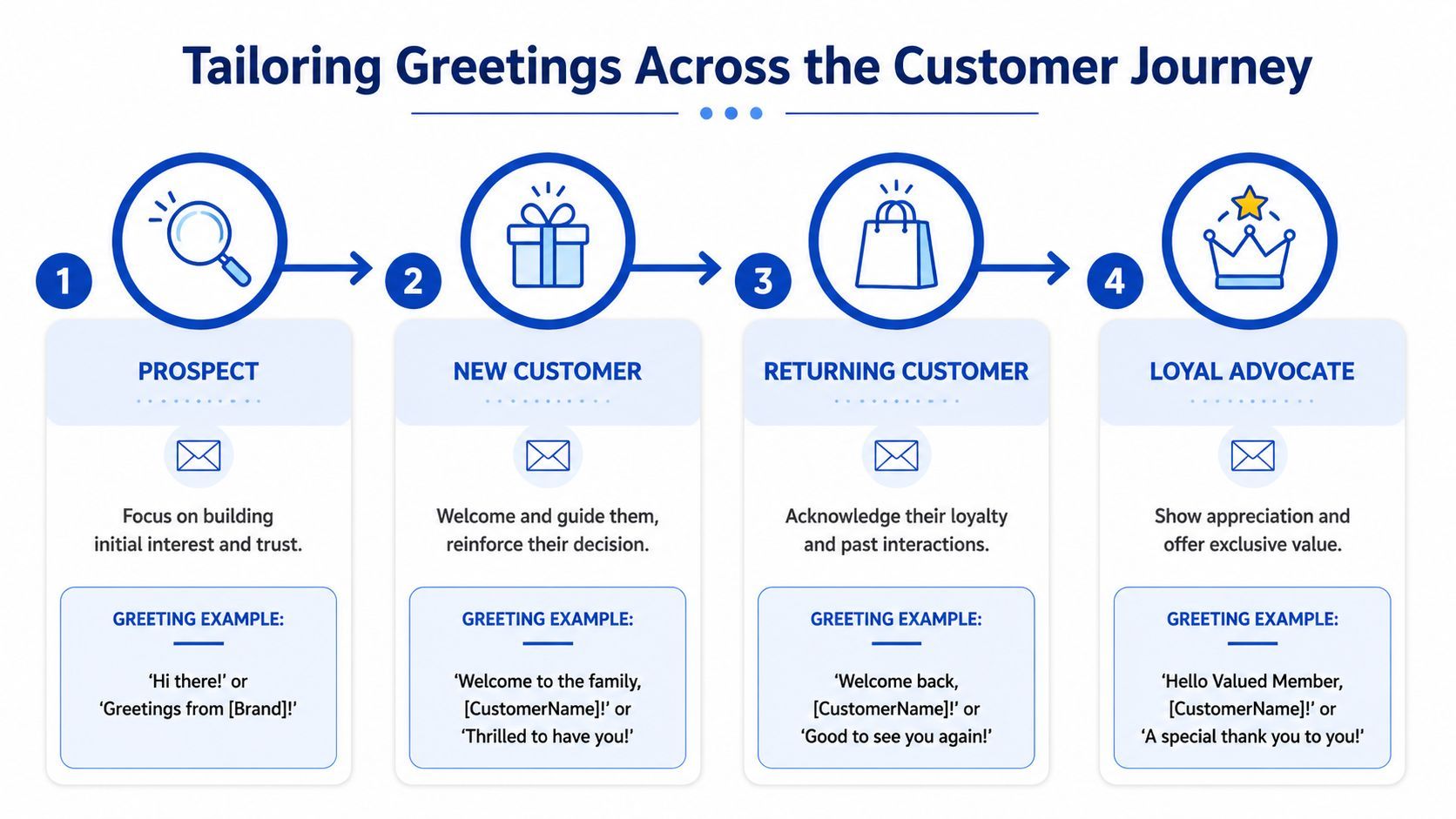
A greeting shouldn’t stay static while the relationship changes.
The same customer might discover your store on Monday, ask a product question on Tuesday, place an order on Wednesday, contact support on Friday, and return a month later for another purchase. If every email opens the same way, your brand sounds blind to context.
Pre-sale enquiries
A first-time visitor who asks about sizing or ingredients needs reassurance. They don’t know your team yet, so the greeting should feel welcoming without pretending there’s already a relationship.
If you have a name, “Hi Aisha” works well. If you don’t, “Hello” or “Hi there” can still feel service-oriented. The mistake here is sounding too scripted. A product advice email should read like a shop assistant helping someone choose, not like a ticketing system firing off a canned response.
For returning visitors who haven’t purchased yet, you can warm the tone slightly. A greeting like “Hi Daniel” still works, but the body can acknowledge familiarity: “Thanks for getting back in touch about the oak finish.”
Order updates
Transactional emails are easy to neglect because they’re operational. But customers open them with emotion. They may be excited, anxious about delivery, or checking whether they made the right decision.
That means the greeting should be simple and stable. “Hi Priya” is often enough. You don’t need to force personality into a dispatch or delay message. You do need to avoid sounding cold.
Three strong habits help here:
- Keep it calm: A shipping confirmation should feel reassuring, not salesy.
- Match urgency to reality: If there’s a delay, don’t open with chirpy language.
- Use consistency: The order update should sound like the same brand that welcomed the sale.
A thoughtful greeting reinforces trust at the exact moment customers want certainty.
Customer support and complaint handling
Many brands often get the tone wrong.
If the customer is frustrated, the greeting should lower tension, not raise it. “Hi Michael” or “Hello Michael” is usually safer than “Hey Michael!”. Casual language can feel dismissive when someone is asking for a replacement or refund.
The greeting also shouldn’t overperform empathy. A dramatic opener can seem insincere if the body of the email moves straight into policy language.
A complaint email doesn’t need emotional theatre. It needs steadiness, clarity, and respect.
For multi-message support threads, your greeting can evolve. The first reply might be slightly more formal. Once the issue is understood and the conversation becomes collaborative, the tone can soften.
If you also use on-site chat before email follow-up, aligning the handoff matters. Your website welcome message strategy should lead naturally into the greeting style customers later see in their inbox.
Winback and loyalty moments
Winback emails are different from support emails because they rely on memory and goodwill. You’re reminding the customer who you are and why they liked you.
For a recent repeat buyer, “Hi Emma” is usually enough. For a long-lapsed customer, “Hello Emma” may feel more appropriate if you’re reintroducing the relationship. For loyalty or VIP communication, the greeting can acknowledge their status without becoming awkwardly grand.
Try to match greeting tone to the emotional ask:
- Soft reactivation: Warm, low-pressure
- VIP reward: Appreciative and polished
- Product restock for past buyer: Familiar and direct
The useful question is not “What’s our brand voice?” on its own. It’s “What should this customer hear from us at this exact point in the journey?”
Personalisation and Localisation Beyond the First Name
Many brands think personalisation begins and ends with a merge tag. It doesn’t. In some cases, using a first name badly is worse than not using one at all.
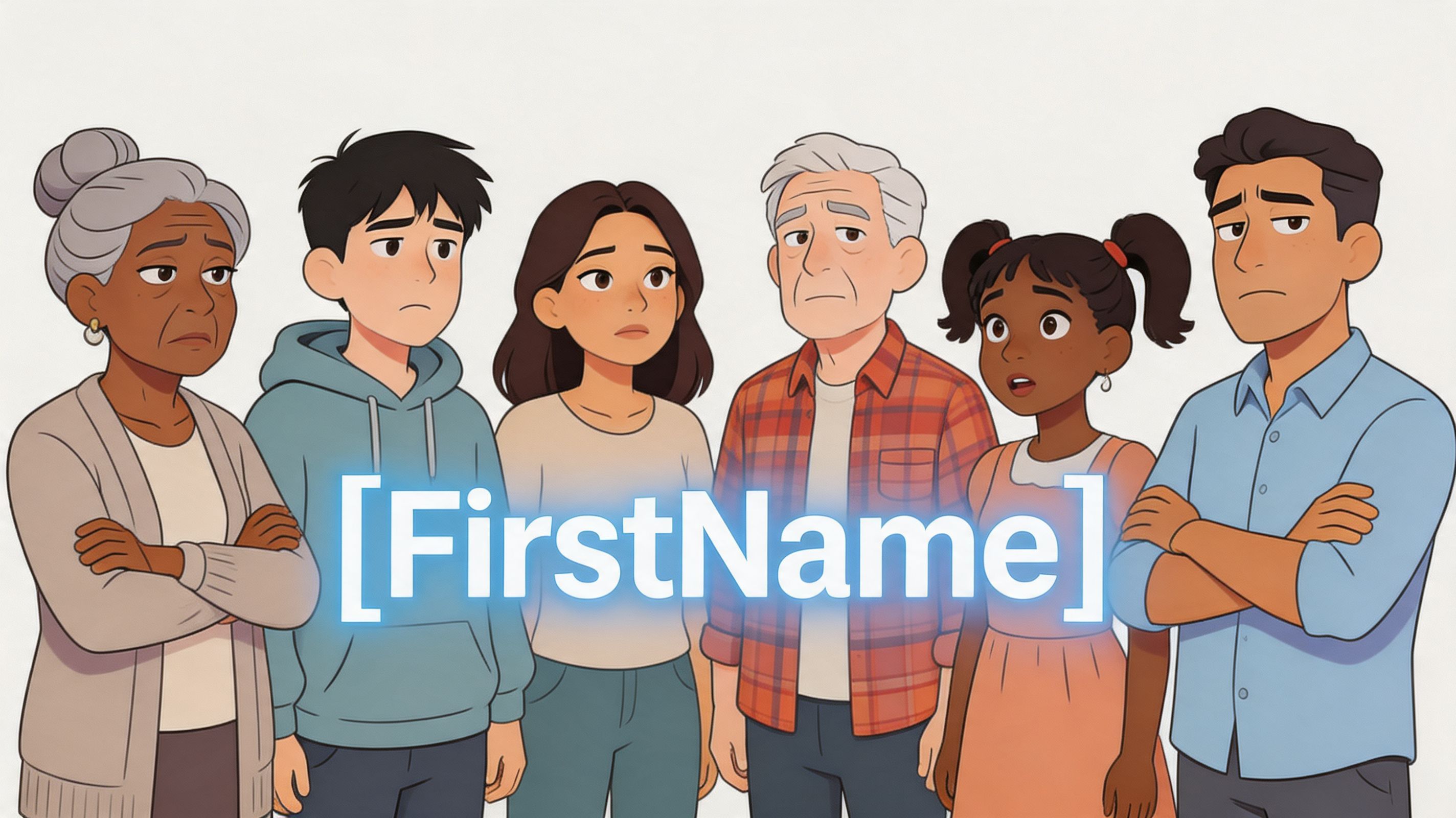
UK email etiquette data shows that 45% of professionals have received emails with their name misspelled, and 30% of UK adults dislike “text speak”, favouring more formal openers in professional contexts, according to Mailbird’s UK email etiquette statistics roundup. For ecommerce, that’s a sharp warning. A clumsy attempt at familiarity can damage trust fast.
Why first-name personalisation often fails
The most common problems are ordinary ones:
- Bad data: The name field contains a typo, nickname, or all lowercase entry.
- Wrong tone: “Hey Jess!!” doesn’t suit every audience.
- Context mismatch: A playful greeting lands badly in a serious support exchange.
- Cultural mismatch: The same opener won’t feel right in every region or customer segment.
That means personalisation needs validation, not blind automation. If your CRM says the customer’s name is “test”, “mum”, or a one-letter entry, the system should know when to fall back to “Hi there” or “Hello”.
Smarter ways to personalise greetings
A better approach uses context around the name, not just the name itself.
For example:
- Time-aware greeting: “Good morning, Sarah” for a local morning send
- Relationship-aware greeting: “Welcome back, Sarah” for a returning customer
- Channel-aware greeting: A support follow-up may need “Hello Sarah” even if campaigns use “Hi Sarah”
- Region-aware phrasing: UK audiences often prefer straightforward, natural language over overly casual slang
A lot of brands overestimate how “friendly” they should sound. Friendly isn’t the same as informal. Friendly means the customer feels understood.
This short video gives a useful view of how greeting choices shape professional tone:
Use customer data carefully
If you want greetings in email to feel thoughtful, pull from the right systems. Shopify customer records, support history, location, and previous order behaviour can all inform your opening line. But the data needs rules around it.
That’s where a connected CRM in ecommerce becomes useful. It helps you decide not only what you know about the customer, but whether that information should shape the greeting at all.
The best personalised greeting doesn’t show off your data. It shows restraint.
Automating Perfect Greetings with Marvyn AI
Manual personalisation sounds great until your inbox fills up.
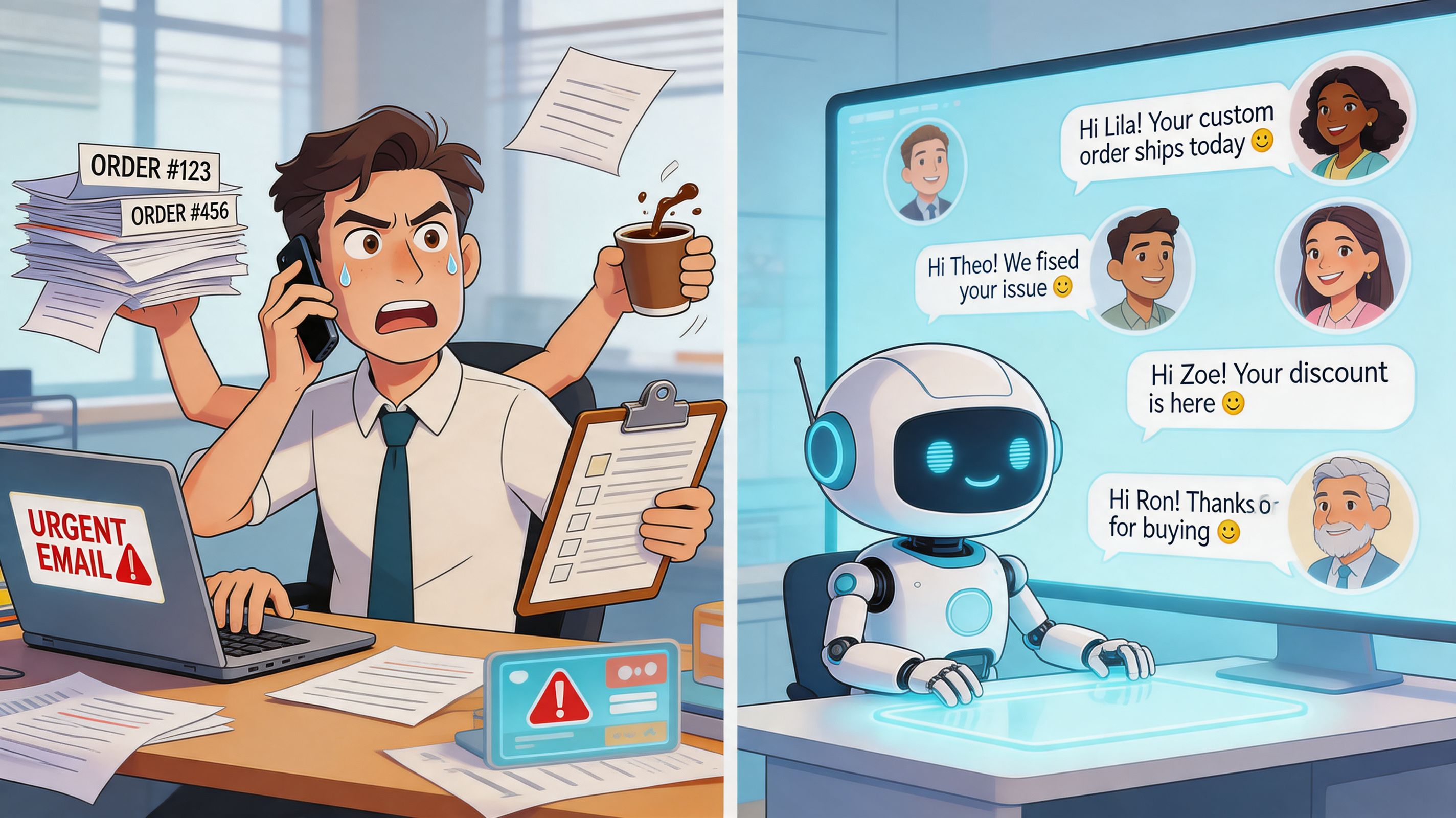
A solo founder can choose the right greeting for ten emails a day. A growing Shopify brand handling product questions, shipping queries, returns, and post-purchase follow-ups can’t rely on everyone making perfect tone decisions by instinct. One person writes warmly, another writes abruptly, and your automations use an entirely different voice.
That inconsistency shows up in customer experience long before a team notices it internally.
Why manual greeting logic breaks at scale
The issue isn’t just volume. It’s decision fatigue.
Every message asks for micro-judgements:
- Is this customer new or returning?
- Is this a support case or a sales conversation?
- Do we have a reliable first name?
- Should this email sound efficient, warm, apologetic, or celebratory?
- Does this match the brand voice used on-site and in chat?
Humans can make those calls. They just can’t make them perfectly and repeatedly across every interaction when the queue is busy.
That’s where automation helps. Not the old kind that pastes “Hi {FirstName}” into every template. The useful kind reads context and applies the right rule.
What context-aware greeting automation should do
For Shopify stores, a strong system should be able to:
- Pull clean customer data
It should use order history, customer profile details, and prior interactions without blindly trusting bad name fields.
- Read the message context
A pre-sale product question needs a different tone from a damaged-order complaint.
- Apply your brand voice
A luxury interiors brand and a playful pet-accessories store shouldn’t greet customers the same way.
- Choose a fallback when data is weak
If the customer name looks unreliable, the system should switch gracefully to a neutral greeting.
- Stay consistent across channels
Your website chat, support replies, and follow-up emails should sound connected.
What this looks like in practice
Say a shopper asks whether a blazer runs small. The system identifies a pre-purchase question from a first-time visitor. It uses a welcoming, low-pressure greeting.
Another customer writes in after a delayed delivery. The system sees a post-purchase support issue and shifts to a steadier, more formal opening.
A loyal repeat buyer comes back asking whether their favourite candle scent will be restocked. The greeting can be warmer because the relationship is established and the tone can reflect recognition.
None of that requires your team to rewrite from scratch every time. It requires rules, data, and a tool that can execute them consistently.
Where Marvyn AI fits
Marvyn AI is built for this kind of ecommerce communication. It connects with Shopify, syncs store knowledge, and handles customer conversations in a way that reflects context rather than treating every interaction as identical. For growing brands, that matters because greetings are only one layer of a larger support and sales workflow.
The practical advantage is control. You can set the tone you want, keep it aligned with your store, and avoid the common problems that happen when replies are rushed or inconsistent. Instead of relying on a patchwork of templates, team habits, and guesswork, you can create a system that responds appropriately across browsing, buying, and support moments.
If you want to evaluate whether this kind of setup fits your store, review the Marvyn AI feature set for Shopify brands. Look specifically at how it supports brand customisation, conversation handling, and scalable customer communication.
Good greetings don’t come from writing fifty clever templates. They come from building a system that knows when each tone belongs.
For Shopify operators, that’s the shift that matters. Stop treating greetings in email as a copy choice made at the last minute. Treat them as part of conversion, retention, and customer trust.
If your store is growing and you’re tired of inconsistent replies, generic templates, and support messages that don’t match your brand, Marvyn AI can help you automate customer conversations with the right tone from the first word. It gives Shopify brands a practical way to deliver faster, more relevant replies without adding more manual work to the team.