Master Apologise Email to Customer: Build Loyalty
A customer emails at 8:12 a.m. asking where their order is. By 9:03, they’ve sent a second message. At 10:17, they’ve left a negative review because no one replied, the tracking page still hasn’t updated, and now they assume you’re avoiding them.
That sequence is common in Shopify stores. The original problem might be a courier delay, a stock sync error, or a warehouse pick mistake. The churn risk often comes from the silence that follows.
A strong apologise email to customer process fixes more than tone. It gives customers quick acknowledgement, a clear path to resolution, and a reason to trust you again. For busy founders, that means treating apologies as an operating system, not a one-off writing task.
Why a Great Apology Is Your Secret Retention Tool
Most founders see apology emails as admin. They sit in the support queue with refund requests, tracking complaints, and “this arrived damaged” messages. That’s the wrong frame.
An apology is one of the few moments when a customer is paying very close attention to your brand. They want to know three things. Did you hear me, do you care, and are you going to fix this without making me work for it?
Bad complaint handling costs more than the refund
In UK ecommerce, weak complaint handling doesn’t just create an unhappy ticket. A 2023 UK Customer Satisfaction Index report found that poor complaint handling leads to a 15 to 20% higher customer defection rate, while a survey of UK Shopify merchants found that timely apology communications boost customer retention by 28% according to this summary of UK apology email benchmarks.
That gap matters because most stores don’t lose customers only when the parcel is late. They lose them when the customer has to chase for updates, repeat the problem, and decode vague replies.
A practical apology system does four jobs at once:
- Reduces uncertainty: Customers relax once they know someone is handling the issue.
- Protects repeat purchase behaviour: A resolved complaint can keep a customer in your retention flow.
- Limits public fallout: Fast private resolution often prevents public escalation.
- Exposes operational weak spots: Late delivery apologies, wrong-item apologies, and refund apologies usually point to recurring backend problems.
If you also manage review channels, the same principles apply in public. The playbook for responding to negative reviews is useful because it forces the same discipline: acknowledge specifics, avoid defensiveness, and show action.
The apology is part of operations, not just support
The stores that handle this well usually stop thinking in terms of “writing a nice email”. They build triggers, response rules, and escalation paths. They know what gets sent when a parcel misses its delivery window. They know who approves compensation. They know which cases need a human reply and which can start with an immediate acknowledgement.
A late apology tells the customer your process failed twice. First in fulfilment, then in communication.
That’s why apology handling belongs with retention, CX, and operations. If you need a broader framework for de-escalating complaints before they spill into churn, this guide on how to handle a disgruntled customer is a useful companion.
A customer problem handled well doesn’t become invisible. But it can become recoverable, and in many stores that’s the difference between a one-time buyer and someone who comes back.
The Anatomy of a Perfect Apology Email
A good apology email is simple to read and hard to misinterpret. It doesn’t hide behind polished language. It tells the customer what happened, what you’re doing, and what happens next.
Start fast and name the issue
Speed comes before elegance. UK Institute of Customer Service data shows that delaying an apology email beyond 24 hours reduces resolution satisfaction by 28%, and language that takes ownership such as “I take responsibility” can boost trust recovery by 42% according to this breakdown of apology email practice.
The first sentence should prove you understand the exact problem.
Good:
I’m sorry that your order from Friday still hasn’t arrived, and I understand that’s frustrating.
Weak:
We apologise for any inconvenience caused.
The first version is anchored in the customer’s reality. The second sounds like a compliance template.
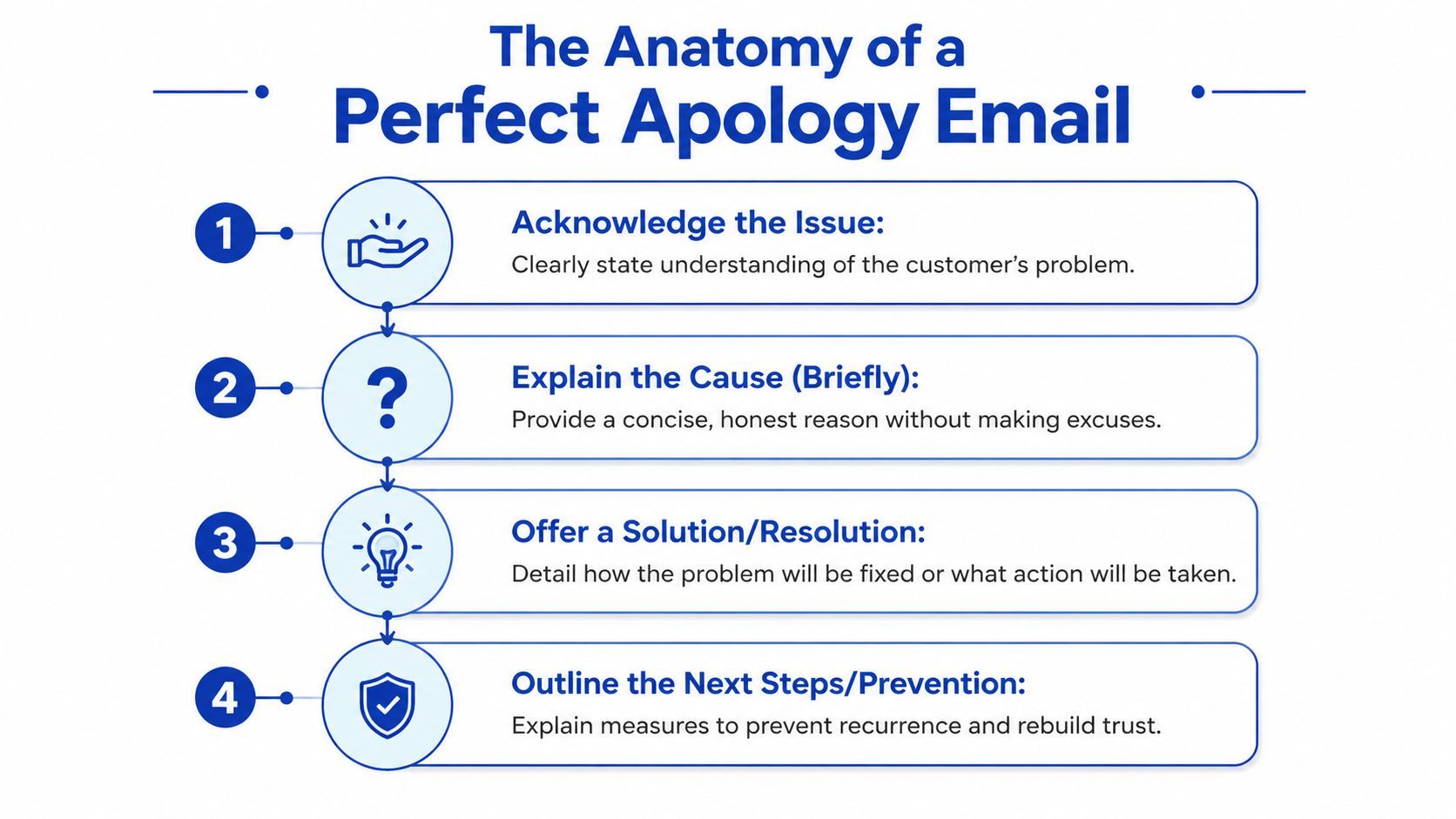
Use a four-part structure that always holds up
I use a straightforward sequence for nearly every apology email.
- Acknowledge the exact failure
Mention the specific order, item, shipment, or interaction. Generic apologies create friction because they make customers feel unseen.
- Take responsibility clearly
Say “we got this wrong” or “I take responsibility for the delay in updating you”. Don’t use passive wording like “mistakes were made”.
- State the fix in plain language
Tell them what action has already happened. Replacement sent. Refund processed. Warehouse flagged. Courier chased. Give only details you can stand behind.
- Explain what happens next
Include timing, the next checkpoint, and how to reply if the issue still isn’t resolved.
Practical rule: If the customer has to email back to ask “So what happens now?”, the apology wasn’t finished.
Keep the explanation brief
Customers do want context. They don’t want a defensive essay about your 3PL, weekend volumes, or a platform glitch.
A short explanation works best when it does one job only: make the issue understandable without shifting blame.
Try this:
- For a stock error: We had a stock sync issue and sold an item that was no longer available.
- For a dispatch delay: Your parcel missed the planned dispatch window at our warehouse.
- For a support delay: We were slower than we should have been in replying to your message.
Avoid:
- Supplier blame: Our supplier let us down.
- Diffuse wording: There were some unforeseen circumstances.
- Overlong detail: A full timeline of internal handoffs and tool failures.
Write for a stressed reader
Customers read apology emails while annoyed, distracted, and often on their phone. Short paragraphs help. So do visible action lines.
A solid structure looks like this:
- Opening: Direct apology and issue acknowledgement
- Middle: One-sentence cause, one-sentence fix
- Close: Next step, time commitment, contact path
If your support team needs examples of concise service language, this collection of email for customer service examples is useful for tightening replies without losing empathy.
The best apology emails don’t sound clever. They sound accountable.
Crafting Subject Lines and Openers That Rebuild Trust
If the email isn’t opened, the apology might as well not exist. That’s why the subject line is operational, not cosmetic.
Apology emails can outperform normal retail campaigns by a wide margin. Some UK campaigns have seen 85.1% open rates compared with the 22.5% retail average, according to this article on apology email engagement. Customers are actively looking for resolution. Your subject line needs to help them find it.
Subject lines that work in ecommerce
The best apology subject lines are specific, calm, and easy to scan in an inbox full of promotions.
Here are the patterns that consistently work better than vague phrasing:
- Order clarity: Sorry about your order #18427
- Issue clarity: Update on your delayed delivery
- Ownership: We got your order wrong. Here’s the fix
- Reassurance: We’re sorry. Your replacement has been sent
- Service follow-up: Update on the issue you reported today
What usually fails:
- Too generic: Important update
- Too salesy: A little something to make it right
- Too corporate: Regarding your recent service experience
- Too soft: Following up on your enquiry
A customer who’s upset wants signal, not spin.
The opener should lower temperature immediately
The first line should remove ambiguity. Don’t thank them for patience before you’ve acknowledged the problem. Don’t bury the apology under branding language.
Use openers like these:
I’m sorry your package hasn’t arrived when it should have.
We sent the wrong item in your order, and that’s our mistake.
We were too slow replying to your message, and I understand why that was frustrating.
Those lines work because they do three things fast. They identify the issue, accept responsibility, and match the customer’s emotional state.
For teams trying to improve the first few words of every message, this guide to greetings in email helps sharpen your openings without making them stiff.
Match the subject line to the scenario
Different failures need different signals. A delayed order needs reassurance. A damaged item needs action. A stock cancellation needs honesty.
A simple scenario map helps:
Video walkthroughs can help teams hear tone more clearly than they can read it on a page:
The test is simple. If the customer reads the subject line and opener and thinks “good, someone’s handling this”, you’ve passed the first hurdle.
Customisable Templates for Common Ecommerce Scenarios
Templates save time. Bad templates create more work because customers reply to ask basic questions your first email should have answered.
The fix is to build scenario-specific templates with controlled variables. Don’t keep one master apology and swap the product name. Keep separate versions for delays, damage, wrong item, and oversells. Each one should reflect the customer’s real frustration.
Apology Remediation Matrix
For more examples across service situations, this library of apology message to customer examples is worth bookmarking.
Template for a shipping delay
A shipping delay apology should reduce uncertainty first. Compensation is secondary unless the delay is significant.
Subject: Sorry about the delay with order [#ORDER]
Hi [Customer Name],
I’m sorry that your order [#ORDER] hasn’t arrived on time.
We’ve checked the shipment and can confirm that it is currently [STATUS]. We should have updated you sooner, and that’s on us.
Here’s what we’ve done today:
- contacted the carrier for the latest status
- flagged your order for priority follow-up
- [included a goodwill offer if appropriate]
If there’s no movement by [DATE/TIME], we’ll contact you again with the next step. If you need this resolved urgently, reply to this email and we’ll handle it directly.
Best,
[Name]
Why this works: it answers the customer’s immediate question. Where is it, what are you doing, and when will I hear from you again?
Template for a damaged item
A damaged item email needs decisive action. Don’t ask for five photos and a form before showing intent to fix it.
Subject: We’re sorry your item arrived damaged
Hi [Customer Name],
I’m sorry your [PRODUCT NAME] arrived damaged.
That’s not the condition it should have reached you in, and I take responsibility for putting this right. We can [send a replacement / issue a refund], and we’ve already started that process.
Your next step is simple: [one clear instruction only]. If easier, reply with a photo and we’ll take it from there.
We’re also reviewing this with our packing team to prevent a repeat.
Best,
[Name]
The important part is friction removal. Don’t make the customer build a case against you.
The more effort you require after your mistake, the less sincere the apology feels.
Template for the wrong item received
This one needs precision. Customers hate ambiguity when your warehouse sent the wrong thing.
Subject: We sent the wrong item. We’re fixing it.
Hi [Customer Name],
I’m sorry we sent [WRONG ITEM] instead of [CORRECT ITEM].
That was our fulfilment error. We’ve arranged for the correct item to be [shipped today / shipped by DATE]. [Return instructions, if needed, should be one sentence and easy to follow.]
As an apology, we’ve also included [GOODWILL GESTURE if appropriate].
If anything in the replacement details looks off, reply directly and we’ll correct it straight away.
Best,
[Name]
Template for an out-of-stock order
This is one of the hardest emails to send because you’re admitting you took payment for something unavailable. Honesty matters more than polish.
Subject: We’re sorry. Your item is no longer available
Hi [Customer Name],
I’m sorry, but the item you ordered, [PRODUCT NAME], is no longer available.
We discovered a stock error after your order was placed. We should not have let you buy an item we couldn’t fulfil.
You can choose either of these options:
- a full refund to your original payment method
- help selecting a similar item from our current stock
If you’d like an alternative, reply and we’ll send options that match your original choice as closely as possible.
Best,
[Name]
A useful rule across all templates is this: only include offers you can fulfil automatically or approve quickly. Nothing makes an apology email worse than promising a fix your team then has to renegotiate.
Beyond the Template Personalisation Tone and Timing
A template gets you to competent. Personalisation, tone, and timing are what make the message feel human.
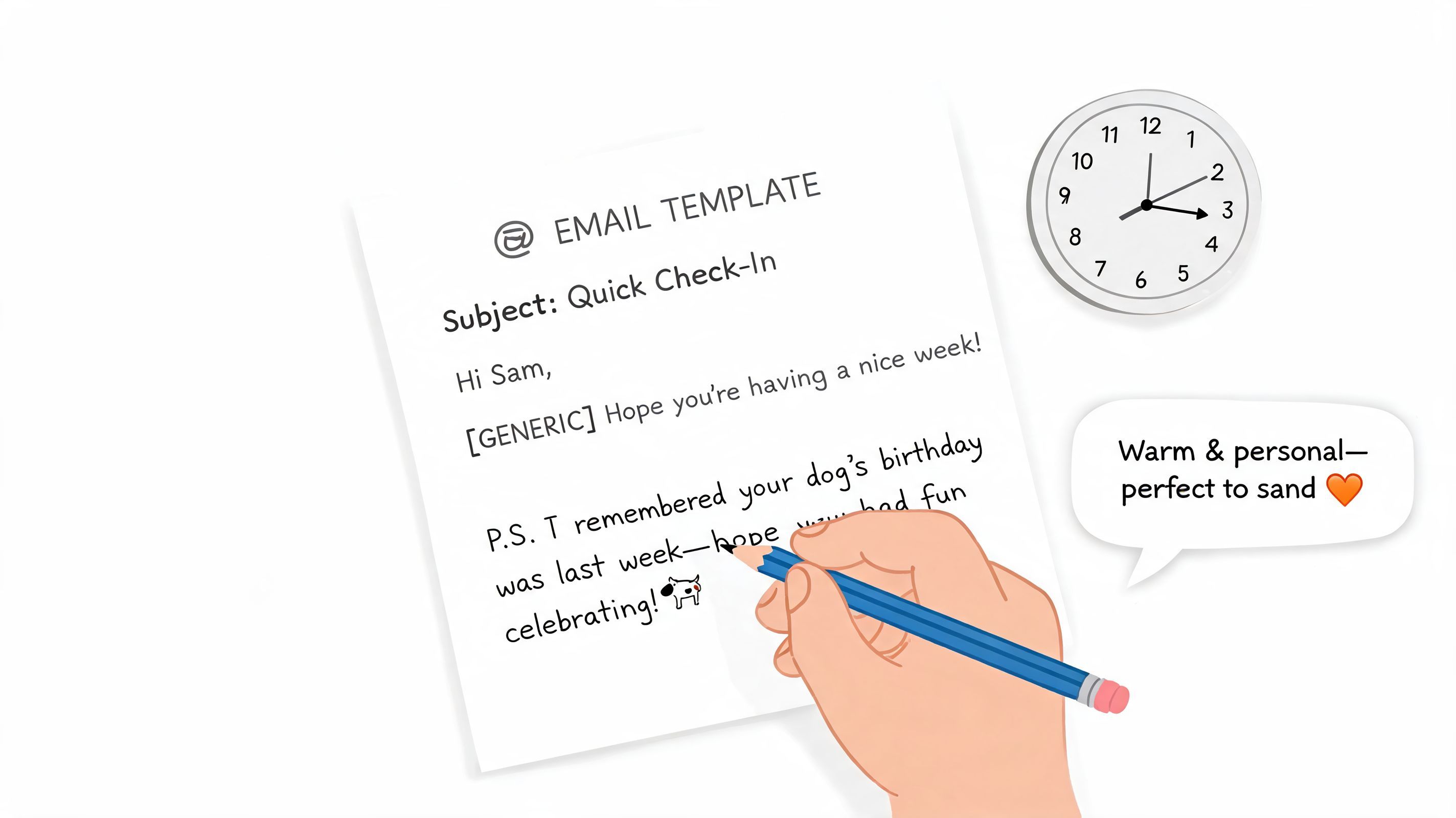
Customers can tell when you’ve inserted their first name into a standard block of text and called it personal. Real personalisation references the exact order, the actual inconvenience, and the fix that fits that situation.
Personalise the problem, not just the greeting
If the issue was a delayed gift order, say that. If the customer has already contacted you twice, acknowledge it. If they ordered a high-ticket item and your support reply took too long, your tone should reflect that seriousness.
Useful details to include:
- Order context: product name, order number, dispatch date
- Customer effort: mention prior messages or failed attempts to resolve
- Practical impact: missed delivery window, incorrect size, damaged packaging
- Specific next step: what your team has already done
That level of detail confirms to the customer a person read the case.
Tone should fit your brand, but sincerity comes first
A playful brand can still apologise well. A premium brand can still sound warm. The mistake is forcing brand voice so hard that the apology feels staged.
A few examples:
- Playful brand, done well: Sorry. We got this one wrong, and we’re fixing it now.
- Premium brand, done well: I’m sorry your order arrived in this condition. We’ve arranged a replacement immediately.
- Founder-led store, done well: I’ve reviewed this personally, and we should have handled it better from the start.
What doesn’t work is sounding cute when the customer is annoyed. Save wit for recovery, not the opening line.
A brand voice should shape the wording. It should never soften accountability.
Timing changes how the same words are received
Message quality matters, but timing changes whether the customer reads it as help or delay. UK-specific benchmarks reported in this email design guide show that A/B tested subject lines can achieve 52% open rates versus 31% for generic ones, and because 68% of UK email opens are on mobile, apology emails need short paragraphs and bolded key actions.
That creates a practical standard for ecommerce teams:
- Send the first acknowledgement quickly: don’t wait until the full investigation is finished
- Format for mobile: short blocks, obvious action lines, no dense paragraphs
- Use follow-ups intentionally: update before the customer has to chase
- Bold only the key action: refund issued, replacement sent, update by tomorrow
The strongest apology emails feel written for one person, on a small screen, during a frustrating moment. That’s the bar.
Automating Responses and Measuring Success
The biggest gap in most apology workflows isn’t wording. It’s response speed.
A founder can write a thoughtful reply. What they usually can’t do is write it at 11:40 p.m., during a product launch, while handling fulfilment issues and ad comments. That delay is where frustration grows.
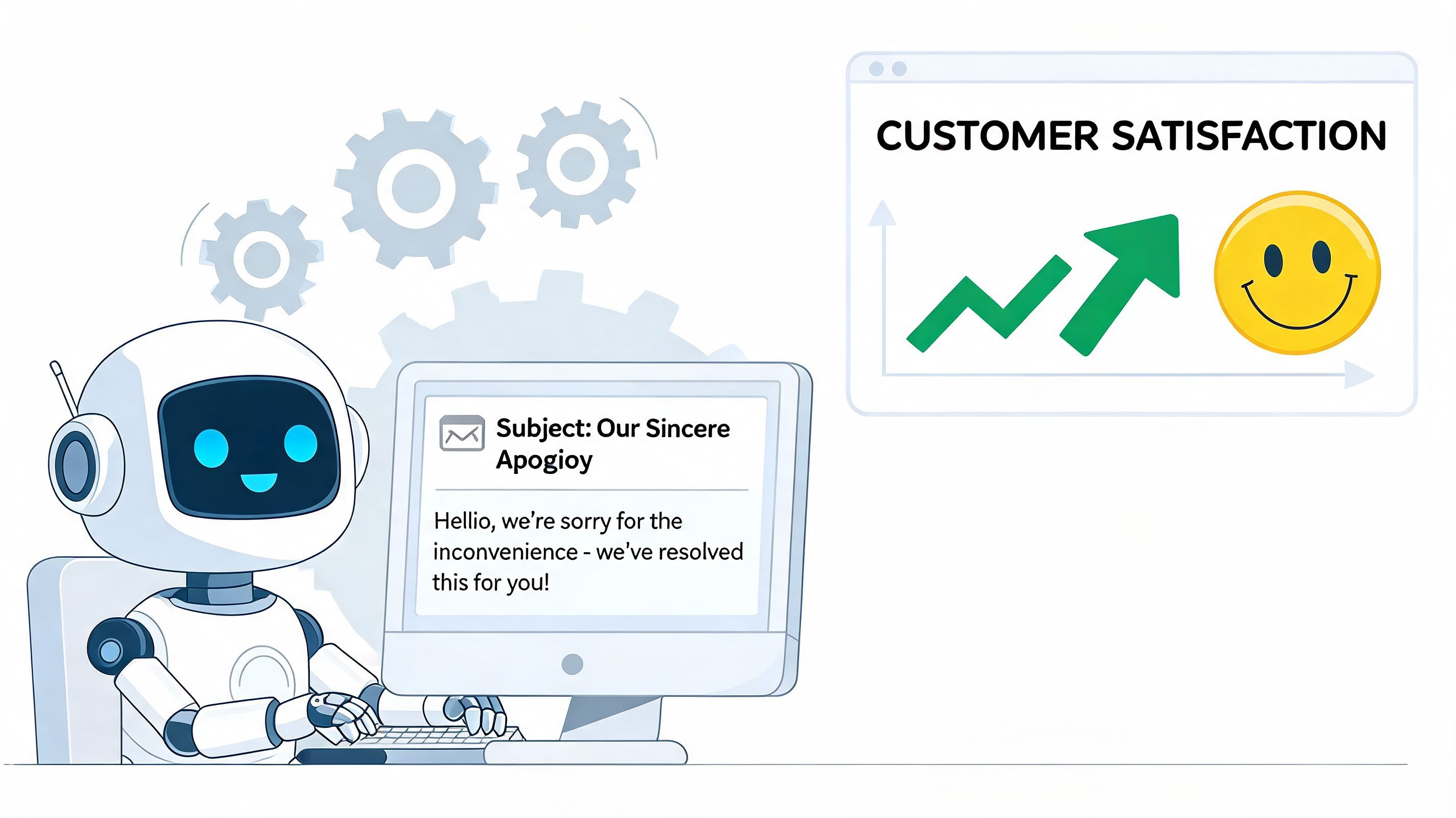
Systematised empathy beats slow perfection
The most underserved part of apology handling is response speed. Many guides focus on what to write, but the immediate frustration often comes from waiting. This overview of apology email timing highlights that gap and notes the value of instant acknowledgement.
That’s where automation earns its place. Not as a replacement for judgement, but as the first layer of reassurance.
A practical setup looks like this:
- Instant acknowledgement for common issues: delayed delivery, wrong item, damaged product, refund request
- Structured data capture: order number, issue type, photo upload, urgency
- Clear escalation rules: VIP orders, repeated contacts, high-value purchases, angry language
- Human follow-up for exceptions: complex compensation, repeated failures, emotionally charged cases
One option is customer service automation that handles the first response, gathers order context, and escalates edge cases to a person. Used properly, that keeps the initial reply fast without making the whole experience robotic.
A tool like Marvyn AI is suitable. It can automate the first acknowledgement layer for Shopify stores, answer common order and policy questions, and escalate when a human needs to step in.
Measure the apology system, not just the email
If you only track opens and clicks, you’ll miss whether your apologies are repairing trust.
The better scorecard is operational:
- Post-complaint retention: do customers buy again after the issue?
- Time to first acknowledgement: how long before they know you’ve seen it?
- Time to resolution: how quickly does the issue close?
- Repeat contact rate: did they need to chase for the same problem?
- Review recovery: do negative reviews get updated or balanced by later feedback?
- Reason tagging: are the same apology types appearing every week?
Fast acknowledgement calms the customer. Root-cause tracking protects the business.
Build the closed loop
An apology system only works when it feeds back into operations. If you send twenty “sorry for the delay” emails every week and nothing changes in warehouse cut-off management, carrier selection, or stock sync logic, the email team is cleaning up for the ops team.
Review apology categories monthly. Look for repeated triggers. Tighten the handoff between support, fulfilment, and merchandising. The goal isn’t to become better at apologising forever. It’s to reduce how often you need to do it.
A strong apologise email to customer workflow does both. It protects the relationship now and improves the store later.
If your Shopify store is drowning in repetitive support tickets, Marvyn AI can help you build a faster apology and resolution workflow by handling common customer questions, sending immediate first-line responses, and routing complex cases to a human when judgement matters most.