Best Chatbot for Customer Service: 2026 Guide
A lot of Shopify founders arrive at the same point the same way. A customer lands on a product page late at night, hesitates over shipping, sizing, returns, or compatibility, opens chat, gets no useful answer, and leaves.
That moment looks small, but it changes how you should think about customer service. You’re not only deciding how to answer tickets. You’re deciding whether your support stack helps people buy, helps them trust you, and helps your team stay sane as the store grows.
The best chatbot for customer service isn’t the tool with the longest feature list. It’s the one that matches how your business sells. A low-SKU store with simple delivery rules needs something very different from a high-ticket brand where buyers ask detailed pre-purchase questions before they commit.
I’d frame the decision this way. You’re no longer just hiring digital help. You’re choosing an operating model. Some merchants still manage agents. The stronger operators increasingly manage automation, knowledge, escalation paths, and conversion flows instead.
A good chatbot can take repetitive work off your plate. A bad one creates a second support queue, only this time customers get frustrated before a human ever sees the issue.
That’s why the choice matters early. Once your catalogue expands, traffic widens across time zones, and support conversations start affecting sales, switching platforms gets messier than most merchants expect.
Choosing Your First Line of Defence in E-commerce
At midnight, your customer doesn’t care whether you call it support automation, conversational AI, or pre-sales assistance. They want an answer before they abandon the basket.
For a Shopify merchant, that’s the primary job of a chatbot. It’s the first line of defence against lost revenue, repeat questions, and founder burnout. If it can answer clearly, guide the shopper, and hand off the edge cases properly, it protects both conversion and operations.
The shift from staffing support to designing service
Many stores still buy chat tools as if they’re buying a cheaper support rep. That’s the wrong lens.
The smarter lens is operational design. You’re deciding:
- What should be automated: shipping questions, returns, stock checks, product comparisons, policy clarifications.
- What should stay human: damaged orders, exceptions, emotional complaints, unusual edge cases.
- What should influence sales: recommendation flows, bundle suggestions, product fit guidance.
This is why a help centre still matters. If your source material is weak, your chatbot will only automate confusion. A clean, structured knowledge base gives any automation layer a better foundation, and a well-organised Shopify help centre makes that easier.
Practical rule: If a question appears every week, your store should not rely on a human to answer it every time.
What the right choice changes
When merchants choose well, the impact goes beyond response speed.
A useful customer service chatbot can:
- Protect sales after hours: especially when pre-purchase hesitation is the only thing blocking checkout.
- Reduce repetitive admin: your team stops rewriting the same delivery and returns answers.
- Keep service quality steadier: customers get consistent responses, not whichever answer a tired agent happened to type.
- Create operational breathing room: founders and CX managers spend more time improving flows, less time clearing queues.
The best chatbot for customer service is usually the one that fits your business model with the least friction. If your store wins on fast-moving orders, your automation should focus on speed and containment. If your store wins on considered purchases, your automation should behave more like a sales assistant than an FAQ box.
Understanding the Three Types of E-commerce Chatbots
Most merchants compare chatbot tools by brand name first. That’s backwards. Start by identifying the type of system you’re looking at, because that tells you how it will behave once customers start asking real questions.
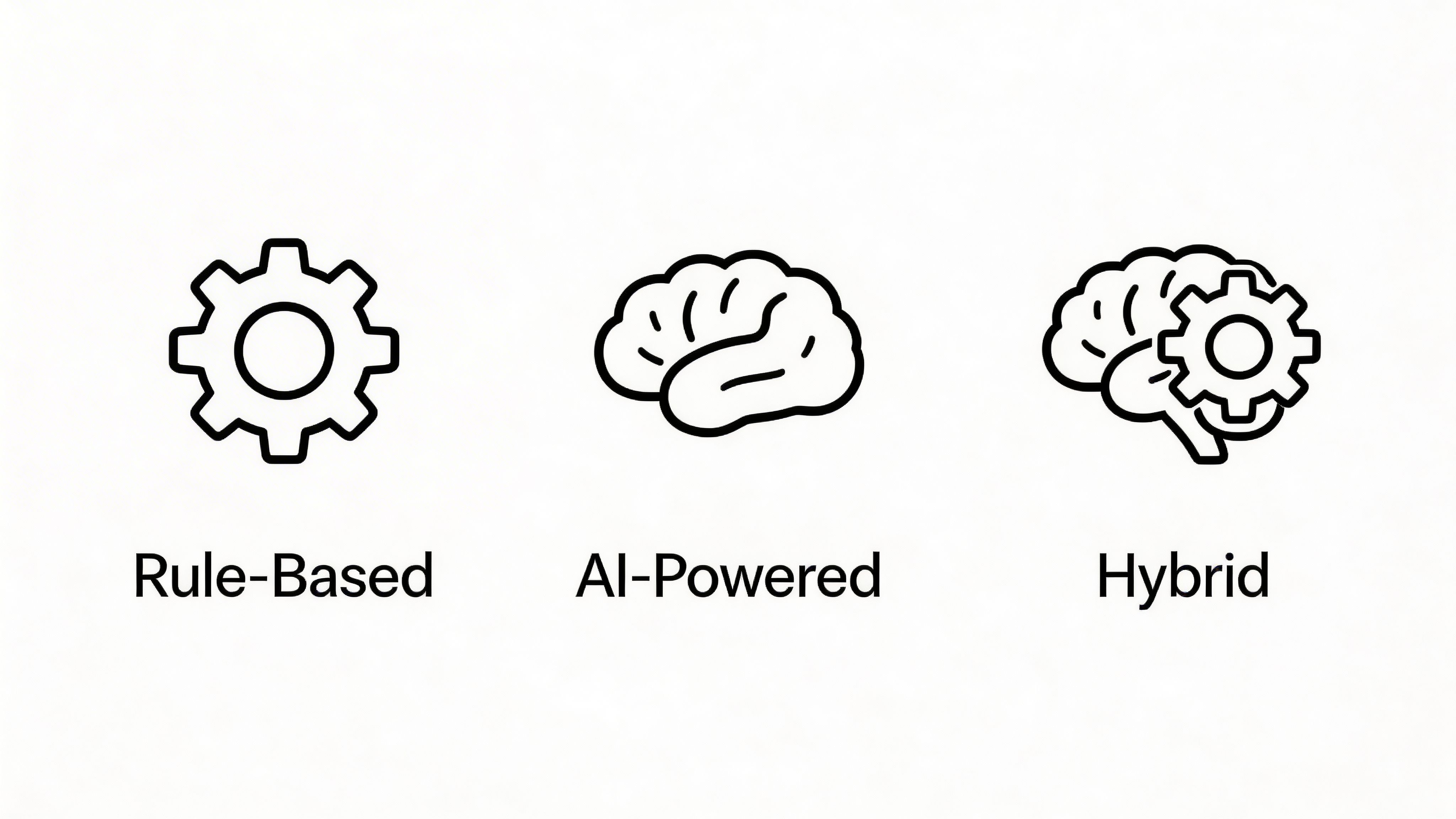
Rule-based bots
A rule-based bot is basically your FAQ turned into a decision tree.
It works well when customers ask narrow, repeatable questions in predictable language. “Where’s my order?” “What’s your return policy?” “Do you ship to the UK?” If the flow is simple, rule-based bots can feel tidy and efficient.
They struggle when real conversations stop being tidy.
A shopper might ask, “I’m between sizes, need this by Friday, and want to know if returns are free if the fit is off.” That’s one message, but it contains multiple intents. A rule-based bot usually can’t handle that naturally. It asks the customer to choose from buttons, restart the path, or wait for a human.
Use this category if your catalogue is simple and your support demand is mostly transactional.
Hybrid or AI-assisted bots
Hybrid bots sit in the middle. Part of the experience is scripted. Part is AI-driven.
That can be useful if you want control over key flows but more flexibility in how the bot interprets customer phrasing. In practice, this often means rules for high-risk tasks and AI for answering broader questions.
The upside is balance. The downside is operational complexity. Someone has to manage where scripted logic ends, where AI begins, and how the handoff behaves when the customer lands between the two.
Hybrid systems often look strong in demos because the scripted parts are polished. The test is what happens when a customer asks a messy question that crosses products, policies, and purchase intent.
For many Shopify stores, this category is attractive because it feels safer than full autonomy. But it can also produce the most inconsistent experience if the setup isn’t disciplined.
Fully autonomous AI bots
A fully autonomous AI bot is the closest thing to a capable digital sales and support associate.
Instead of waiting for button clicks, it interprets intent, handles natural phrasing, pulls from approved knowledge, and can guide customers toward a purchase. That matters for stores where support and sales overlap heavily.
The market gap is notable. UK Shopify merchants still face a shortage of free, autonomous AI chatbots built for product catalogue syncing and pre-sales guidance, while many mainstream round-ups still lean toward paid enterprise tools such as Zendesk AI at $55 per agent per month and Ada’s custom sales-led model, rather than highlighting zero-cost Shopify-native options that can automate 70% of service and support AOV growth, as described in Zendesk’s own market overview of chatbot options for 2026 projections for customer service chatbots.
That matters because many merchants don’t need another helpdesk layer. They need a tool that understands products, policies, and shopper intent without a heavyweight implementation.
If you want to see how different conversational experiences show up in real stores, these chat bot examples are useful as a benchmark for what feels helpful versus what feels scripted.
A simple way to classify any tool
Before you buy, ask four quick questions:
- Does it rely mainly on buttons and flows? That’s rule-based.
- Does it mix fixed flows with AI responses? That’s hybrid.
- Can it answer broadly from synced store content and carry the conversation naturally? That’s closer to autonomous AI.
- Who manages it day to day? If the answer is “someone constantly updating paths”, you’re probably not buying true automation.
The Eight Pillars of a High-Performing Chatbot
Once you know the chatbot type, the next step is tougher. You need to judge whether it will work inside your actual operation.
I use eight pillars. Not because every merchant needs every feature, but because weak performance in any one of these areas usually shows up later as lost sales, bloated support overhead, or a poor handoff experience.
Shopify integration depth
This comes first because shallow integrations create shallow answers.
A chatbot should understand your product catalogue, collections, policies, and store content. If it can’t access the information shoppers need, it won’t reduce meaningful work. It will only redirect people to a human or a help article.
Ask whether the bot reads live store context or depends on manual copy-pasting from your team. Those are very different operating models.
Pricing model transparency
Some tools look cheap until conversations scale. Others look expensive but become easier to justify once volume rises.
Check for:
- Seat-based pricing: manageable if the bot mainly supports agents.
- Usage-based pricing: risky if your traffic spikes or your team can’t predict volume well.
- Hidden implementation costs: setup support, premium integrations, or paid upgrades for channels you assumed were included.
If the model is hard to understand before launch, forecasting ROI gets harder too.
Multilingual capability
For UK-based Shopify merchants, multilingual support matters earlier than many expect. It’s not only for global enterprise brands. It matters as soon as traffic starts arriving from outside your primary market.
A chatbot that can’t support multiple languages often forces one of two bad outcomes. Either customers get a lower-quality experience, or your team absorbs the complexity manually.
Actual automation rate
Many demos fail here.
A chatbot that answers a few FAQs but escalates most useful questions doesn’t transform operations. It just adds another interface. The key question is how much of your support load, and how much of your pre-sales questioning, it can resolve without creating more work downstream.
Treat this as an operational metric, not a vanity one.
Operational check: Don’t ask only “Can it answer questions?” Ask “What work disappears from my team’s queue if this performs well?”
Human escalation that preserves context
No serious merchant should want a bot to handle everything.
What matters is whether it knows when to step back, and whether the customer has to repeat themselves once a human joins. Good escalation preserves transcript context, issue summary, and relevant order or product details.
Bad escalation feels like starting over. That wipes out most of the goodwill automation created in the first place.
Customisation and brand control
Your chatbot should sound like your store, not like generic software.
That includes tone, visual styling, response boundaries, and the ability to train it on brand-specific FAQs or documents. For merchants with premium positioning, this matters even more. A clumsy chat experience can make the whole brand feel cheaper than it is.
If you’re shaping short response templates for repetitive conversations, even a basic example of auto reply can help clarify what your tone should sound like before you automate it.
Analytics and reporting
If you can’t see what the bot is doing, you can’t improve it.
Look for reporting that helps you answer practical questions:
- What topics come up most often
- Where escalations happen
- Which conversations influence purchase intent
- What content gaps keep causing failures
The best teams don’t “set and forget” chatbots. They review conversation patterns and tighten the system over time.
Conversion impact
This is the pillar many customer service teams underweight.
The best chatbot for customer service in e-commerce should support both service efficiency and buying confidence. That means answering policy questions quickly, but also helping customers choose products, compare options, and move closer to checkout.
For high-ticket or specification-heavy stores, this matters a lot. The line between support and sales is thin. If your chatbot can only deflect tickets but can’t help a hesitant buyer decide, you’re only solving half the problem.
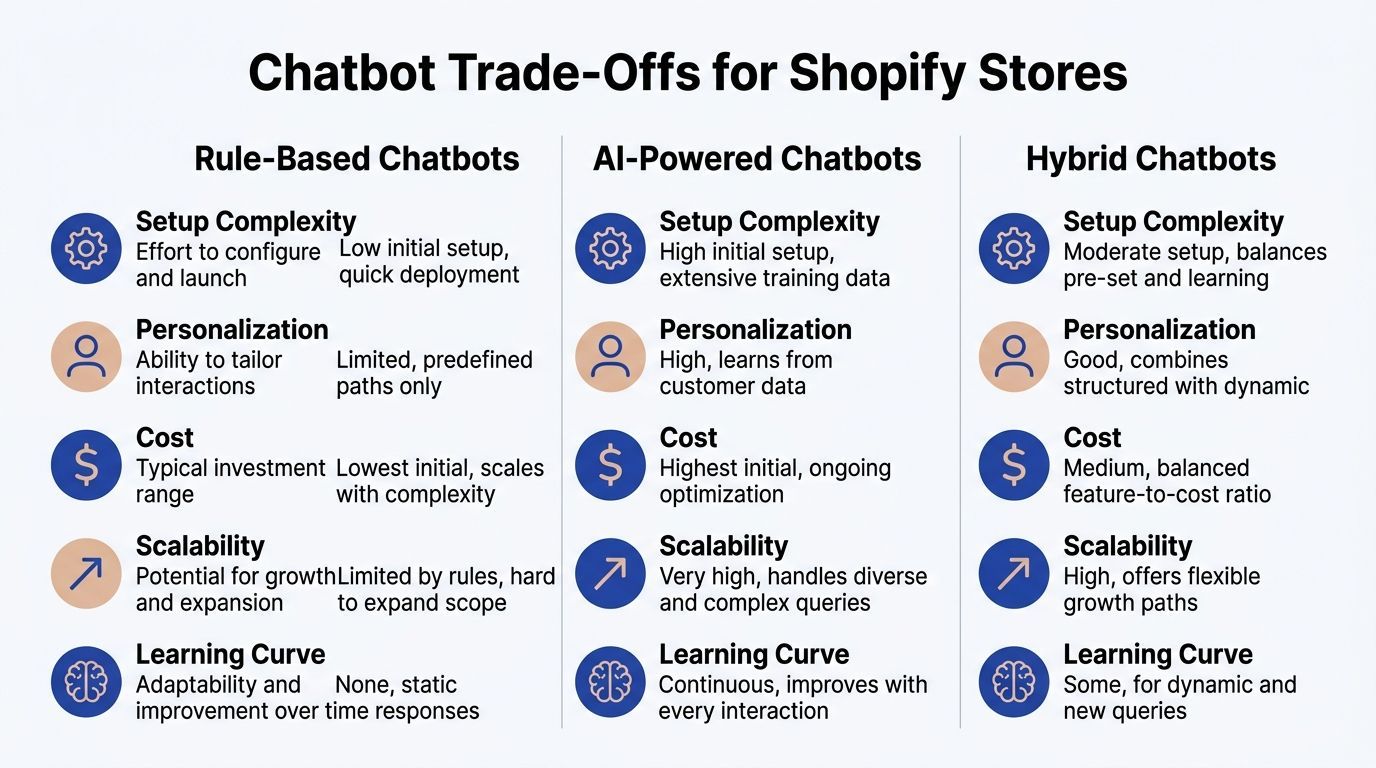
Comparing Chatbot Trade-Offs for Shopify Stores
Once merchants understand the pillars, the decision gets more practical. You’re no longer asking which chatbot sounds smartest. You’re asking what you gain and what you give up with each model.
That trade-off matters because every chatbot category shifts work differently. Rule-based tools shift work into flow building. Hybrid tools shift it into maintenance and supervision. Autonomous systems shift it into knowledge quality, guardrails, and optimisation.
Integration and setup trade-offs
Rule-based bots are easiest to launch if you only need a few fixed answers. They don’t ask much of your data, but that’s also their limitation.
Hybrid tools usually require more planning. You need to define which paths stay fixed and which can flex. That creates more room for a better experience, but also more room for inconsistency.
Autonomous AI tools need the strongest content foundation, because they depend on what you sync or train. Once that’s in place, they can handle broader conversation types with less manual flow management.
Cost and scaling trade-offs
A cheap tool that escalates too often can become expensive fast. You’re paying for software and still paying humans to finish the job.
That’s why merchants should look at cost shape, not sticker price.
- Rule-based bots: low entry cost, but hidden labour in updating flows.
- Hybrid bots: mid-range spend, plus maintenance complexity.
- Autonomous AI: can be more scalable if pricing doesn’t punish conversation volume.
For UK e-commerce, the strongest benchmark in the source set comes from Helpshift. In UK-based benchmarks, Helpshift automated and resolved over 70% of support tickets, and its multilingual support across 150+ languages contributed to a 30% cost reduction in non-English ticket handling for UK retailers including Sybo and Kraftonn, according to Helpshift’s AI chatbot customer service benchmarks. That’s the kind of operational outcome merchants should compare against, not just the number of integrations on a pricing page.
If a chatbot only saves time in English but your orders create support in multiple languages, your real operating cost stays higher than expected.
Service quality and escalation trade-offs
Rule-based bots usually fail in the same way. They hit an edge case and trap the customer in an option tree.
Hybrid bots fail more subtly. They answer some parts well, then lose context when the conversation moves outside a scripted lane. That can be more frustrating because the experience feels promising right up until it breaks.
Autonomous AI tools are strongest when customers ask layered questions. A shopper might combine product suitability, shipping urgency, and returns policy in one message. That’s where broader intent handling starts to matter.
Still, autonomy raises the bar for escalation design. If the handoff is poor, the sophistication of the AI doesn’t matter much to the customer.
Reporting and optimisation trade-offs
Rule-based reporting often tells you how many people clicked a path. That’s useful, but narrow.
Hybrid systems can give better visibility, though the data is sometimes split between bot performance and agent performance.
Autonomous systems are most useful when they expose patterns you can act on. Which products trigger doubt. Which policies create hesitation. Which pre-sales questions correlate with drop-off. That’s when chat data becomes a conversion tool, not just a support metric.
If you’re comparing platforms that sit closer to traditional support software, this breakdown of Freshdesk vs Zendesk helps clarify how support-led stacks differ from commerce-led automation.
Conversion trade-offs
E-commerce models diverge fastest in this area.
A rule-based bot can answer “What are your delivery times?” It rarely helps a customer decide between two sofas, two supplements, or two skincare bundles.
A hybrid bot can support some recommendation logic, but often feels constrained unless the merchant has invested heavily in the setup.
An autonomous AI bot is best suited when conversion depends on dialogue. That’s common in stores selling furniture, cosmetics, premium apparel, electronics accessories, or any category where shoppers need reassurance before buying.
The more your store depends on pre-purchase clarification, the less value you’ll get from a chatbot that only behaves like a ticket filter.
What different merchants usually choose
The best chatbot for customer service isn’t determined by AI sophistication alone. It’s determined by how much of the customer journey can be handled cleanly without turning your ops team into bot babysitters.
Implementation and ROI Scenarios for Merchants
The easiest way to choose is to picture your own store in motion. Not your homepage. Not your pitch deck. Your actual day-to-day.
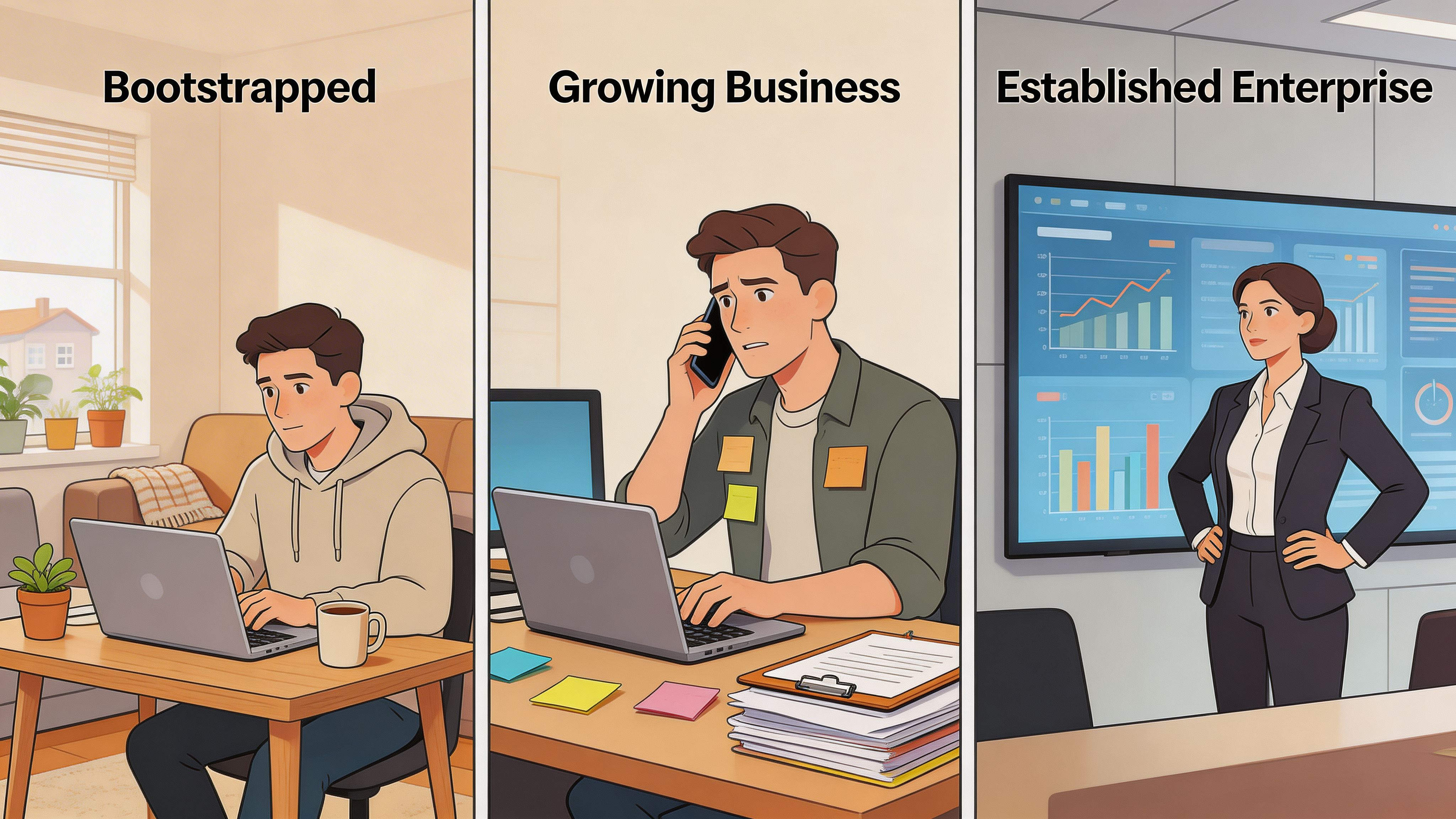
The bootstrapped solo founder
This merchant sells a focused product range and still handles support personally. Most questions are about shipping, returns, dispatch times, and a handful of product basics.
The wrong move is buying a bloated helpdesk stack. The right move is usually simple automation with low setup friction.
A lean bot works if it can:
- Answer repetitive policy questions
- Reduce after-hours interruptions
- Escalate anything unusual by email or inbox
- Avoid charging more as conversations increase
For this merchant, ROI shows up as reclaimed time first. Revenue impact matters too, but relief from repetitive questions is the immediate win.
The high-ticket furniture brand
This merchant gets fewer orders, but each purchase carries more hesitation. Customers ask about dimensions, materials, delivery access, finishes, and returns before they commit.
A shallow FAQ bot won’t do enough here. The store needs an AI system that can handle layered pre-sales conversations and guide customers toward suitable products.
The most relevant benchmark in the source set comes from eesel AI. In UK-specific 2026 benchmarks, eesel achieved 85%+ resolution rates on historical UK ticket data before live deployment, and those deployments helped DTC brands reduce support ticket volume by 40-50%. For high-ticket Shopify merchants, the same source associates preference-based recommendations with 15-20% conversion lifts in UK e-commerce trials, according to eesel AI’s chatbot benchmark analysis. That doesn’t mean every furniture store will get the same result, but it does show why conversational guidance matters more in considered-purchase categories.
A high-ticket store should judge a chatbot by whether it helps customers decide, not only by whether it answers service questions.
The fast-growing global fashion retailer
This merchant has broader catalogue complexity, more languages, and more pressure to maintain a consistent brand voice across markets. Support volume is climbing, but many conversations are still pre-sales in disguise.
The store usually needs:
- Multilingual coverage
- Consistent product and policy answers
- Good handoff for exceptions
- Visibility into what shoppers ask before buying
For this merchant, a bot isn’t replacing the support team. It’s acting as a layer that absorbs repetitive demand while helping the team focus on exceptions, VIP customers, and edge cases.
How to think about ROI by scenario
The practical model is simple.
Different stores will value different outcomes. Some need cost control. Others need conversion support. Others need coverage that doesn’t require hiring around the clock.
The mistake is using the same buying criteria for all three.
Why Marvyn AI Excels for Ambitious Shopify Stores
Ambitious Shopify brands usually outgrow the old support logic before they realise it. They start with inbox management. Then they add templates. Then live chat. Then they discover that a large share of “support” conversations are really blocked buying decisions.
That’s the point where the chatbot decision stops being a support software decision and becomes a growth operations decision.
The operational model that fits growth
For stores that want to scale without building a larger support team, the most useful approach is usually autonomous automation with strong store context.
That’s where a tool like Marvyn AI fits. It’s a free autonomous Shopify AI chatbot with one-click install, catalogue and policy syncing, multilingual support in 80+ languages, customisation options, conversation tracking, smart escalation, and no per-conversation fees, according to the product information provided by the publisher. The operational appeal is straightforward. It lets merchants manage automation rather than manage a growing queue of repetitive conversations.
That model fits stores where customer service and sales overlap heavily. Fashion, furniture, beauty, gifting, and premium accessories all tend to work this way.
Why this approach is stronger than agent-first scaling
Hiring your way out of support pressure works for a while. Then complexity rises.
You now have to manage:
- Training quality
- Response consistency
- Schedule coverage
- Language gaps
- Escalation discipline
- Rising software and staffing overhead
Automation changes the manager’s job. Instead of overseeing every reply, you oversee knowledge quality, decision boundaries, and conversation outcomes. That’s usually a more scalable operating model for Shopify brands that want to grow internationally or extend service beyond business hours.
The strongest merchants don’t ask, “How do I answer more chats?” They ask, “How do I remove unnecessary chats while still helping customers buy?”
Governance matters more now
There’s another reason autonomous systems need to be chosen carefully. Compliance has become more visible.
Post-2025 GDPR updates have increased pressure for transparent AI escalation and data syncing in customer service, and coverage of chatbot tools still leaves major gaps on UK-specific audit trails for autonomous agents. In the last 12 months from April 2025 to April 2026, UK ICO fines reached £5.2M for non-transparent AI in retail chat, according to CX Lead’s chatbot market analysis. For Shopify merchants, that means your chatbot shouldn’t be a black box. You need clarity on what it uses, how it escalates, and how conversations are tracked.
That’s also why broader strategic reading matters. If you’re thinking beyond support and into how automation will reshape positioning, customer experience, and merchandising, this piece on how AI will affect your brand in the future is worth your time.
What ambitious merchants should optimise for
If you’re choosing a customer service chatbot for a growth-stage Shopify store, prioritise these in order:
- Store-native knowledge
- Useful pre-sales conversations
- Predictable scaling economics
- Escalation with context
- Reporting that improves both CX and conversion
- Governance you can explain internally
A lot of traditional platforms still come from a helpdesk mindset. They are built to organise tickets efficiently. That’s useful, but it isn’t the same as helping shoppers move from uncertainty to purchase.
For an ambitious merchant, the best chatbot for customer service often isn’t the one that looks most like a call centre tool. It’s the one that behaves most like a reliable sales associate, stays grounded in approved store data, and hands off neatly when human judgement is needed.
If you want to evaluate that kind of setup in more detail, the Marvyn AI feature set gives a practical view of how a Shopify-native autonomous model is structured.
If you want a customer service chatbot that also supports conversion, not just ticket deflection, take a look at Marvyn AI. It’s built for Shopify merchants who want to automate routine support, answer pre-sales questions, and keep service running around the clock without adding operational drag.