A Shopify Guide to Reduce Cart Abandonment
If you want to reduce cart abandonment, you can't just throw solutions at the wall and hope something sticks. You have to play detective first. Before you change a single button or rewrite a line of copy, you need to dig into your analytics and figure out why shoppers are leaving in the first place.
Only by diagnosing the root causes—the real friction points in your store—can you apply the right remedies and turn those hesitant browsers into confident buyers.
Diagnosing the Core Reasons for Cart Abandonment
It’s tempting to guess why people are leaving your checkout. Most merchants jump to conclusions, usually blaming product price. But the real reasons are almost always more nuanced and often have nothing to do with the price tag.
Throwing random fixes at the problem without understanding the why is a waste of time and money. A proper diagnosis is the most critical first step. You need to find the holes in your conversion funnel before you can patch them.
The real culprits can be technical, psychological, or simply a matter of convenience. Your mission is to find these specific friction points in your customer's journey.
Uncovering Hidden Friction Points
Here’s the thing most store owners miss: the number one reason for abandoned carts isn’t the product price. It’s the unexpected costs that pop up right at the end.
Imagine a shopper is happy to pay £50 for an item. They get to the checkout, feeling good about their purchase, and then—bam. A surprise £5.99 shipping fee. It feels like a last-minute trick, a betrayal of trust, and they leave instantly. This sticker shock is a massive conversion killer.
Unexpected costs are the number one reason shoppers abandon their carts. Being transparent about all fees, including shipping and taxes, right from the product page can prevent this sticker shock and build immediate trust with your customers.
Once you’ve addressed cost transparency, it’s time to analyse the checkout process itself. A long, clunky, or confusing checkout will sabotage your sales. Every extra field you ask a customer to fill out is another opportunity for them to get frustrated and bail.
Are you forcing them to create an account? That's a huge barrier for first-time buyers who just want a quick, easy purchase. Simply offering a guest checkout option respects their time and can significantly boost conversions. For a deeper look at this, check out these proven strategies to reduce shopping cart abandonment.
To help you prioritise, we've compiled the most common reasons UK shoppers leave their carts behind.
Top Reasons for Cart Abandonment in the UK (2026)
This data shows that nearly half of all abandoned carts are due to cost surprises. Fixing that single issue could have a massive impact on your bottom line.
The Mobile Experience Matters Most
You absolutely must pay attention to your device-specific data. In the UK e-commerce market, the gap is huge: mobile cart abandonment rates are hovering around 76-85%, far higher than the 67-69% on desktop.
These checkout and delivery frustrations cost UK retailers an estimated £31.5 billion annually as shoppers simply go to competitors with a slicker mobile experience.
To figure out what’s going wrong on mobile, you need the right tools:
- Heatmaps: These are brilliant for visualising user behaviour. They show you exactly where people are tapping, scrolling, and getting stuck on your mobile site. Are they tapping on images that aren't clickable? Are they not scrolling far enough to see the "Continue to Payment" button?
- Session Replays: This is as close as you can get to looking over a customer’s shoulder. Watch real recordings of user sessions to see your store through their eyes. It’s the most direct way to spot glitches, confusing navigation, or design flaws that cause people to give up.
Fixing these foundational issues isn’t just about cart abandonment; it’s a core part of a wider conversion rate optimisation for eCommerce strategy. When you combine the hard numbers from your analytics with the qualitative insights from user behaviour tools, you get a crystal-clear picture of what needs fixing.
High-Impact Fixes for Your Shopify Checkout
When you're trying to figure out why so many carts are being abandoned, your checkout page is the first place you need to look. This is where the sale is won or lost. Forget about long-term, complex projects for a minute; we're talking about high-impact fixes you can make this week to immediately stop the bleeding.
The single biggest killer of conversions? Unexpected costs. A shopper has already decided on a price in their head, only to get hit with a surprise shipping fee right at the end. It feels deceptive, and that sticker shock instantly kills the trust you’ve just built.
Erase Friction from Your Forms and Payments
A clunky or confusing checkout is right behind unexpected costs as a reason to bail. In fact, 18% of shoppers abandon carts simply because the process feels too long or complicated. The goal is to make buying from you feel completely effortless.
Start by being ruthless with your checkout form. Do you really need their phone number, or a second address line? Every single field you remove is one less hurdle for a potential customer. Only ask for the absolute essentials you need to process and ship the order.
Just as important is offering a guest checkout. Forcing someone to create an account is a massive turn-off for new customers. They don't want a long-term relationship yet; they just want to buy their product. Let them.
Next, you have to offer flexible payment options. Today's shoppers simply expect choice. Not having their preferred method is one of the easiest ways to lose a sale you were about to close.
- Accelerated Checkouts: You absolutely must enable one-click payment options like Shop Pay, Apple Pay, and Google Pay. For mobile shoppers, these are non-negotiable as they pre-fill all the customer's information.
- Buy Now, Pay Later (BNPL): Integrate services like Klarna or Afterpay. For higher-priced items, these options can make a huge difference to your conversion rates and average order value.
- Traditional Methods: Make sure you clearly display the logos for all major credit cards you accept.
A critical aspect of high-impact fixes involves providing direct incentives. Exploring methods like implementing effective coupon management can significantly sway customer decisions at the point of purchase, turning hesitation into a completed sale.
These fixes aren't just a matter of convenience. They're about meeting modern customer expectations and removing any last-minute doubt before they click “buy now”.
Build Unshakeable Trust at the Final Hurdle
Even with a smooth process, shoppers can still get cold feet if they don't feel confident giving you their payment details. This is especially true for first-time buyers who aren't familiar with your brand yet.
You need to visually reassure them that their information is safe. This isn't the time to be subtle. Place your trust signals right where their eyes and cursor will be—next to the payment fields and the final purchase button.
Immediate Trust-Building Checklist:
- Display Security Badges: Prominently show SSL certificates (like "Secure SSL Encryption") and the logos of trusted payment providers like Visa, Mastercard, and PayPal.
- Add a Guarantee: A simple money-back guarantee or a satisfaction seal can provide a powerful dose of reassurance.
- Show Contact Information: Making a phone number or support email easy to find shows there’s a real business, with real people, behind the website.
These elements work together to reduce the customer's perceived risk and build the confidence they need to hand over their card details. This whole process is a key part of any good conversion strategy, as we cover in our conversion rate optimisation checklist. By streamlining your form, offering more payment options, and reinforcing trust, you directly tackle the most common reasons for checkout abandonment.
A slick checkout is a great start, but it won’t silence that little voice in a shopper's head asking, "Am I making the right choice?" In e-commerce, trust is everything. Without it, even the most interested buyers will get cold feet at the last second. To really tackle cart abandonment, you have to build that trust directly on your product and cart pages, turning hesitation into confidence.
This is where social proof and urgency come into play. These are powerful psychological nudges that show hesitant shoppers two things: other people love and trust your brand, and waiting to buy might mean missing out. It’s all about validating their decision before they have a chance to second-guess it.
Use Social Proof to Show You're the Real Deal
Social proof is so much more than just star ratings. It's about showing your products being used and loved out in the wild. When a potential customer sees someone just like them enjoying your products, it’s a powerful signal that they’re making a good choice.
Forget about just relying on generic reviews. Get proactive and feature user-generated content (UGC). Displaying customer photos on your product pages shows your items in a real-life context, which is miles more convincing than perfect, polished studio shots. When a shopper sees a dress on a real person, not a model, they can actually picture themselves wearing it. That creates a connection that studio photos just can't match.
Another trick is to pull out your best, most authentic testimonials and put them front and centre. Don't bury them on a separate page nobody visits. Instead, embed short, punchy quotes right there on your product pages, ideally near the "Add to Cart" button. This is non-negotiable for higher-priced items. A glowing testimonial can be the final push a customer needs to feel good about a bigger purchase.
A study found that featuring user-generated content can boost conversion rates by as much as 161%. People trust other shoppers way more than they trust brand ads, making UGC one of your single best weapons against cart abandonment.
And if your brand has been mentioned in the press or won any awards, show off those logos. Don't be shy. This kind of third-party validation provides instant credibility, telling first-time visitors that you're an established and trustworthy business.
Create Real Urgency (Without Being Sleazy)
While social proof builds trust, urgency gives people a reason to act now. The key here is to be ethical. This isn't about faking scarcity; it's about communicating genuine limitations or time-sensitive offers. This is how you fight the "I'll just come back later" thinking that fills up abandoned carts across the internet.
Here are a few ways to do this well:
- Low-Stock Counters: Displaying a message like "Only 3 left in stock!" creates a very real sense of scarcity. This works best when it’s true, so use it on your best-sellers or products with limited runs to encourage a quick decision.
- Real-Time Activity: Subtle pop-ups that say "Someone in London just bought this" or "25 people are viewing this item right now" tap directly into the fear of missing out (FOMO). It proves the product is in high demand, making it seem more desirable and nudging the shopper to grab it before it's gone.
- Limited-Time Offers: Countdown timers for a sale or a special discount create a firm deadline. A simple banner that reads "Free shipping on all orders for the next 3 hours" gives a compelling reason to finish the purchase right away.
When you use them together, social proof and urgency are a knockout combination. Social proof confirms the desire for the product, and urgency provides the nudge to act on that desire now. By thoughtfully weaving these elements into your site, you can guide shoppers through those final moments with confidence and seriously cut down your cart abandonment rate.
Okay, let's rework this section to give it that authentic, expert voice you're after.
Here is the rewritten content:
Automating Cart Recovery Across Multiple Channels
Even with a perfectly tuned checkout, some shoppers will always slip through the cracks. Life gets in the way — a phone call, a distracting notification, or just plain old second thoughts. But an abandoned cart isn’t a lost sale. It’s a warm lead. This is where a smart, automated recovery system becomes your secret weapon, working 24/7 to bring those high-intent customers back.
The trick is to use a multi-channel approach that combines email, SMS, and browser push notifications. Relying on just one channel is like fishing with a single line. By creating a cohesive safety net, you meet customers wherever they are, which massively increases your chances of rescuing that lost revenue.
Crafting the Perfect Abandoned Cart Email Sequence
Email is still the foundation of any solid cart recovery strategy. When done right, a sequence of two or three emails can pull in incredible results, with open rates often soaring past 40%. The key is to build a sequence that gently increases urgency and adds value over time, without ever feeling spammy or desperate.
Think of it as a friendly, persuasive conversation. Your first email is just a helpful nudge. Later messages can sweeten the deal to get them over the line.
Here’s a proven, three-step email campaign structure you can adapt for your own brand. It's designed to methodically tackle common reasons for abandonment, from simple distraction to price sensitivity, without overwhelming the customer.
Abandoned Cart Email Sequence Template
By staggering your messages like this, each one serves a distinct purpose, guiding the shopper back to their cart step-by-step.
Using SMS and Push Notifications for Immediate Impact
While email is a powerhouse, it’s not always instant. For a faster, more direct line to your customer, SMS and browser push notifications are in a league of their own. Text messages have a staggering 98% open rate, making them the perfect tool for timely, urgent reminders.
The secret to a good SMS strategy is to be concise and respectful. An abandoned cart text should feel like a helpful tap on the shoulder, not an invasion of privacy.
- Timing is Everything: Fire off an SMS within 60 minutes of abandonment. This is the golden window when their purchase intent is still red-hot.
- Keep it Simple: A quick message like, "Hi [Name], looks like you left something behind at [Your Brand]. Your cart is saved for you here: [Link]" is all you need.
- Use Offers Sparingly: Save the discounts for your email sequence or for particularly high-value carts. The main goal of SMS is a quick, effective reminder.
Browser push notifications give you a similar edge. With just one click, you can pull a shopper directly back to their cart. This works especially well for those customers who were "just browsing" and might have completely forgotten they even added something.
By combining email, SMS, and push notifications, you create a robust, multi-layered strategy. This ensures your message gets seen, whether it’s in a crowded inbox, a text message alert, or a quick browser pop-up.
This process flow shows how adding visual trust signals—like reviews, customer photos, and scarcity timers—gives shoppers the final push they need to come back and complete their purchase.
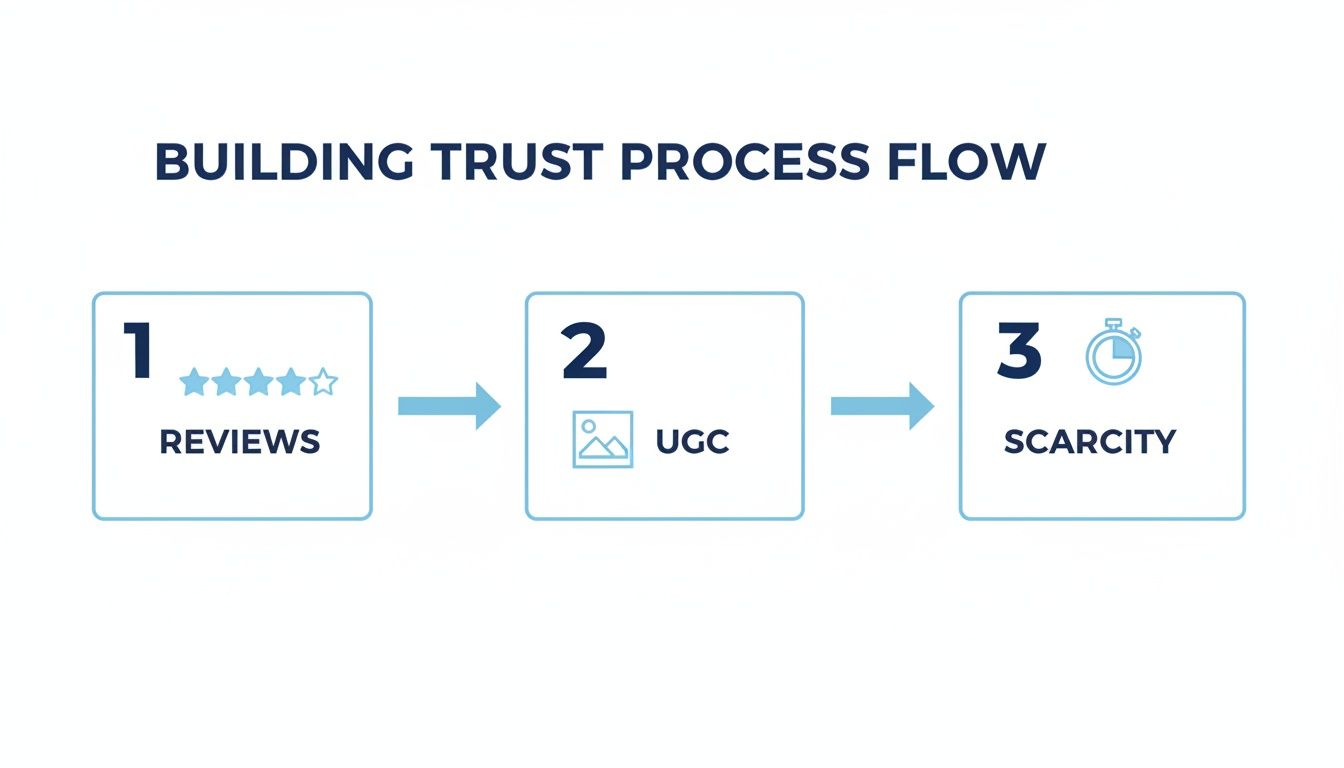
Every element in your recovery messages, from a simple star rating to a low-stock alert, helps rebuild the momentum that was lost when the shopper first navigated away. A truly successful automated recovery system isn’t about a single magic message. It’s about creating a series of well-timed, context-aware touchpoints across the right channels, making it incredibly easy and appealing for shoppers to come back and finish what they started.
Using Conversational AI to Proactively Stop Abandonment
While automated recovery sequences are great for winning back shoppers who’ve already left, the real goal is to stop them from leaving in the first place. This means shifting from a reactive mindset to proactive prevention. Your frontline tool for this is a conversational AI chatbot, engaging customers in real-time to solve doubts the very moment they pop up.
Think of it as having your best sales assistant on the floor 24/7. When a customer hesitates, wondering about shipping times or your return policy, they don’t have to go hunting for an FAQ page or fire off an email into the void. Instead, they get an instant, accurate answer right there. This immediate support dismantles the tiny points of friction that so often snowball into an abandoned cart.
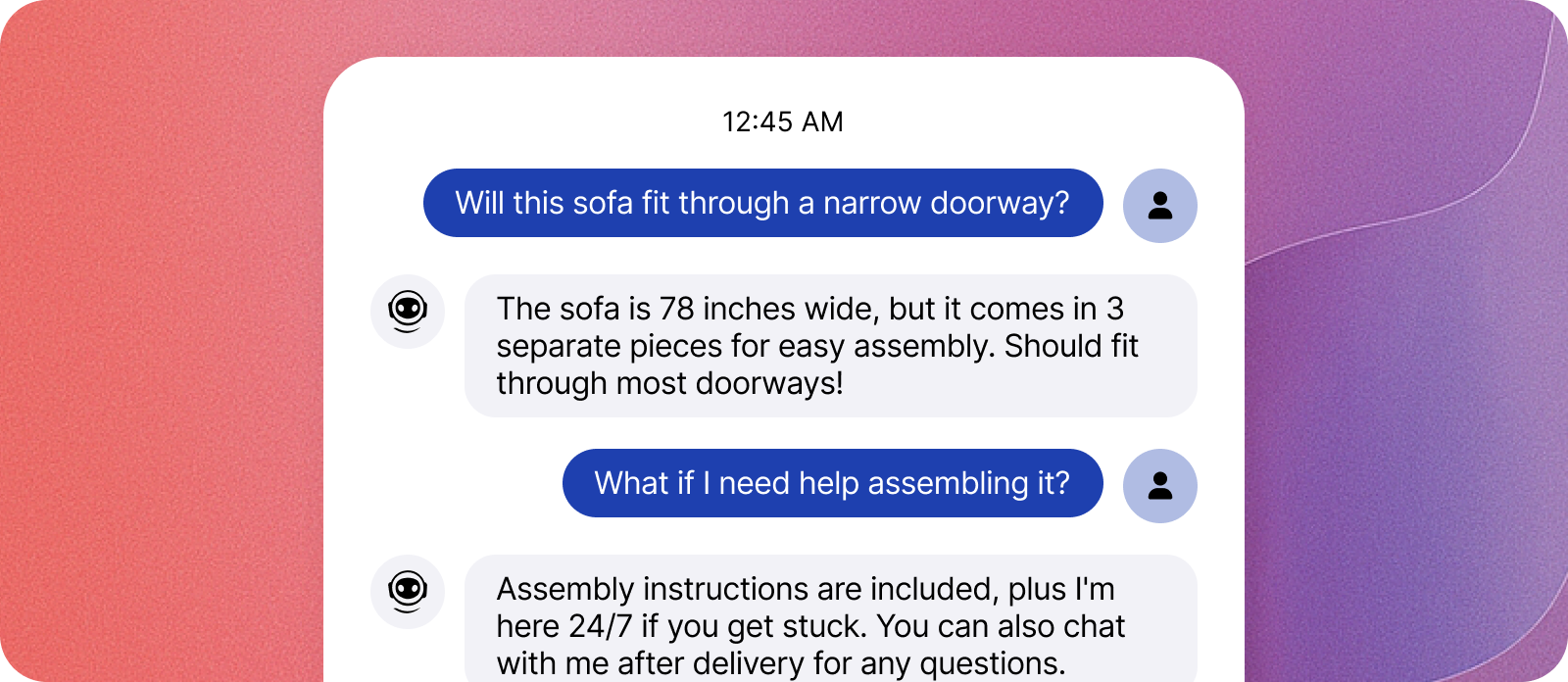
This sketch shows just how seamlessly an AI assistant can fit into the shopping experience, offering help without being intrusive. By providing answers and guidance directly within the buying journey, the AI acts as a co-pilot, steering the shopper confidently towards the checkout.
Acting as an Instant Support Agent
Let's be honest, the most common reasons for last-minute hesitation are usually simple logistical questions. We know from countless studies that unexpected costs and delivery concerns are massive conversion killers. An AI chatbot like Marvyn, which you can install with a single click from the Shopify App Store, instantly syncs with your store’s policies to give immediate answers.
It can handle a huge volume of those repetitive queries automatically:
- "What are the shipping costs to Manchester?"
- "What's your return policy for sale items?"
- "How long does delivery usually take?"
By answering these on the spot, you kill uncertainty and build trust at that critical decision-making moment. One study found that 82% of business owners use AI to improve the customer experience, and this is a perfect example of why. Instead of letting a simple question derail a sale, you provide a frictionless path to the answer.
An AI chatbot isn't just a support tool; it's an abandonment prevention tool. It intercepts customer doubts before they fester, handling over 70% of routine queries so shoppers can move forward with confidence.
This kind of proactive support ensures those small hesitations don’t turn into lost revenue. Plus, it frees up your human support team to focus on more complex, high-value customer conversations.
Transforming into a Personal Sales Consultant
This is where it gets really interesting. Beyond just answering basic questions, modern conversational AI can act as a consultative sales expert. This is where you can seriously cut down on cart abandonment and even increase your average order value (AOV). By asking smart, guiding questions, the AI can help shoppers discover the perfect product for their needs.
Imagine a customer is browsing a page with several similar-looking jackets. An AI chatbot can pop up to help them choose.
Sample Conversational Flow for Product Recommendation:
- AI Chatbot: "Hi there! I see you're looking at our technical jackets. Are you looking for something for a specific activity, like hiking, or just for daily city wear?"
- Shopper: "Mostly for hiking."
- AI Chatbot: "Great! In that case, waterproofing is key. Our 'Summit Pro' jacket has a 20,000mm waterproof rating, making it ideal for unpredictable weather. Would you like to see the available colours?"
This short interaction does three crucial things: it engages a passive browser, it figures out their specific need, and it gives a personalised, confident recommendation. It transforms the experience from overwhelming choice to a guided selection, making the shopper feel understood and sure of their decision. This consultative approach is a powerful way to reduce the kind of cart abandonment driven by simple indecision.
If you want to build out these kinds of automated helpers, our guide on [AI sales agents](https://www.marvyn.co/blog/ai-sales-agents) offers a much deeper look.
Guiding Shoppers All the Way to Checkout
Once a shopper has the right product in their cart, the AI's job isn't over. It can continue to assist them, knocking down any final barriers to purchase.
For example, if a customer is sitting on the cart page, the AI can proactively offer a helping hand or highlight key value props to seal the deal.
- Offer Help: "Anything else I can help with before you check out? I can also check if you qualify for free shipping."
- Reinforce Value: "Just a reminder, all our orders come with a 30-day money-back guarantee for your peace of mind."
This final touch gives that last bit of reassurance and tackles any lingering worries about the transaction itself. By blending automated support with consultative selling, conversational AI becomes a non-negotiable part of your strategy to reduce cart abandonment. It turns what is often a solitary, uncertain online shopping journey into a supported and guided experience, making sure more customers actually make it all the way to "complete purchase."
Frequently Asked Questions
Even with the best playbook in hand, you're bound to have questions. Let's tackle some of the most common ones we hear from Shopify merchants trying to get a handle on cart abandonment.
How Quickly Can I See Results After Implementing These Strategies?
Some fixes deliver results almost instantly. Things like making your shipping costs crystal clear upfront, simplifying the checkout form, or adding a few trust badges can boost conversions within a matter of days. If you're A/B testing these, you’ll have solid data within a week or two.
Automated recovery flows are even faster. The moment you switch on a cart recovery email or SMS sequence, you’ll start seeing recovered sales trickle in, often within the first 24 hours.
An AI chatbot starts paying for itself from the second it’s activated. By giving customers instant answers 24/7, it prevents abandonment in real-time and delivers a measurable return from day one.
When you combine everything—checkout fixes, trust signals, and automated recovery—you can expect a serious, measurable drop in your overall abandonment rate inside the first 30 days.
Is an AI Chatbot Too Impersonal for My Brand?
This is a really common concern, but a modern AI isn't a cold, robotic script. It's designed to be a seamless part of your brand. You can easily customise its voice, logo, and colours to feel like a natural extension of your store's personality.
More importantly, think about the customer experience. Getting an instant, accurate answer about shipping is far better than waiting hours for an email reply. A well-trained AI can handle over 70% of common questions, freeing up your team to focus on the high-value conversations that actually need a human touch. It’s about blending smart efficiency with a great brand experience.
My Budget Is Limited. Which Actions Offer the Highest ROI?
If you're working with a tight budget, you need to be ruthless. Focus on the low-cost, high-impact actions first. These will give you the most bang for your buck and build momentum.
Here’s your high-ROI priority list:
- Be Transparent with All Costs: This is the number one killer. Show all shipping costs and fees upfront on the product and cart pages. It costs you nothing to implement and has a massive impact.
- Simplify Your Checkout: Cut down the number of fields in your checkout form. Only ask for what is absolutely essential to process the order.
- Set Up a Basic Recovery Sequence: Most email marketing platforms include a simple 3-step abandoned cart flow in their basic plans. Find it and switch it on.
- Install a Free AI Chatbot: An AI assistant automates both customer support and sales consultations. Since it prevents abandonment and drives sales without any upfront cost, its return on investment is exceptionally high.
How Do I Measure the Success of My Cart Abandonment Strategy?
To really understand if your efforts are working, you need to look at a few key metrics together. Don't get fixated on a single number; the full picture tells the real story.
Your main Key Performance Indicator (KPI) is your Cart Abandonment Rate, which you can track in Shopify Analytics. It’s calculated as (Total Abandoned Carts / Total Carts Created). The goal is to watch this number go down consistently.
But you should also keep an eye on these supporting metrics:
- Cart Recovery Rate: For your email and SMS flows, this shows the percentage of abandoned carts your automations are successfully winning back.
- Conversion Rate from Chat: If you’re using an AI chatbot, track how many conversations turn directly into a sale. This is pure ROI.
- Overall eCommerce Conversion Rate: A good strategy won't just reduce abandonment; it will lift your entire site's conversion rate.
- Average Order Value (AOV): With smart tactics like AI-powered upselling and cross-selling, you should also see your average order value begin to climb.
Ready to stop cart abandonment before it happens? With Marvyn AI, you get a FREE, fully autonomous chatbot that automates over 70% of support and acts as a 24/7 sales consultant. It installs in one click and guides shoppers from browsing to buying, recovering lost revenue while you sleep. Get started today.
Related Articles
Conversion Rate Optimization for Ecommerce A Modern Growth Playbook
Level up your conversion rate optimization for ecommerce with this playbook. Learn how to audit your funnel, optimize pages, and use AI to drive Shopify growth.
Conversion Rate Optimization Checklist for Shopify in 2026
Master the conversion rate optimization checklist for Shopify in 2026. Boost sales, reduce cart abandonment, and raise AOV with 10 practical steps.
Unlocking Growth With AI Sales Agents for Your DTC Brand
Discover how AI sales agents can transform your Shopify store. Learn to increase conversions, boost AOV, and enhance customer experience with our expert guide.
7 Top Chat Bot Examples for E-commerce Success in 2026
Discover the best chat bot examples for Shopify stores. See how Marvyn AI and others automate support and drive sales with real-world use cases.
Website Welcome Message: 20+ Examples & Templates (2026)
See 20+ real welcome message examples for websites, online stores, fashion boutiques, and more. Plus how to automate them with an AI chatbot.
How Fashion Stores Are Increasing Sales by 28% with AI Chatbots
The practical playbook behind how real Shopify fashion brands are turning conversations into conversions.