Increase Shopify Sales With These Actionable Growth Strategies
Forget all the generic advice you’ve read. To increase Shopify sales in a way that actually lasts, you need a proper blueprint—a repeatable process that starts with a hard look at what’s really happening in your store.
This isn’t about chasing trends. It’s about plugging the leaks in your funnel, optimising the pages that get the most eyeballs, and using smart automation to make sure no sale slips through the cracks.
Your Blueprint For Sustainable Shopify Growth
To genuinely move the needle on your sales, you have to stop guessing and start following a data-driven plan. It's a straightforward cycle: first, you audit your store to find the weak spots, then you optimise for conversions, and only then do you focus on scaling your growth.
This is the exact process we use to build a solid foundation that turns more of your existing traffic into paying customers.
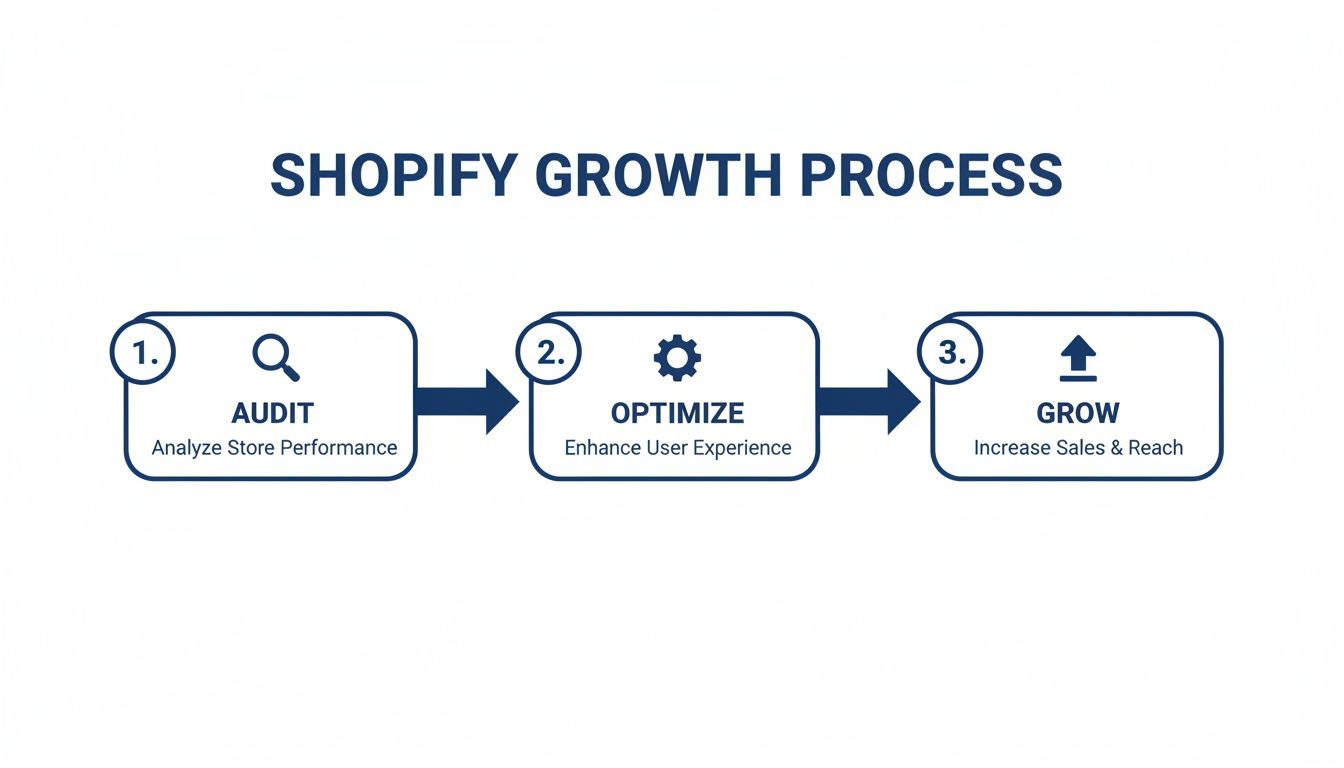
The key thing to realise here is that sustainable growth isn't a one-off task. It's a continuous loop of analysis and improvement. By systematically working through these stages, you ensure every effort builds on the last, creating a compounding effect on your revenue.
Understanding Your Starting Point
Before you change a single thing, you need a complete audit of your sales funnel and traffic sources. You have to know where your best customers are coming from and, more importantly, what’s stopping everyone else from buying.
This means diving deep into your analytics. Which channels are bringing you high-converting visitors? Which pages have the highest drop-off rates? Are people abandoning their carts the moment they see the shipping costs? Are they bouncing from one specific product page?
This isn’t just about spotting problems; it’s about uncovering hidden opportunities. For merchants in the UK, the market is massive, but so is the competition.
The UK's e-commerce market is valued at a staggering $871 billion. Shopify has a huge 23% market share here, making it the second-largest Shopify market in the world with over 215,000 active stores.
That huge user base means you need a sharp, refined strategy to stand out. It’s not enough to just be on Shopify.
To give you a head start, here’s a quick summary of some of the most effective tactics you can put into play right away.
High-Impact Tactics To Boost Your Shopify Sales
These are the kinds of foundational changes that deliver real results.
Once you’ve pinpointed your most valuable traffic sources, you can start to lean into what’s working. Effective PPC advertising strategies can be a powerful way to bring in targeted shoppers. But before you spend another pound on ads, you need to fix your store. That’s the next crucial phase: optimising your site to make sure it’s ready to convert all that new traffic. This foundational work maximises the return on every visitor and sets the stage for genuine, long-term growth.
Transform Product Pages Into Conversion Engines
So you've audited your store and figured out where your best traffic is coming from. Now for the most important part of the journey: the product page. This is your digital showroom, your online salesperson, and often the final hurdle between a casual browser and a paying customer. An uninspired product page can kill all the hard work you put into getting people there in the first place.
This isn’t about just listing features. It's about building an experience that creates trust and makes clicking ‘Add to Cart’ feel like the most natural, obvious decision. To really increase Shopify sales, you have to master the art of the product page.
Craft Product Descriptions That Sell a Solution
Your product description is your chance to have a one-on-one conversation with your customer. Don't waste it on a dry list of dimensions and materials. Instead, you need to tell a story that connects with their needs and solves a real problem for them.
Get inside the customer's head and think about the "why" behind their purchase. Someone isn't just buying a raincoat; they're buying the comfort of staying dry on their miserable morning commute. They're not just buying a scented candle; they're buying a pocket of calm for their chaotic home office.
Use a mix of short, punchy paragraphs and scannable bullet points:
- Start with a hook: Grab their attention with a relatable scenario or a powerful benefit right away.
- Focus on benefits, not just features: Translate what the product is into what it does for them. Instead of "100% merino wool," try "Stay warm without the bulk, thanks to our ultra-soft merino wool."
- Use their language: Weave in the exact phrases and keywords you've seen in customer reviews or social media comments. This makes your brand feel instantly more authentic and relatable.
This benefit-first approach connects on an emotional level, moving shoppers from just looking to actually buying.
Let Your Visuals Do the Talking
In e-commerce, your customers can't touch, feel, or try on your products. Your images and videos have to do all the heavy lifting to bridge that physical gap. Low-quality, generic photos are absolute conversion killers.
You need a solid mix of high-resolution images that show your product from every conceivable angle. Make sure to include lifestyle shots showing the product in use—this helps customers picture it in their own lives. For clothing, showing the fit and drape is everything. To seriously level up your imagery, you might even consider tools like an ai ghost mannequin for ecommerce to create professional, consistent shots without the hassle.
Video is another game-changer. A short clip can show off a product's features, scale, and function in a way that static images just can't match.
Key Takeaway: One study found that adding a product video can boost the likelihood of a purchase by up to 85%. People just feel more confident in their decision when they can see the product in action.
Build Trust With Powerful Social Proof
Here’s a simple truth: shoppers trust other shoppers way more than they trust brands. That's why social proof is one of the most persuasive elements you can add to your product page. It provides that third-party validation that reassures hesitant buyers they’re making a good choice.
Put customer reviews and ratings right on the page, ideally somewhere visible near the product title and the "Add to Cart" button. And don't hide the less-than-perfect reviews. A mix of glowing feedback and constructive criticism actually looks more authentic and can increase trust.
Here are a few ways to get social proof working for you:
- Customer Testimonials: Pull out the best quotes from happy customers. If you can, add their name and a photo for extra credibility.
- User-Generated Content (UGC): Encourage your customers to share photos of themselves using your products on social media. Then, feature those photos on your product pages (with their permission, of course).
- "As Seen In" Banners: If you’ve been lucky enough to get press, show off the logos of the media outlets that have featured you. It’s instant credibility.
When you combine persuasive copy, compelling visuals, and trustworthy social proof, you create a product page that doesn't just inform—it convinces. Getting this right is fundamental to driving conversions, and it can also have a great knock-on effect on other metrics. You can see how an optimised page contributes to a higher basket size in our detailed guide on how to https://www.marvyn.co/blog/how-to-increase-average-order-value.
Deploying An AI Sales Assistant To Drive Revenue
Once you've got your product pages looking sharp, the next big win comes from automation. Let's be honest, in a 24/7 retail world, you can't be there to answer every customer question around the clock. This is where an AI sales assistant stops being a "nice-to-have" and becomes a serious tool to increase Shopify sales without hiring a huge support team.
But don't confuse this with a basic chatbot that just spits out order tracking links. A true AI sales assistant is a proactive sales engine. Tools like Marvyn AI plug directly into your Shopify store in minutes, learning everything there is to know about your products, collections, shipping rules, and FAQs. From day one, it’s an expert on your brand.
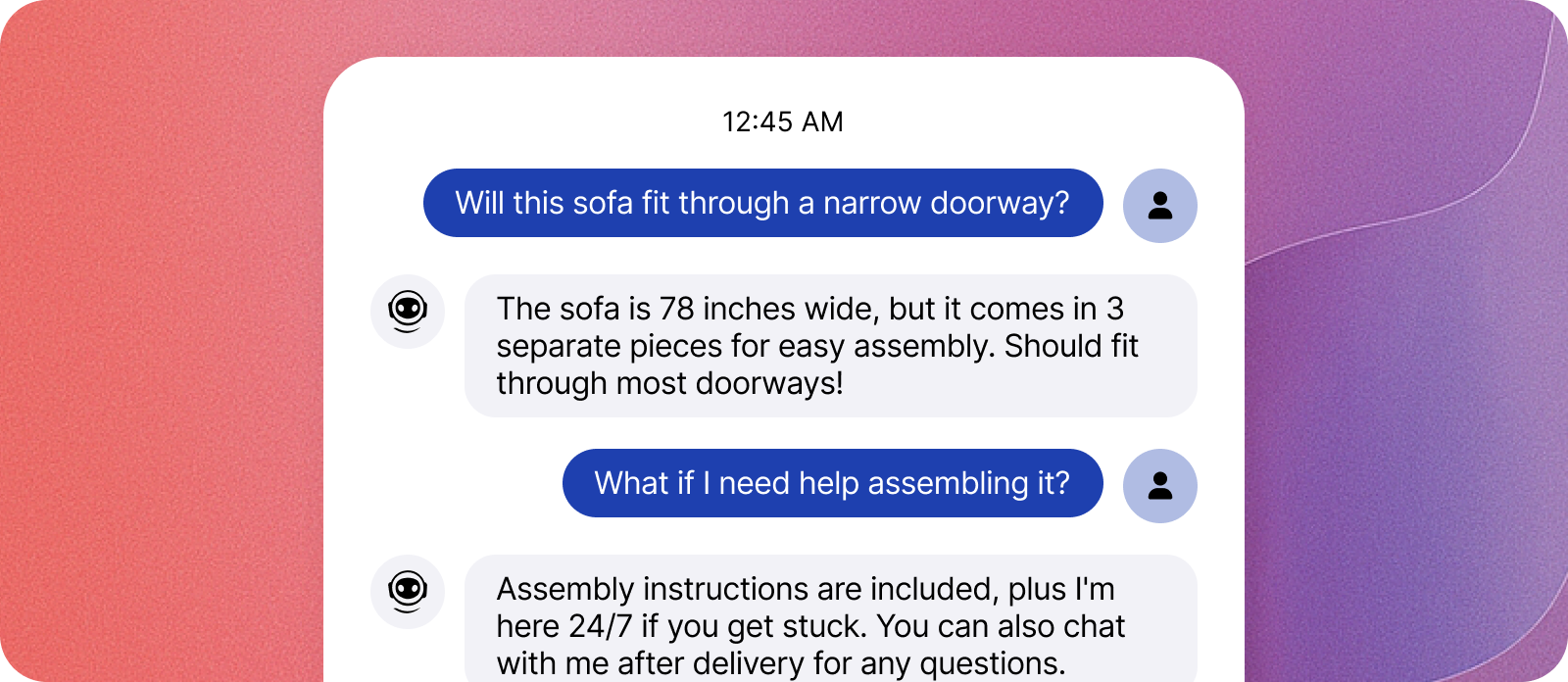
This allows the AI to graduate from simply answering questions to actually guiding shoppers from discovery right through to purchase.
From Answering Questions To Driving Sales
Think about the last time you were in a physical shop and had a question. A good sales assistant doesn't just point you to an aisle; they talk to you. They ask what you’re looking for, suggest a few good options, and help you feel confident you're making the right choice. An AI sales assistant brings that exact experience online, and it does it at scale.
Imagine a customer lands on your store, eyeing a new pair of running shoes but feeling a bit lost.
- A basic chatbot would just sit there, waiting for a direct question.
- An AI sales assistant proactively chimes in: "Are you looking for shoes for trail running or road running? What's your typical weekly mileage?"
Based on their answers, it can instantly recommend the top 3 most suitable shoes from your catalogue, complete with links and key selling points. This isn't just support—it's a personalised sales consultation happening automatically, day or night. That’s the kind of proactive engagement that directly leads to more sales.
Common Scenarios Where An AI Assistant Shines
Let’s look at a few real-world moments where this tech really makes a difference to your bottom line. A good AI assistant is designed to handle those common pre-sale questions that make shoppers hesitate and eventually leave your store.
Here are a few scenarios it handles effortlessly:
Product & Sizing Questions
- Customer: "Does this dress run true to size? I'm usually a UK 12."
- AI Assistant: "Our customers find this dress fits true to size. Looking at our size chart, a Medium would be the best fit for a UK 12. Shall I add it to your cart for you?"
Policy & Shipping Clarifications
- Customer: "What's your return policy for sale items? And how quickly do you ship to Manchester?"
- AI Assistant: "Sale items can be returned for store credit within 14 days. We offer next-day delivery to Manchester for any orders placed before 2 PM. You can find our full shipping policy right here."
Budget-Conscious Recommendations
- Customer: "I'm looking for a gift for my partner under £50."
- AI Assistant: "Great! We have a couple of popular options in that price range. The 'Artisan Leather Wallet' is a best-seller at £45. We also have the 'Merino Wool Scarf' for £48. Which one sounds more like their style?"
By instantly resolving these common points of friction, an AI assistant gets rid of doubt and builds the confidence someone needs to make a purchase. It stops potential customers from clicking away to find answers, keeping them on your site and moving toward the checkout.
This kind of automated help doesn't just increase Shopify sales; it gives you your time back. Instead of answering the same five questions a hundred times a day, you can get back to marketing, developing new products, and actually growing your business. It's like having a sales team that never sleeps. You can dive deeper into how this works by checking out our guide to AI sales agents and their impact on e-commerce.
For small to medium-sized Shopify stores, this is a game-changer. It levels the playing field, letting you offer the kind of instant, expert service that used to be reserved for huge corporations. The best part? It gets to work the moment it's installed, turning more of the traffic you already have into paying customers.
Fixing Your Funnel To Recover Lost Sales
Even with the world’s best product page, you’re still going to lose sales. It’s a hard truth of e-commerce. A shocking number of potential customers—nearly 70% on average—ditch their shopping carts right at the finish line. This is where most stores leak profit, and it usually comes down to two things: a clunky checkout and zero follow-up on abandoned carts.
The good news? Fixing these two areas is one of the fastest ways to increase Shopify sales. You’re not trying to find new customers; you’re simply converting shoppers who were already moments away from buying.
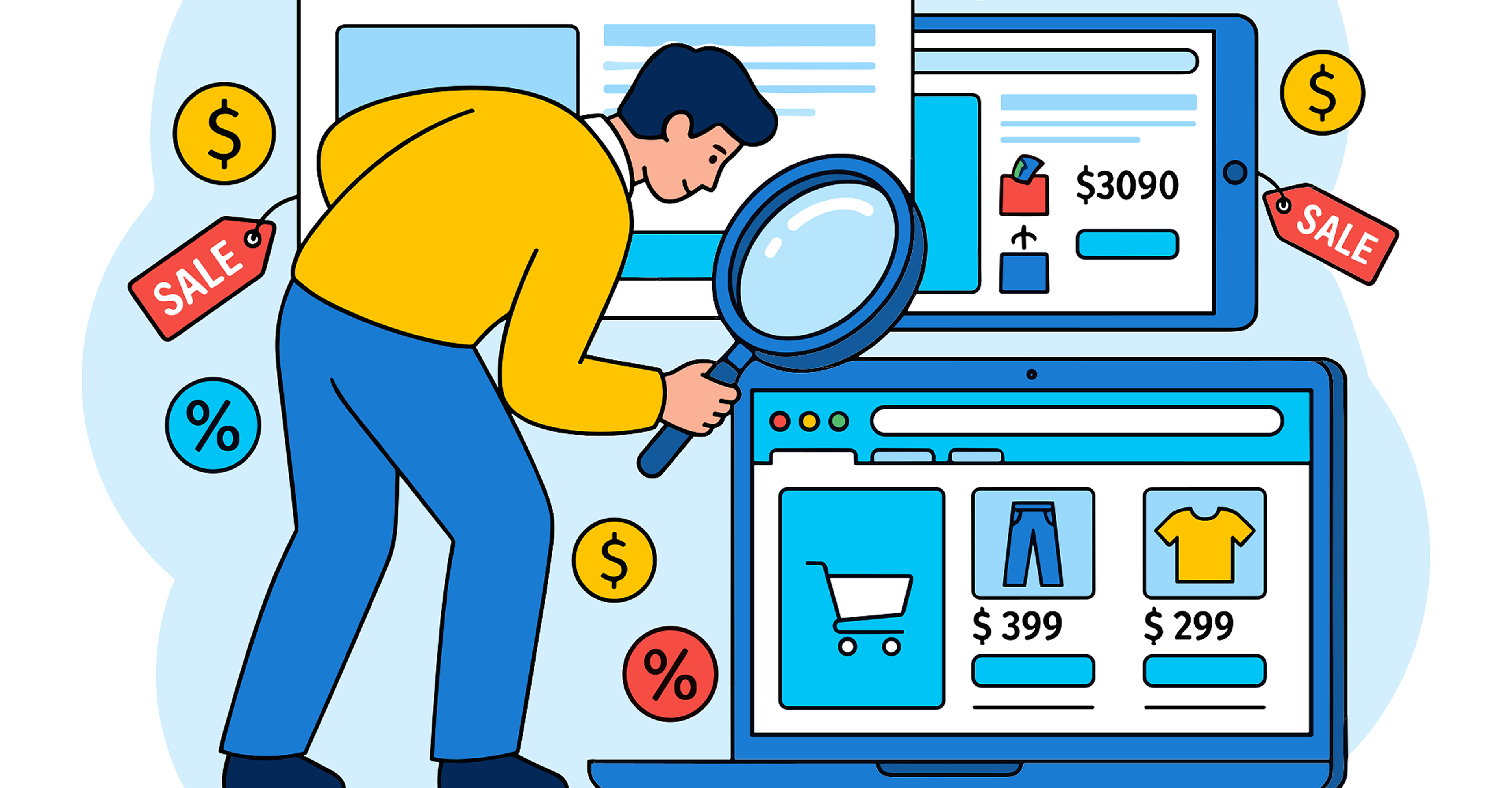
Let's start by smoothing out the checkout experience itself, then we'll get into the automated sequences that bring hesitant buyers back to seal the deal.
Streamline Your Shopify Checkout
Friction kills conversions. Every extra field, surprise cost, or confusing step in your checkout is another reason for a customer to walk away. Your goal should be to make paying for an order feel completely effortless and trustworthy.
The most common checkout headaches are surprisingly easy to fix. I always tell merchants to start with these high-impact tweaks:
- Enable Guest Checkout: Never force someone to create an account. This is a massive turn-off for first-time buyers who just want to get in, get their product, and get out.
- Offer Express Payment Options: This is a no-brainer. Integrating one-click methods like Shop Pay, Apple Pay, and PayPal lets customers fly through checkout using pre-filled details. It can turn a multi-step process into a single tap.
- Be Transparent with Costs: Surprise shipping fees are the #1 killer of carts. Show all costs, including shipping and taxes, on the cart page itself—not just at the very final step. No one likes a last-minute shock.
These small changes dismantle the barriers that cause hesitation and build the confidence a shopper needs to click "complete order."
Craft Abandoned Cart Sequences That Work
Even with a flawless checkout, life happens. People get distracted, have second thoughts, or just want to shop around. This is where your safety net comes in: automated abandoned cart emails and SMS messages.
A well-crafted sequence can realistically recover 10-15% of sales you would have otherwise lost. The secret is to be helpful and persuasive, not desperate or pushy.
A simple but effective three-email sequence might look something like this:
1. Email 1 (1-2 hours later): A gentle, low-pressure reminder. Think "Did you forget something?" or "Your items are waiting for you."
2. Email 2 (24 hours later): Introduce a bit of urgency or social proof. "Your cart is about to expire" or "Good choice! Others are loving the items in your cart."
3. Email 3 (48-72 hours later): If they still haven't bitten, it's time for a smart incentive. A small 10% discount or free shipping is often just enough to nudge them over the line without devaluing your brand.
Always keep your subject lines interesting and the copy friendly and on-brand. For a much deeper dive, you can check out our complete guide on how to reduce cart abandonment with targeted strategies.
Stop Abandonment Before It Happens
While recovery sequences are essential, a proactive approach is even better. This is where a real-time AI assistant like Marvyn AI can have a massive impact. It can step in the very moment a customer shows signs of hesitation on the cart or checkout page.
For instance, if a shopper has been inactive for 30 seconds, the AI can pop up with a helpful, non-intrusive message: "Have any last-minute questions about shipping or returns? I'm here to help!" This simple intervention often uncovers the exact friction point holding them back.
As Shopify's ecosystem continues its massive growth—with a record-breaking $378.4 billion in Gross Merchandise Volume in 2025—the volume of transactions and customer questions will only increase. This surge in activity makes it crucial to address customer questions proactively to secure sales. You can explore more about these trends by reading up on Shopify's analytics and growth insights. By fixing your funnel, you’re not just recovering sales today; you’re building a store that’s ready to convert traffic at scale.
Building Loyalty And Driving Repeat Business
Getting a new customer is expensive. We all know this. But the real, sustainable profit—the kind that builds a brand that lasts—doesn't come from the first sale. It comes from turning that one-time buyer into a loyal, repeat customer.
This is where you stop thinking about transactions and start building a community. You want to create brand advocates who not only come back to buy again but also tell their friends about you. It's about looking beyond the sale to the entire post-purchase journey.
Crafting A Delightful Post-Purchase Experience
The moment a customer hits "buy" isn't the end of their journey. It’s the start of a new, more important one. Their excitement is at an all-time high, but so is their potential for buyer's remorse. A thoughtful post-purchase flow can make all the difference here.
Let's start with your order confirmation page. Don't waste this space with a generic "Thanks for your order". Use this prime real estate to your advantage:
- Reinforce their great decision: Add a short, enthusiastic message about the product they just bought.
- Set crystal-clear expectations: Reiterate the shipping timeline and exactly what happens next. No ambiguity.
- Invite them into the fold: Ask them to join your email list or follow you on social media for exclusive content.
Next, get proactive with your communication. Branded shipping updates are a must. Instead of the default, sterile tracking emails, create a custom flow that keeps them informed and genuinely excited. This small touch makes your brand feel professional and caring, building trust with every notification.
Building A Community With Email Marketing
Your email list is one of your most valuable assets for driving repeat business, period. It's a direct line to your most engaged customers. Use it to build a real community, not just to blast out sale announcements.
Give them something of genuine value beyond just discounts.
- Exclusive Content: Share behind-the-scenes stories, useful how-to guides related to your products, or interviews with your team.
- Early Access: Give your subscribers the first look at new product launches or limited-edition items.
- Personalised Recommendations: Use data from their past purchases to suggest other products they might actually love.
When you take this approach, your emails feel less like marketing and more like a conversation. You're not just trying to increase Shopify sales; you’re nurturing a real relationship.
Implement A Rewarding Loyalty Programme
A well-designed loyalty programme makes customers feel genuinely appreciated and gives them a compelling reason to shop with you over a competitor. The key is to make it feel rewarding, not purely transactional. A simple points-for-pounds system is a solid start, but you can go so much further.
Consider a tiered programme where customers unlock new perks as they spend more. Think free shipping for life, exclusive access to events, or even a dedicated customer service line. This gamifies the experience and gives them something to aim for.
High-traffic periods are when loyalty truly pays off. During the 2025 Black Friday Cyber Monday weekend, for example, Shopify merchants generated a record-breaking $14.6 billion in sales, hitting peaks of $5.1 million per minute. In those surges, AI chatbots are absolutely critical for handling the massive volume of questions about products and shipping. This ensures your loyal customers get instant answers and frees up your team. You can find more details about this record-breaking event in these in-depth Shopify statistics.
During these frantic sales events, your loyal customers expect a flawless experience. Answering their questions instantly is non-negotiable, but a human team can only do so much. The table below shows just how different support models handle this intense pressure.
Manual Support vs AI Chatbot During Peak Sales
By building a loyal base and supporting them effectively, especially when it matters most, you create a stable foundation of repeat revenue. This insulates your business from market volatility and powers long-term, sustainable growth.
Your Shopify Sales Questions Answered
Running a Shopify store often feels like you're constantly chasing answers. You launch a new strategy, look at the data, and a dozen new questions pop up. It’s a familiar cycle. Here, we’re tackling some of the most common queries we hear from Shopify merchants who are serious about growth, with straightforward advice to help you increase Shopify sales and scale your brand with confidence.
What Is The Fastest Way To Increase Shopify Sales?
The quickest way to get more sales is a two-pronged attack: fix your conversions and add smart automation. When you do both at the same time, you get an immediate lift.
First, work with what you already have. Go through your product pages and sharpen up the copy. Are your photos top-notch? Add them. Do you have customer reviews? Make them prominent. These aren’t huge projects, but they instantly make the traffic you’re already getting work harder for you.
At the same time, install an AI sales assistant like Marvyn AI. From the moment it goes live, it’s working 24/7—answering questions, guiding shoppers to the right products, and nudging them towards the checkout. This dual approach means you’re fixing your sales funnel while an automated system is actively converting browsers you might have otherwise lost. It’s about capturing sales around the clock.
How Can I Reduce Cart Abandonment On My Shopify Store?
To cut down your abandoned cart rate, you need to be obsessed with one thing: eliminating friction. It’s a battle on multiple fronts, but the payoff is huge.
Start with your checkout process. Make these changes right away:
- Enable Guest Checkout: Forcing someone to create an account is a massive hurdle for new customers. Don’t do it.
- Offer Express Payments: Add options like Shop Pay, Apple Pay, and PayPal. Let people buy with a single click.
- Be Transparent With Costs: Surprise shipping fees are the number one reason people abandon carts. Show every cost clearly on the cart page before they hit checkout.
Next, you need a safety net. An automated abandoned cart recovery sequence using both email and SMS is non-negotiable. A simple three-part series—a gentle reminder, a follow-up creating urgency, and maybe a final small incentive—can recover a surprising amount of lost revenue.
Finally, get proactive. An AI chatbot can engage shoppers who are hesitating on the cart or checkout page. It can instantly answer those last-minute questions about shipping times or return policies that are often the final barrier to a purchase.
Key Insight: Proactively answering customer doubts on the cart page can stop abandonment before it even happens. An AI assistant acts as your on-demand problem solver, building that last bit of confidence a shopper needs to complete their order.
Is An AI Chatbot Worth It For A Small Shopify Store?
Absolutely. In fact, for a small store, an AI chatbot is arguably more valuable. It’s like hiring your first full-time, round-the-clock sales and support employee, but without the salary or scheduling headaches. For a lean team, it’s a massive force multiplier.
Think of it this way: tools like Marvyn AI level the playing field. They give smaller brands the ability to offer the kind of instant, professional, and knowledgeable support that customers now expect from the big retailers.
This immediately frees you and your team from answering the same repetitive questions about order status, shipping policies, or product details over and over again. That’s time you can put back into marketing, product development, and strategy—the things that actually grow your business. By converting browsers into buyers automatically, it delivers a direct, measurable return on investment from day one.
What Are The Best Ways To Drive Traffic Without Paid Ads?
Paid ads get you speed, but building organic traffic channels creates a sustainable, long-term asset for your business. There are a few powerful ways to get people to your store that don’t involve a big ad budget.
Search Engine Optimisation (SEO) is the foundation. It’s all about optimising your product pages, collections, and blog posts with the keywords your target customers are actually searching for. Good SEO means you show up when someone is actively looking for what you sell.
Content Marketing works hand-in-hand with SEO. Writing genuinely helpful blog posts that solve problems for your niche will attract highly qualified traffic. For instance, a skincare brand could write a guide on "building a routine for sensitive skin," and naturally feature their own products within it.
Email Marketing is your own private channel. Building and nurturing an email list gives you a direct line to your most loyal customers, letting you drive repeat visits and sales completely independent of any social media algorithm.
Finally, Social Media Engagement is about building a community, not just an audience. It’s more than just posting product photos; it’s about joining conversations where your customers hang out, building trust, and making them want to see what you have to offer.
Ready to see how automation can increase Shopify sales and free up your time? Marvyn AI installs in one click and gets to work immediately, turning browsers into buyers 24/7. Get started for free today.
Related Articles
A Shopify Guide to Reduce Cart Abandonment
Reduce cart abandonment on your Shopify store with this complete guide. Learn to diagnose causes, implement fixes, and use AI chatbots to recover lost sales.
How to Increase Average Order Value in 2026
Learn how to increase average order value with proven Shopify tactics: bundles, upsells, and AI personalization to boost conversions.
Conversion Rate Optimization Checklist for Shopify in 2026
Master the conversion rate optimization checklist for Shopify in 2026. Boost sales, reduce cart abandonment, and raise AOV with 10 practical steps.
Unlocking Growth With AI Sales Agents for Your DTC Brand
Discover how AI sales agents can transform your Shopify store. Learn to increase conversions, boost AOV, and enhance customer experience with our expert guide.
10 Customer Service Best Practices for Shopify Brands in 2026
Discover 10 actionable customer service best practices for DTC brands. Boost sales and satisfaction on Shopify with our 2026 guide to automation and support.
7 Top Chat Bot Examples for E-commerce Success in 2026
Discover the best chat bot examples for Shopify stores. See how Marvyn AI and others automate support and drive sales with real-world use cases.