10 Customer Service Best Practices for Shopify Brands in 2026
In the competitive world of direct-to-consumer (DTC) e-commerce, generic customer service is a liability. Modern shoppers expect instant, personalised, and helpful interactions 24/7. Failing to meet these expectations doesn't just lead to a lost sale; it erodes brand trust and sends customers straight to your competitors.
For ambitious Shopify merchants, the challenge is balancing world-class support with limited resources. The solution isn't simply working harder; it's about working smarter. This means moving beyond reactive, ticket-based support and embracing a new set of principles designed for growth. Adopting modern customer service best practices transforms your support function from a cost centre into a powerful conversion engine.
This guide outlines ten essential, actionable strategies that top Shopify and DTC brands are using to increase sales, build loyalty, and scale efficiently. We will explore how to implement these practices, from using AI and automation for always-on support to adopting a consultative sales approach that boosts average order value. To truly turn these insights into tangible business growth, consider implementing these 10 actionable customer service best practices, focusing on continuous improvement and customer-centric strategies.
Get ready to rethink what's possible for your customer service. The following sections will provide concrete steps to build a support experience that not only satisfies customers but actively contributes to your bottom line. We will cover everything from intelligent escalation protocols and proactive communication to omnichannel integration and data-driven performance monitoring. Each practice is designed to be immediately applicable, helping you create a standout brand experience.
1. 24/7 Availability and Always-On Support
In the world of e-commerce, your storefront never closes. Shoppers browse at midnight, make impulse buys during their morning commute, and ask questions from different time zones. Providing customer support around the clock meets customers where they are, eliminating the frustration of waiting for "business hours" to get help. This commitment to continuous availability is a cornerstone of modern customer service best practices, directly impacting purchase confidence and satisfaction.

This doesn't mean you need to hire a global team of support agents working in shifts. Instead, it’s about a smart mix of automation and human support. For example, many leading Shopify stores use AI assistants to answer common pre-sales questions about shipping, returns, and product details instantly, no matter the time of day. This strategy frees up human agents to handle more complex or sensitive issues during their working hours.
How to Implement Always-On Support
Achieving 24/7 coverage requires a clear strategy that balances automated efficiency with the human touch.
- Set Clear Expectations: Your automated chat greeting should immediately inform customers they are interacting with an AI and what it can help with. For instance: "Hi! Our AI assistant is here to help 24/7. Ask me about order status, shipping, or products. For complex issues, I can pass your message to our human team, who will reply during business hours (Mon-Fri, 9 am-5 pm GMT)."
- Implement Smart Escalation: Not every question can be answered by a bot. A well-organised system should recognise its own limitations and offer to create a ticket or pass the conversation to a human agent. This ensures no customer query is lost.
- Provide Follow-Up Options: For issues that require human expertise outside of business hours, always offer a callback or email follow-up option. This reassures the customer that their problem is in the queue and will be addressed.
- Maintain Operational Uptime: To truly offer continuous support, robust operational processes are required, including mastering effective incident management best practices to ensure your support tools are always online and functional.
Key Takeaway: The goal of 24/7 support isn’t just being available; it's about providing immediate value. By using smart automation in customer service, you can resolve the majority of queries instantly, building trust and encouraging conversions at any hour.
2. Instant Product Knowledge and Catalog Synchronization
Nothing frustrates a potential customer more than getting incorrect information about a product. Equipping your customer service team, whether human or AI, with real-time, accurate product knowledge is a fundamental customer service best practice. This means instant access to specifications, stock levels, pricing, shipping details, and return policies. When your product catalogue is automatically synchronised, you eliminate the risk of manual errors and ensure every answer is consistent and reliable.
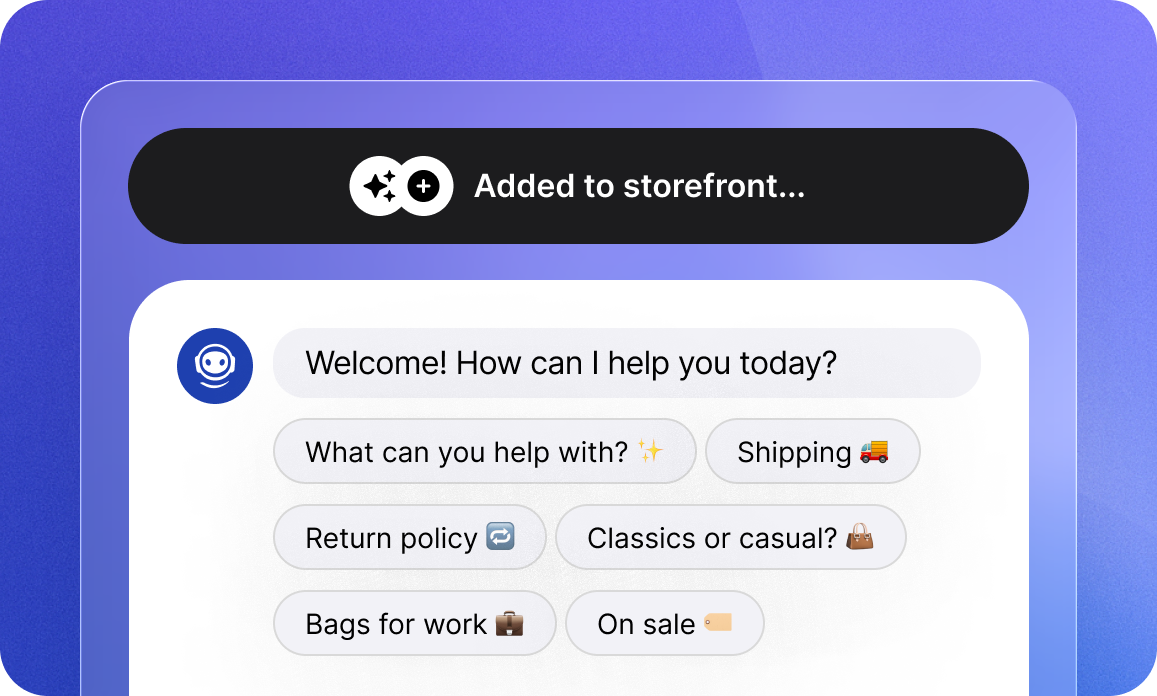
This direct link to your store’s backend allows support agents or chatbots to answer detailed pre-sales questions with confidence. For instance, a fashion retailer can instantly confirm size availability and material composition, while an electronics seller can answer complex compatibility questions on the spot. This capability turns your support channel into a powerful sales tool, directly addressing purchase blockers and building shopper confidence.
How to Implement Instant Product Knowledge
Achieving perfect synchronisation requires a focus on data quality and the right technological integration.
- Integrate Your Product Catalogue: Use a customer service platform that connects directly to your Shopify or e-commerce backend. This ensures that any change in your product information, from a price update to a new size variant, is immediately reflected in the support tool.
- Enrich Product Data: Go beyond basic descriptions. Ensure all product pages include detailed size guides, compatibility charts, material information, and ingredient lists. Keyword-rich descriptions also help AI tools better understand and find the right information.
- Use Strategic Tagging: Organise your products with clear collection tags and attributes. This helps support systems quickly filter and find products based on customer queries like "Do you have any vegan leather bags?" or "Show me waterproof jackets."
- Audit Data Regularly: Schedule periodic checks of your product information to ensure accuracy and consistency. Fix any outdated details, broken image links, or conflicting information between your product page and your support knowledge base.
Key Takeaway: The goal is to make your support channel an extension of your product page. By synchronising your catalogue, you empower your support function to not just solve problems but also to actively guide customers toward a purchase, significantly reducing product-related queries and boosting conversions.
3. Personalized Customer Interactions and Preference Recognition
Modern customers expect more than generic, one-size-fits-all service. They anticipate that brands will know them, remember their history, and tailor interactions accordingly. Personalisation in customer service means using individual data-like purchase history, browsing behaviour, and stated preferences-to make every conversation feel relevant and unique. This practice is a pillar of effective customer service best practices, transforming a simple query into a loyalty-building experience.
This approach demonstrates that you see the customer as an individual, not just an order number. For example, when a returning customer asks about new products, an agent or AI can make suggestions based on their previous purchases of a specific brand or colour. This was popularised by e-commerce giants like Amazon, and now it's an accessible strategy for Shopify stores of any size.
How to Implement Personalised Interactions
True personalisation goes beyond simply using a customer's first name. It requires integrating data into your support workflow to provide genuinely helpful and relevant guidance.
- Ask and Remember Preferences: Start conversations by asking clarifying questions. An automated chat could ask, "To help me find the perfect item, could you let me know your budget or style preference?" This data can be used immediately and stored for future interactions.
- Reference Past Interactions: Equip your support system to access previous conversations and purchase history. An agent can then say, "I see you bought the merino wool jumper last winter. We have a new version in a colour you might like." This shows you're paying attention.
- Use Behavioural Data: Track browsing patterns to anticipate needs. If a customer has repeatedly viewed a specific product category, your chatbot or live agent can proactively offer information or assistance related to those items when they initiate a chat.
- Segment for Relevance: Group customers based on their behaviour or purchase history. This allows you to send targeted follow-up messages or offer promotions that are genuinely relevant to their interests, increasing the likelihood of conversion.
Key Takeaway: Personalisation is about using data to be more helpful. By recognising customer preferences and history, you can provide smarter, faster, and more relevant support that not only solves problems but also drives sales and fosters long-term loyalty.
4. Multilingual Support for Global Reach
As a DTC brand’s reach expands beyond its home country, language can quickly become the biggest barrier to growth. Offering customer support in multiple languages dismantles this barrier, allowing you to serve customers worldwide and build a truly global brand. This is a critical component of customer service best practices for any business with international ambitions, enabling you to communicate with shoppers in their native tongue and significantly improving trust and conversion rates.
This doesn't mean you need to recruit a global team of native-speaking agents. Modern AI solutions can provide real-time translation for dozens of languages, allowing your existing team, or even an automated chatbot, to manage conversations from around the world. For instance, a UK-based fashion brand can instantly answer pre-sales questions from a customer in Japan, translating the query into English for the bot or agent and the reply back into Japanese for the customer.
How to Implement Multilingual Support
A successful multilingual strategy goes beyond simple translation and involves cultural and operational awareness.
- Prioritise Languages Strategically: Use your website analytics to identify where your international traffic is coming from. Start by supporting the top 3-5 languages from your most promising markets before expanding further.
- Customise for Cultural Context: Direct translations can sometimes miss cultural nuances. Customise automated greetings and key phrases to align with local etiquette. For example, formal and informal address forms vary greatly between languages.
- Test Translations Thoroughly: Before going live, have a native speaker review key automated responses. This ensures your brand’s voice is consistent and that industry-specific terms are translated correctly, preventing confusing or unprofessional interactions.
- Localise Beyond Language: True localisation includes offering local payment methods and displaying prices in local currencies. Integrating this information into your multilingual support answers provides a seamless and reassuring customer experience.
Key Takeaway: Multilingual support is about more than just translation; it's about showing international customers you value their business. By using AI-powered tools like Marvyn to communicate in 80+ languages, you can remove friction from the global buying journey and unlock new revenue streams without scaling your support team.
5. Intelligent Escalation and Human Handoff Protocols
Automation is powerful, but knowing when to pass the baton to a human is a critical customer service best practice. Intelligent escalation ensures that complex, sensitive, or high-value issues receive the empathy and expertise only a human can provide. This practice balances the efficiency of bots with the necessary human touch for difficult situations, preventing customer frustration and protecting brand reputation.
A smart handoff is more than just a "let me get a human" message. It involves a seamless transition where the human agent receives the full context of the automated conversation, including the customer's details and prior interactions. For instance, an e-commerce chatbot might handle routine questions about an order but immediately escalate a complaint about a defective product, routing it to a specialised agent who is authorised to process a replacement.
How to Implement Intelligent Escalation
A well-defined escalation strategy prevents customers from having to repeat themselves and gets them to the right person, fast.
- Define Clear Escalation Triggers: Your system must know when to escalate. Set up triggers based on negative sentiment analysis, specific keywords (e.g., "damaged," "unhappy," "legal"), or repeated failed attempts by the bot to understand a query.
- Assign Escalations to the Right Teams: Not all human agents are the same. Route escalations based on the issue type. Technical problems should go to your tech team, complaints to senior support, and high-value sales questions to a specialised pre-sales expert.
- Provide Full Context: The handoff must be seamless. Ensure your support platform provides the human agent with the complete chat history and customer background information. This allows the agent to pick up the conversation without missing a beat.
- Set Response Time Targets: Once an issue is escalated, the clock is ticking. Establish clear Service Level Agreements (SLAs) for human response times. A high-priority escalation from a VIP customer should be answered much faster than a standard query.
Key Takeaway: The goal of an escalation protocol is not to admit automation has failed, but to show you've designed a system that respects the customer's time and the complexity of their issue. By monitoring escalation rates and reasons, you can continuously identify gaps and improve your automated support's capabilities.
6. Proactive Communication and Issue Prevention
Instead of waiting for customers to report problems, the best customer service practices involve anticipating needs and preventing issues before they happen. Proactive communication turns support from a reactive cost centre into a proactive value driver. This means providing timely shipping updates, addressing common questions upfront, and guiding customers through potential friction points, creating a smoother, more trustworthy shopping experience.
This approach is more cost-effective and customer-friendly than reactive support. By getting ahead of potential queries about order status or product setup, you reduce support ticket volume and build customer confidence. A simple, automated notification about a shipping delay, for instance, prevents dozens of frustrated customers from contacting your team.
How to Implement Proactive Communication
Building a proactive strategy means using data and automation to anticipate what your customers will need to know, and when.
- Automate Key Journey Updates: Send automated notifications at crucial stages of the order process: order confirmed, order shipped (with tracking link), out for delivery, and delivered. This transparency manages expectations and dramatically reduces "Where is my order?" (WISMO) enquiries.
- Provide Post-Purchase Guidance: For products that require setup or have a learning curve, send a welcome email containing a quick-start guide, video tutorials, or a link to a detailed FAQ page. This helps customers get value from their purchase immediately.
- Set Clear Expectations on-site: Don't hide important information. Clearly display your returns policy, shipping times, and any potential seasonal delays on product pages, at checkout, and in your site's footer. An AI-powered chat can also offer this information based on a user's browsing behaviour.
- Follow Up After Delivery: A few days after an order is delivered, send an automated email or SMS to check in. Ask if they are happy with their purchase and provide a simple way to get help if something isn't right. This catches issues early, before they escalate into negative reviews.
Key Takeaway: Proactive support is about prevention, not reaction. By anticipating customer needs and providing clear, timely information, you can solve problems before they even exist, which is a cornerstone of exceptional customer service best practices that builds loyalty and frees up your support team.
7. Omnichannel Support Integration and Unified Messaging
Today’s customers interact with brands across multiple touchpoints. They might discover a product on Instagram, ask a question via website chat, and then follow up with an email. An omnichannel approach ensures this journey is seamless by unifying all conversations into a single, continuous thread. This prevents customers from having to repeat themselves, creating a fluid and positive experience that strengthens loyalty. This practice is a crucial element of modern customer service best practices.
This unified view not only benefits the customer but also makes your support team vastly more efficient. Instead of juggling separate inboxes for email, social media DMs, and live chat, agents can see the entire customer history in one place. Platforms like Zendesk and HubSpot specialise in this, consolidating interactions from various sources into one dashboard, giving agents full context for every enquiry.
How to Implement Omnichannel Support
Building a truly unified system requires careful planning to connect disparate channels into a cohesive whole.
- Start Where Your Customers Are: You don't need to be everywhere at once. Analyse your data to see which channels your customers use most, whether it’s email, Instagram DMs, or website chat. Focus on integrating these key channels first.
- Ensure Seamless Handoffs: Test the transitions between channels. If a conversation moves from a chatbot to a live agent via email, the agent must have the full chat transcript. This prevents customer frustration and demonstrates competence.
- Maintain a Consistent Brand Voice: Your tone and messaging should be consistent, whether a customer is talking to a chatbot, a social media manager, or an email support agent. Develop clear brand voice guidelines and train all team members on them.
- Train Your Team on the Platform: A unified inbox is only as good as the people using it. Provide thorough training on your chosen support platform to ensure agents can navigate customer histories, manage tickets, and use all features effectively. You can learn more about deploying effective live chat on a website as a starting point.
Key Takeaway: True omnichannel support is about creating one conversation that flows across many channels. It respects the customer's time and history with your brand, turning fragmented interactions into a single, unified relationship.
8. Data-Driven Performance Monitoring and Continuous Optimisation
Customer service excellence isn't a one-off achievement; it's a moving target. Data-driven performance monitoring is the practice of tracking key support metrics to make informed decisions and continuously refine your approach. This methodology transforms customer service from a cost centre into a strategic growth engine, revealing exactly what's working, what isn’t, and where the biggest opportunities for improvement lie. Adopting these customer service best practices ensures your support system evolves alongside customer needs and business goals.
Successful DTC brands don't just answer tickets; they analyse them. For example, a brand might track how many support interactions a customer has before making a purchase, then use that data to optimise their pre-sales chat flows. Similarly, support leaders use customer satisfaction (CSAT) scores not just as a report card, but as a guide for agent training, identifying specific topics or scenarios that require more attention. This constant feedback loop is vital for sustained success.
How to Implement Data-Driven Monitoring
Building a data-informed support strategy requires defining what success looks like and then tracking the right metrics to measure progress.
- Define Clear Success Metrics: Align your support KPIs with broader business objectives. Are you focused on efficiency, customer loyalty, or sales? Your metrics should reflect that. Key indicators include First Response Time (FRT), Customer Satisfaction (CSAT), Resolution Rate, and the impact of support on conversion rates.
- Measure Both Quality and Efficiency: Track efficiency metrics like cost per interaction and tickets handled per agent, but balance them with quality metrics like resolution rates and customer feedback. Focusing only on speed can harm satisfaction.
- Analyse Escalation Patterns: Pay close attention to which queries are frequently escalated from automated systems to human agents. This data is a goldmine, highlighting gaps in your AI's knowledge base or areas where self-service resources need to be improved.
- Connect Support to Revenue: Use analytics to measure how support interactions influence conversion rates and average order value (AOV). For instance, analyse which product questions, when answered quickly, lead most often to a sale.
Key Takeaway: The ultimate goal of data monitoring is continuous optimisation. Regularly review your performance against set targets, A/B test your chat scripts and workflows, and use customer feedback to guide not just your support processes but also your product development and website user experience.
9. Consultative Sales Approach in Support Interactions
Excellent customer service goes beyond simply answering questions; it involves guiding customers to solutions that genuinely meet their needs. A consultative approach transforms a standard support interaction into a personalised shopping experience. Instead of just reacting, agents (both human and AI) proactively ask clarifying questions to understand the customer's context, challenges, and goals. This method turns support from a cost centre into a powerful revenue driver, boosting average order value and satisfaction at the same time.
For instance, a clothing retailer's support agent might ask about the occasion, preferred style, and fit before recommending an outfit. A tech store's advisor would seek to understand the customer's primary use case before suggesting a particular laptop. This shift from transactional to relational service is a key customer service best practice that builds deep-seated loyalty and trust.
How to Implement a Consultative Approach
Adopting a consultative mindset requires training your team to act as expert advisors, not just problem-solvers.
- Understand Before Recommending: Train agents to start conversations by asking open-ended questions. Instead of "Can I help you find something?", try "What project or occasion are you shopping for today?". This opens the door to a more meaningful dialogue.
- Listen for Context and Priorities: An effective consultant listens for clues about budget, preferences, and deal-breakers. By actively listening, an agent can recommend a product that fits the customer's needs perfectly, rather than just pushing a high-margin item.
- Provide Comparisons and Justifications: When offering solutions, explain why a particular product is a good fit. Offer two or three options and clearly outline the pros and cons of each based on the customer’s stated needs. This empowers the customer to make an informed decision.
- Suggest Complementary Items Naturally: Once the core need is met, a consultant can naturally suggest add-ons that improve the customer’s experience. For a camera purchase, this might be a memory card and a case. This should feel helpful, not pushy.
Key Takeaway: A consultative approach focuses on customer success, not just closing a sale. By training your team or configuring your bot to be a genuine advisor, you create value that extends far beyond the transaction. Advanced AI sales agents can be programmed to master this approach, guiding customers through your entire catalogue with expert precision.
10. Empathy-Driven Communication and Customer-Centric Tone
In customer service, how you communicate is just as important as what you communicate. When a customer contacts you with a problem, they are often frustrated, confused, or anxious. An empathy-driven approach acknowledges their emotional state first, building a foundation of trust before diving into a solution. This customer-centric tone makes them feel heard and valued, transforming a potentially negative interaction into a loyalty-building experience.

Brands like Zappos built their reputation on empowering agents to prioritise customer delight over rigid scripts. This means focusing on the customer’s needs, not company convenience. Adopting this mindset is a core component of modern customer service best practices, as it creates the positive emotional connection that turns one-time buyers into lifelong advocates.
How to Implement an Empathetic Tone
Fostering an empathetic culture requires intentional training and clear communication guidelines for your support team.
- Acknowledge Emotion First: Always start by validating the customer’s feelings. A simple "I understand how frustrating it must be to receive a damaged item" shows you are on their side before you offer a solution.
- Use 'We' to Build Partnership: Frame the conversation as a team effort. Phrases like "Let's see how we can get this sorted for you" create a collaborative feeling, whereas "You need to..." can sound accusatory.
- Offer Proactive Solutions: Don't just explain what happened. Think one step ahead. If an item is out of stock, don't just say so; offer to notify them when it's back or suggest a similar product.
- Train for Active Listening: Your team should be trained to read between the lines, identify the core issue, and repeat it back to the customer for confirmation. This ensures they feel understood.
Key Takeaway: Empathetic communication isn't about being overly emotional; it's about being human. By prioritising the customer's feelings and focusing on positive outcomes, you build trust and emotional loyalty that automated responses alone cannot achieve. A genuine apology and a proactive solution are often more powerful than a quick, impersonal answer.
10-Point Comparison of Customer Service Best Practices
Turning Best Practices into Business Growth
The journey through these ten customer service best practices reveals a powerful truth for modern DTC brands: exceptional support is not a cost centre, but a strategic growth engine. Moving beyond reactive problem-solving to proactive, personalised engagement is what separates fleeting brands from enduring ones. The practices we've explored, from implementing 24/7 availability to cultivating an empathy-driven tone, are not isolated tactics. They are interconnected components of a single, unified strategy designed to build customer trust, foster loyalty, and directly influence your bottom line.
Think of it as shifting your brand’s posture. A defensive support model waits for problems to arise, treating customer interactions as tickets to be closed. A growth-oriented model, however, sees every interaction as an opportunity, a chance to guide a customer, offer a recommendation, or turn a moment of friction into a moment of delight. This is the core principle that ties together instant product knowledge, proactive communication, and a consultative sales approach.
From Theory to Tangible Results
Implementing these customer service best practices might seem like a monumental task, especially for solo founders or small teams managing everything themselves. The key is not to attempt an overnight overhaul. Instead, focus on progressive, intelligent implementation. The goal is to build a system where technology handles the repetitive, and your human team manages the relational.
Consider the most impactful starting points for your specific business:
- For High-Ticket Brands: Prioritise implementing a consultative sales approach within your support channels. Your customers have complex questions, and providing expert, personalised advice pre-purchase can be the deciding factor.
- For Global Retailers: Multilingual support and 24/7 availability are non-negotiable. Start by identifying your top three emerging international markets and ensure your support system can cater to them flawlessly, even outside your primary business hours.
- For Brands with High Ticket Volume: Focus on intelligent escalation protocols and data-driven performance monitoring. Analyse your KPIs to find the most common, repetitive queries and automate them first, freeing up your agents to handle the escalations that truly require a human touch.
By strategically adopting these practices, you transform customer service from a reactive necessity into a proactive asset. You stop just answering questions and start building relationships. You stop just solving problems and start creating brand advocates.
The True Value of a Superior Customer Experience
Ultimately, mastering these customer service best practices is about building resilience and a competitive advantage in a crowded e-commerce space. When your support is always on, instantly knowledgeable, and genuinely helpful, it becomes a core part of your product offering. Customers remember the brands that made their lives easier, that understood their needs without being asked, and that spoke to them in their own language.
This level of service directly contributes to higher conversion rates, increased average order value, and, most importantly, a stronger customer lifetime value. It’s a flywheel effect: a great experience leads to positive reviews and word-of-mouth referrals, which brings in new customers who then have their own great experience. This is how you build a sustainable, profitable brand that customers don't just buy from, but believe in. The path forward is clear: start small, measure your impact, and consistently reinvest in the systems and people that create an unforgettable customer journey.
Ready to turn these best practices into reality without the heavy lifting? Marvyn AI is a purpose-built AI chat solution that automates over 70% of support queries for Shopify brands, implementing 24/7, multilingual, and consultative support in minutes. See how it can transform your customer service and drive sales by visiting Marvyn AI.
Related Articles

Unlocking Growth With AI Sales Agents for Your DTC Brand
Discover how AI sales agents can transform your Shopify store. Learn to increase conversions, boost AOV, and enhance customer experience with our expert guide.

Conversion Rate Optimization Checklist for Shopify in 2026
Master the conversion rate optimization checklist for Shopify in 2026. Boost sales, reduce cart abandonment, and raise AOV with 10 practical steps.

A Shopify Guide to Reduce Cart Abandonment
Reduce cart abandonment on your Shopify store with this complete guide. Learn to diagnose causes, implement fixes, and use AI chatbots to recover lost sales.

7 Top Chat Bot Examples for E-commerce Success in 2026
Discover the best chat bot examples for Shopify stores. See how Marvyn AI and others automate support and drive sales with real-world use cases.

Website Welcome Message: 20+ Examples & Templates (2026)
See 20+ real welcome message examples for websites, online stores, fashion boutiques, and more. Plus how to automate them with an AI chatbot.

Conversion Rate Optimization for Ecommerce A Modern Growth Playbook
Level up your conversion rate optimization for ecommerce with this playbook. Learn how to audit your funnel, optimize pages, and use AI to drive Shopify growth.