How to Improve Customer Engagement for Your Shopify Store
For any modern Shopify brand, figuring out how to improve customer engagement really boils down to four things. You need to master proactive chat, personalised automation, a seamless user experience, and a delightful post-purchase journey. When you get these four elements working together, you start turning one-time buyers into genuine, loyal fans.
Why Customer Engagement Is Your Greatest Competitive Advantage
In a world of skyrocketing ad costs and lookalike competitors, having a great product just isn't the trump card it used to be. The real battle is for attention and loyalty. Winning that battle requires connection, not just transactions. For most direct-to-consumer brands, the online shopping experience can feel sterile and impersonal, creating a huge gap between you and the people buying your products.
This is where real customer engagement becomes your most powerful, defensible asset. It’s not some soft metric or a vague marketing buzzword; it's a direct driver of sustainable, profitable growth.
True engagement means building memorable, human-centric experiences at every single touchpoint. It’s about making customers feel seen, heard, and valued—not just like another order number in your Shopify dashboard.
The Shift From Transactional to Relational
The most successful brands I've seen all grasp this fundamental shift: the goal isn't just to make a sale, but to start a relationship. A transactional mindset is obsessed with the checkout button. A relational approach sees every click, every question, and every order as a chance to build trust.
This shift has a direct, measurable impact on your bottom line:
- Increased Customer Lifetime Value (CLV): Engaged customers are far more likely to make repeat purchases. They come back again and again, massively boosting their total value to your business over time.
- Reduced Acquisition Costs: Let's be honest, ads are expensive. But happy, engaged customers become your best marketers. Their positive word-of-mouth and user-generated content provide the kind of organic promotion that money simply can't buy.
- Improved Brand Resilience: When customers feel a genuine connection to your brand, they’re more forgiving of the occasional slip-up. They’re also far more likely to stick with you, even when a competitor dangles a cheaper price.
The core idea is simple: when you invest in the customer relationship, the customer invests back in you. This reciprocal loyalty is the foundation of a brand that can actually last.
This guide is your playbook for building these critical relationships. We’re going to move beyond fluffy theory and give you concrete, actionable strategies that are specifically tailored for Shopify stores. To really get ahead, you'll need to explore proven strategies for increasing customer engagement that are built on delivering value, not just endless discounts.
We'll break down the four essential pillars that form a powerful customer engagement engine. Here's a quick overview of what we'll cover.
The Four Pillars of Modern Customer Engagement
This table summarises the core strategies this guide will cover, showing how each one contributes directly to the business metrics you care about.
By mastering these four areas, you can stop just selling products and start building an authentic community around your brand. Let's dive in.
Turning Your Site Chat into a Proactive Sales Channel
For too long, site chat has been a passive, reactive tool—a digital equivalent of a dusty old help desk sign. Customers had to start the conversation, usually out of frustration. But what if your chat widget acted less like a suggestion box and more like your best, most intuitive sales associate?
That’s the key to unlocking a whole new level of customer engagement and a powerful revenue stream.
The goal is to move beyond the generic "How can I help you?" pop-up and make your chat a proactive, consultative shopping assistant. Modern AI chatbots, when set up correctly, can do this by making your online store feel more like a high-end boutique where helpful advice is always on hand.
It’s all about teaching an AI to understand not just your products, but also the context of the customer's journey. Is it a new visitor browsing your bestsellers? A returning customer who has viewed the same item three times? Someone hesitating on the checkout page? Each of these moments is a golden opportunity for the AI to step in.
This simple flow breaks down how to turn a basic chat into a rich, personalised experience.
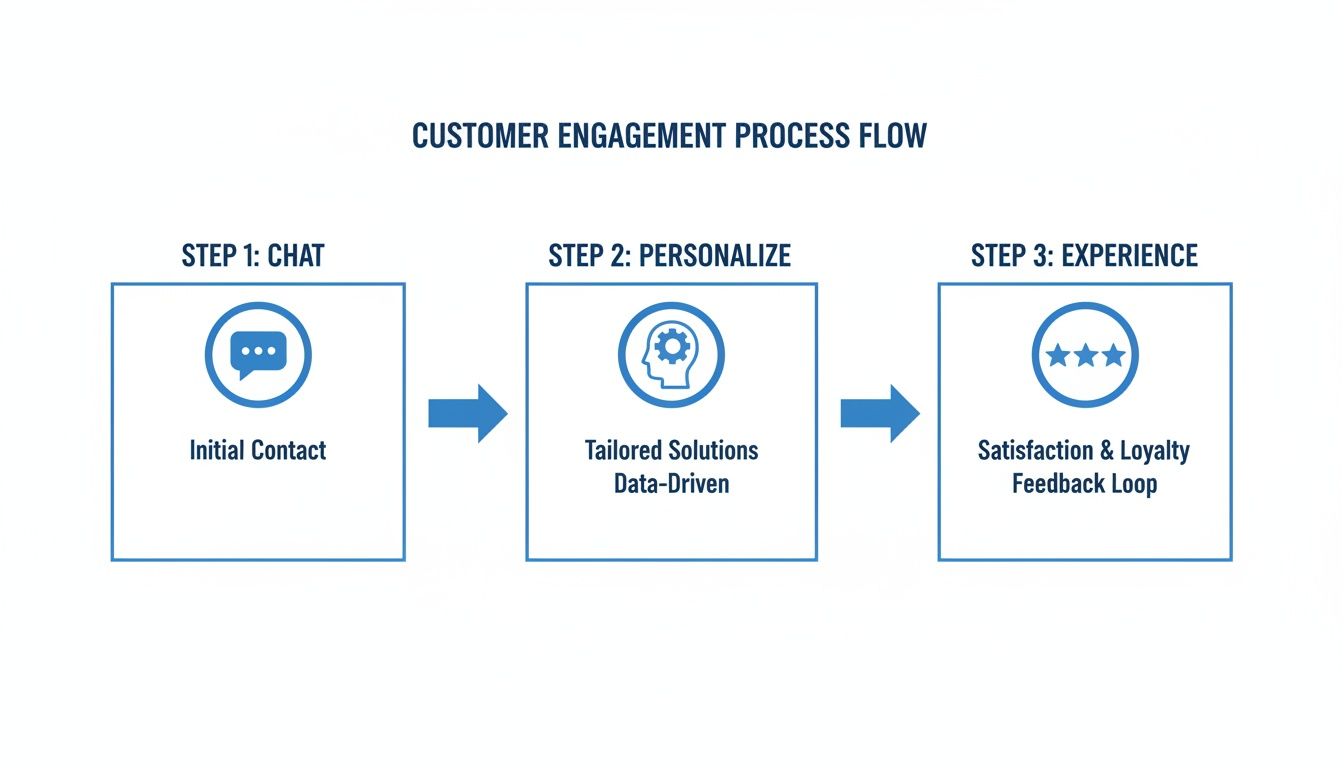
As you can see, engagement isn't a single event. It’s a process that starts with a conversation and leads to a much better overall shopping experience.
Train Your AI to Be a Product Expert
A truly effective AI sales agent isn't just a fancy FAQ bot. It needs deep, native knowledge of your entire business. This means it must be instantly synchronised with your Shopify store's data, including:
- Your Full Product Catalogue: It should know every variant, material, size, and specification. If a customer asks, "Do you have this jumper in blue, and is it machine washable?" the AI needs to answer instantly. No fumbling.
- Real-Time Stock Levels: There’s nothing worse than recommending an out-of-stock product. The AI must be aware of your inventory to guide customers toward items they can actually buy.
- All Your Policies: It must be an expert on your shipping, returns, and warranty information. This builds immense trust and removes friction for shoppers who are on the fence.
By training your AI on this foundational knowledge, it becomes an authentic extension of your team. You can refine this even further by uploading extra documents, like FAQs or brand story details, to give it a richer personality that aligns with your brand’s voice.
Create Proactive Engagement Scenarios
Once your AI is trained up, the real magic begins: creating rules for proactive outreach. Instead of waiting for a question, the chatbot should intelligently start conversations based on user behaviour. This is how you start improving customer engagement at the moments that matter most.
For instance, you could set up a flow where the AI detects a user hovering near the browser's back button on a product page. This "exit-intent" trigger is a perfect moment for the AI to chime in.
Proactive Chat Example: Exit-Intent Offer
* User Behaviour: A returning customer has a £150 coat in their cart but hesitates for over 30 seconds on the checkout page and moves their cursor toward the exit.
* AI Action: The chatbot proactively opens.
* AI Message: "Hey there! I see you've got great taste. Just so you know, we offer free shipping on all orders over £100. Need any help completing your purchase?"
This small, timely intervention can be the nudge a customer needs to complete their order, directly fighting cart abandonment. You can learn more about how to set up these kinds of powerful interactions by exploring the capabilities of dedicated AI sales agents.
Guide Shoppers with Consultative Selling
Beyond just answering questions, a well-implemented AI can act as a personal shopper. This is particularly valuable for brands with large catalogues or complex products where customers might feel a bit overwhelmed.
Here’s how a consultative conversation might unfold, turning a vague interest into a confident purchase.
This example demonstrates the shift from a simple Q&A to a guided sales experience that understands what the customer actually needs. By asking clarifying questions about preferences and budget, the AI narrows down the options and presents the perfect product—just like a skilled human sales associate would.
This approach not only drives sales but also seriously enhances the customer experience. Shoppers feel understood and supported, which builds the kind of brand affinity that leads to long-term loyalty. The result is a powerful tool that not only slashes routine support tickets but also actively increases your average order value and conversion rate by being present and helpful at every step.
Building Automated Email Flows That Feel Personal
Email is far from dead. In fact, for any Shopify brand, it's one of the most powerful tools you have for building real customer relationships. But there's a fine line between creating genuine loyalty and just adding to the inbox clutter. The difference boils down to one thing: personalisation.
Generic, one-size-fits-all email blasts just don't work anymore. If you want to improve customer engagement, your automated flows have to feel like they were written for an audience of one. The trick is to go beyond the basic welcome series and start using rich customer data to trigger hyper-relevant campaigns.
Think of it as a series of thoughtful, automated conversations that pop up at exactly the right moment in your customer’s journey.
Moving Beyond the Standard Welcome Email
A welcome email is a great start, but it’s just that—a start. Real engagement happens when you anticipate what a customer needs next, based on what they've already done. This means tapping into the data you already have in Shopify—like their purchase history, browsing behaviour, and past interactions—to create automated journeys that provide genuine value.
For instance, a standard welcome email just says, "Thanks for signing up." A personalised, data-driven flow says, "We see you bought our flagship skincare product. Here's a quick guide on how to get the best results, sent three days after delivery." See the difference?
The goal is to make every email feel less like a marketing message and more like a helpful tip from a brand that truly understands the customer’s needs. This simple shift in mindset turns automation into a powerful tool for connection.
This approach transforms your email strategy from a one-way broadcast into a dialogue, where each message strengthens the bond between the customer and your brand.
Segment Your Audience for Maximum Relevance
To send emails that feel personal, you first need to know who you’re talking to. This is where customer segmentation comes in. It's the foundation of any good email automation strategy. Instead of blasting the same message to everyone, you can group your audience based on specific criteria.
Here are a few simple but powerful segments to get you started:
- First-Time Buyers: These customers have taken a chance on you. Your job is to validate their decision and nudge them towards that all-important second purchase.
- VIP Customers: These are your biggest fans, often flagged by their high spend or frequent purchases. They deserve special treatment, like exclusive access and early-bird offers.
- Dormant Customers: This group hasn't bought anything in a while (say, 90+ days). A thoughtful re-engagement campaign can be all it takes to win them back.
- Specific Product Purchasers: Customers who bought a particular item are the perfect audience for targeted content, like usage guides, accessory recommendations, or refill reminders.
By organising your audience into these groups, you ensure every campaign is incredibly relevant to the person receiving it. This is how you dramatically improve open rates, click-throughs, and overall engagement.
Implement High-Impact Automated Flows
With your segments defined, you can start building automated email flows that meet the specific needs of each group. Here are a couple of high-impact campaigns you can set up to improve customer engagement and drive repeat business.
1. The "How-To" Post-Purchase Guide
Instead of just a transactional "your order has shipped" email, create a flow that actually helps the customer get the most out of their new product.
- Trigger: An order is marked as "Delivered."
- Flow Example:
- Email 1 (3 days after delivery): "Your Guide to Using Your New [Product Name]." This email can link to a video tutorial, a PDF guide, or a blog post with tips and tricks.
- Email 2 (14 days after delivery): "How's It Going? Share Your Thoughts!" This asks for a review, showing you value their opinion while also collecting valuable social proof for your store.
2. The "We've Missed You" Win-Back Campaign
Re-engaging a customer who's gone quiet is far more cost-effective than acquiring a new one. A targeted win-back flow can remind them why they loved your brand in the first place.
- Trigger: A customer has not made a purchase in 90 days.
- Flow Example:
- Email 1: "Is It Something We Said?" A friendly, light-hearted email that shows you’ve noticed their absence. You could use it to showcase what’s new since their last visit.
- Email 2 (7 days later): "Here Are a Few Things We Picked for You." Use their past purchase history to recommend specific products they might love. Offering a small, exclusive incentive here can also be very effective.
Effective email is just one piece of the puzzle. For a deeper look into how it fits into your wider support strategy, check out our guide on using email for excellent customer service. It’s packed with more tactics for building strong relationships right from your inbox.
Designing a Website Experience That Boosts Engagement
Your website is your digital flagship store, not just an online catalogue. A confusing or clunky site is the quickest way to lose a sale and send shoppers running to your competitors. The good news? Improving your user experience (UX) doesn't mean you need a total site redesign.
You can make a huge impact by focusing on a few key areas. The real goal is to remove friction at every step, from the moment someone lands on your homepage to the second they hit “complete order.”
A great UX just feels right. It almost predicts what a shopper wants and makes it dead simple for them to find it. Get this part right, and you're well on your way to improving customer engagement online.
Make Product Discovery Effortless with Smart Navigation
If a customer can't find what they're looking for, they're gone. It’s that simple. Making it easy to discover products is one of the most powerful UX improvements you can make.
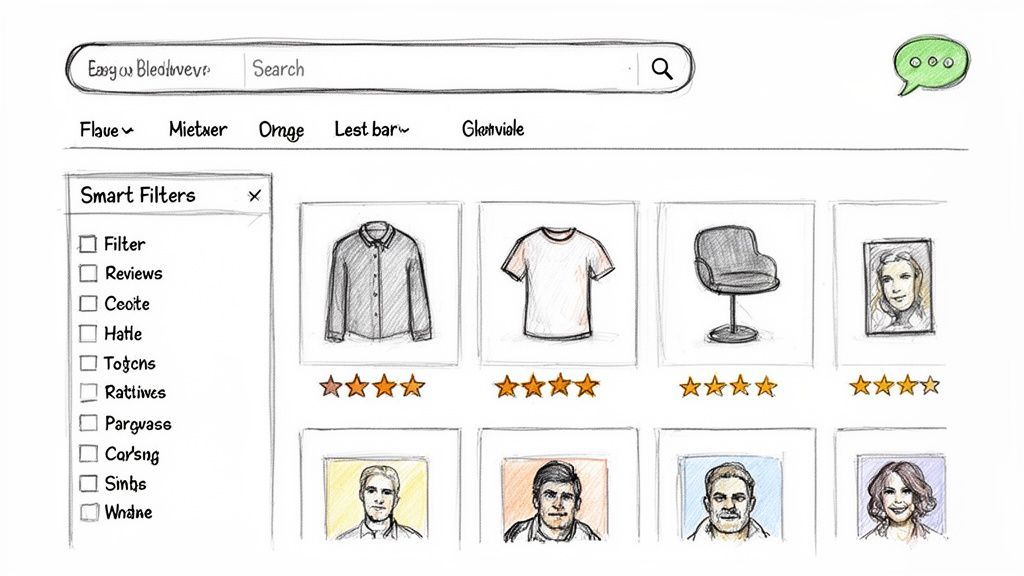
This all starts with clean, logical navigation menus. But for any modern e-commerce store, especially those with a decent-sized product catalogue, smart filtering and search are non-negotiable. These tools give shoppers the power to slice through your entire inventory and find exactly what they need in seconds.
Your filters need to be specific to what you sell. For a clothing brand, this isn't just a "nice-to-have," it's essential. Let people filter by:
- Size and Fit: Don’t force them to click on every single product just to see if their size is in stock.
- Colour: A visual colour swatch filter is infinitely better than a boring text list.
- Price Range: A price slider is a must-have for shoppers on a budget.
- Material or Style: Let them instantly find all your "cotton" tees or "formal dresses."
These small details add up. They reduce frustration, put the shopper in control, and create a positive experience that makes them want to stick around.
Build Instant Trust with Social Proof
New visitors arrive on your site with a healthy dose of scepticism. They don’t know you, and they’re actively looking for signs that you’re a legitimate business they can trust. This is where social proof becomes your secret weapon.
We’ve all done it—scrolled straight to the reviews before even considering a purchase. In fact, research shows that around 90% of shoppers read reviews before buying. You need to make this information impossible to miss.
Don't bury your reviews on a separate page. Feature your star ratings and best testimonials right under the product title or next to the "Add to Cart" button. That visibility gives instant validation and answers questions before they’re even asked.
Take it one step further with user-generated content (UGC). Encourage customers to upload photos of themselves with your products. A gallery of real people enjoying what you sell is far more persuasive than even the most polished professional photoshoot. Plenty of Shopify apps can help you collect and display these photos right on your product pages.
Remove Friction with Proactive Chat Support
Even the world's best-designed website will leave some shoppers with questions. This is especially true for complex, high-value, or highly customisable products. Answering those questions instantly is the key to stopping them from abandoning their cart.
This is a perfect job for a smart AI chatbot. It can offer immediate, contextual help without making the user click away to a generic FAQ page.
Imagine someone is looking at a high-end camera on your site. They've been on the page for a minute, clearly weighing their options. A chatbot could proactively pop up with a targeted message.
- Proactive Chat Example:
- User Behaviour: A visitor spends more than 60 seconds on a complex product page.
- AI Action: The chatbot initiates a conversation.
- AI Message: "This is one of our most advanced models! Do you have any questions about its features or compatibility with other gear? I can help."
This kind of proactive help is also a lifesaver at the checkout. If someone hesitates on the shipping page, the AI can jump in to clarify delivery times or international costs, smoothing over that final hurdle and guiding them right to the finish line. It turns a potential roadblock into another positive, helpful interaction with your brand.
Creating a Post-Purchase Experience That Builds Lifelong Fans
The sale is just the beginning. For far too long, brands have treated the post-purchase phase as a boring checklist of transactional updates. "Order confirmed," "order shipped," "order delivered"—end of story. But this mindset misses one of the biggest opportunities you have to forge real, lasting loyalty.
Think about it. That period of anticipation, from the second a customer clicks "buy" to when they finally unbox their order, is packed with emotion. By getting this part right, you can turn a one-time buyer into a passionate advocate for your brand. It’s about making them feel looked after, even after you have their money.
Transform Transactional Updates into Brand Moments
Your order and shipping notifications are some of the most-opened emails you will ever send. Seriously. You have a captive audience, eager for information. Wasting this touchpoint on a generic, robotic template is a massive missed opportunity.
Instead, inject your brand's personality into every single update. Don't just inform; delight.
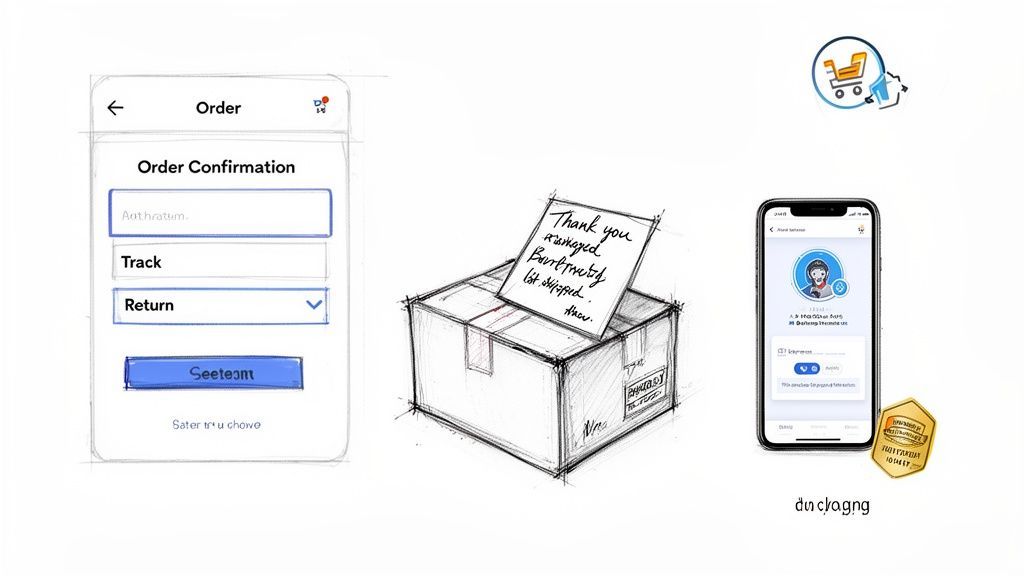
- Order Confirmation: Go beyond a simple receipt. Reassure them they've made a great choice, share a fun fact about the product they picked, or link to a user guide so they can get excited about what’s on its way.
- Shipping Notification: This is the moment of peak excitement. Include a personal note from your fulfilment team or a sneak peek of what's new in your store. Make it feel like an event.
These small changes turn a boring necessity into an enjoyable part of their journey, reinforcing all the good feelings they have about their purchase.
The most successful direct-to-consumer brands get this: the post-purchase experience isn't an operational afterthought; it's a core part of their marketing strategy. It's your final, and most memorable, sales pitch for the next purchase.
By mastering these interactions, you keep the conversation going and set the stage for a long-term relationship.
Simplify Returns with a Self-Service Portal
Let's be honest—nobody enjoys dealing with returns. But making the process painful is a surefire way to lose a customer forever. A confusing, slow, or rigid returns policy creates a huge amount of friction and frustration.
The solution is to empower customers with a self-service returns portal.
A great portal lets customers start a return, print a shipping label, and track its status without ever needing to contact your support team. This autonomy drastically improves their experience during what is, let's face it, a bit of a negative moment.
To make this even better, you can integrate an AI assistant right into the portal. An AI can instantly answer common policy questions like:
- "How many days do I have to return my item?"
- "Can I exchange for a different size instead?"
- "When will I receive my refund?"
This immediate support deflects countless support tickets, saving your team time while giving the customer the instant answers they want. It turns a potential point of friction into a smooth, professional, and reassuring interaction. Many businesses are finding that implementing a few key customer service best practices like this can dramatically boost satisfaction and retention.
Engineer Moments of Surprise and Delight
While a smooth process is essential, the moments that truly stick in a customer's memory are the unexpected ones. These "surprise and delight" tactics are what create the stories customers share with their friends. They don’t have to be expensive, but they do have to be thoughtful.
Here are a few ideas that work wonders for Shopify brands:
- A Handwritten Thank-You Note: In a digital world, something analogue really stands out. A short, personalised note shows there’s a real human behind the brand who appreciates their business.
- An Unexpected Freebie: Tucking a small, relevant sample into the package can be a fantastic surprise. If they bought a coffee blend, include a single biscuit. If they bought a skincare product, add a sample of a complementary serum.
- Exclusive Early Access: After their first purchase, add them to a "New Customer" segment and give them early access to your next product drop. This makes them feel like an insider and part of a special club.
These gestures show you see them as more than just an order number. They demonstrate genuine appreciation and are fundamental to building an emotional connection that goes far beyond the transaction. This is how you build a community of lifelong fans.
Got questions about customer engagement? Good. You should.
As a store owner, you're right to be cautious about any new tool or strategy. Your time is your most valuable asset, and you need to know that any effort you put into engagement will pay off without creating a mountain of extra work. Let's tackle some of the most common questions we hear.
How Can I Improve Customer Engagement with a Small Team or Budget?
This is the number one concern for most DTC brands, and it’s a fair one. The answer isn't to work harder; it's to automate smarter.
A modern AI chatbot can handle the vast majority of your routine customer questions 24/7. It syncs directly with your Shopify store to give instant, accurate answers about order status, product details, and return policies. This isn't just about saving time—it’s about delivering an elite level of service without the overhead of a large support team. It frees you up to focus on the things that actually grow the business.
Will an AI Chatbot Make My Brand Seem Robotic?
Not if it’s done right. The fear of sounding like a robot is exactly why so many brands stick to manual support, but today's AI is built for deep customisation. You can dial in the chatbot's tone of voice to perfectly match your brand, whether you’re witty and informal or professional and straight to the point.
The goal isn't to trick customers into thinking they're talking to a human. It's to make the AI feel like a genuinely helpful, knowledgeable part of your team that's always available.
You can feed the AI your existing FAQs, brand story, and policy documents. This gives it a much richer, more nuanced understanding of how you communicate, ensuring every interaction feels consistent with the brand you’ve worked so hard to build.
What Are the Most Important Metrics for Tracking Customer Engagement?
It’s easy to get lost in a sea of data. The key is to focus on a handful of indicators that give you a clear, honest picture of what’s actually working. Before you do anything else, it's worth getting a solid grip on understanding engagement metrics and how they tie back to real business goals.
For a quick rundown, here are the core metrics we recommend watching:
- Website: Keep an eye on your overall conversion rate and bounce rate. If people are sticking around instead of bouncing, your site is doing its job.
- Chat: Measure the percentage of conversations handled automatically and the conversion rate from chat interactions. This shows the AI’s direct impact on both efficiency and sales.
- Email: For your automated campaigns, open rates and click-through rates are your truth-tellers. They show you if your messages are hitting the mark.
- Post-Purchase: The ultimate signs of true loyalty and engagement are your repeat purchase rate and Customer Lifetime Value (CLV). This is where engagement turns into long-term profit.
Focusing on these specific metrics gives you a no-fluff view of your ROI. You'll see exactly how building better customer relationships translates into a healthier bottom line.
Ready to see how a fully autonomous AI can transform your customer engagement? Marvyn AI installs in one click and instantly starts turning your browsers into buyers. Automate over 70% of your support and offer consultative sales 24/7, for free. Get started today at https://www.marvyn.co.
Related Articles
8 Powerful Example of Auto Reply Templates for 2026
Discover every example of auto reply you need. Get 8 templates for Shopify, chatbots, and more to automate support and drive sales. Updated for 2026.
Conversion Rate Optimization Checklist for Shopify in 2026
Master the conversion rate optimization checklist for Shopify in 2026. Boost sales, reduce cart abandonment, and raise AOV with 10 practical steps.
Live Chat on a Website The Ultimate Ecommerce Growth Guide
Learn how to use live chat on a website to boost sales, delight customers, and grow your ecommerce brand. Your ultimate guide to Shopify growth and CX.

Website Welcome Message: 20+ Examples & Templates (2026)
See 20+ real welcome message examples for websites, online stores, fashion boutiques, and more. Plus how to automate them with an AI chatbot.
How to Improve Ecommerce Customer Experience A Shopify Playbook
Discover how to improve ecommerce customer experience on Shopify. Our playbook covers site speed, AI support, and post-purchase strategies that drive loyalty.
7 Top Chat Bot Examples for E-commerce Success in 2026
Discover the best chat bot examples for Shopify stores. See how Marvyn AI and others automate support and drive sales with real-world use cases.